
Northwest Arkansas is growing fast, and the stakes are getting real. Traffic is heavier than it used to be, housing costs are climbing, and the green space people love can disappear one subdivision at a time. So how do we head toward nearly 1 million residents by 2050 without losing the very things that make this place special?
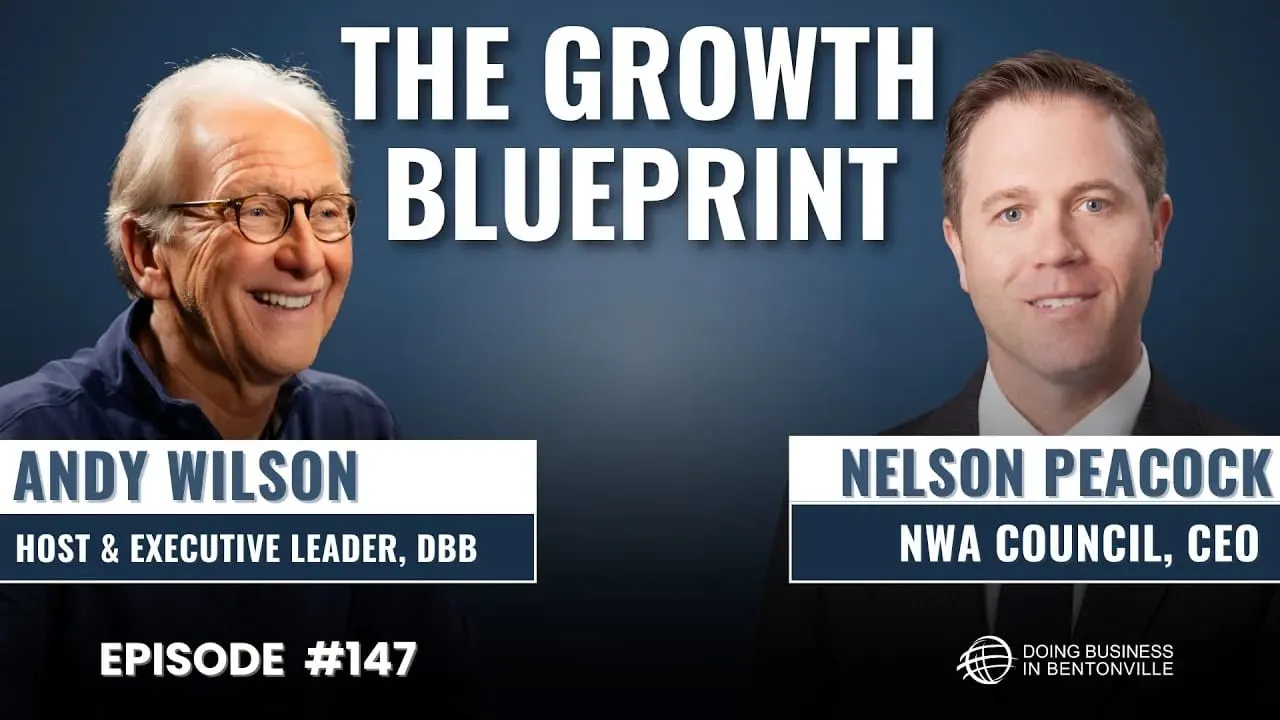
We sit down with Nelson Peacock, President and CEO of the Northwest Arkansas Council, to walk through a new long-range vision for managing growth across Benton and Washington counties. Nelson explains why quality of life is the region’s “secret sauce” for economic development and business growth, and why protecting regional character has to be the starting point. We get into the idea of creating more town centers and walkable hubs that bring jobs, services, and community closer together, helping reduce sprawl while keeping that Northwest Arkansas feel.
From there, we dig into the unglamorous but critical pieces: the true long-term cost of infrastructure, the need for housing options at every stage of life (including workforce housing and missing-middle homes), and why transportation planning can’t rely on I-49 alone. Nelson also breaks down why water and wastewater require regional cooperation, and how governance has to evolve when city decisions ripple across the entire corridor.
If you care about Northwest Arkansas, regional planning, housing affordability, smart growth, infrastructure, and what it takes to keep a place livable as it booms, you’ll get a lot from this conversation. Subscribe, share this with a friend who’s thinking about moving here, and leave us a review with your biggest hope for the region’s future.
More About this Episode
Anchoring the Future of Northwest Arkansas: A Vision for Regional Character and Sustainable Growth
Northwest Arkansas is at a pivotal crossroads. For decades, we have enjoyed a trajectory of growth that has been almost entirely positive. We have seen the rise of global giants like Walmart, Tyson Foods, and J.B. Hunt, alongside the evolution of the University of Arkansas into a premier research institution. This economic engine has been fueled by a secret sauce that many other regions envy: an exceptional quality of life. We have combined a robust economy with world class trails, a thriving arts scene, and a low stress community culture that makes people want to plant roots here.
However, as we look toward the year 2050, projections suggest our population will nearly double, reaching approximately one million residents. This level of growth brings a new set of challenges that we must address head on if we want to preserve the very soul of our region. We are already beginning to feel the pressures of increased traffic, rising housing costs, and the gradual loss of the green spaces that define our landscape. The question is no longer whether we will grow, but how we will grow.
To meet this moment, the Northwest Arkansas Council has spent the last year listening. We engaged in town halls, surveyed residents, and collaborated with municipal leaders to craft a path forward. Our strategy is built on the premise that we must anchor our future growth in our regional character. We cannot allow the growth to overwhelm the qualities that made us successful in the first place. This requires a shift from city by city competition to a unified regional vision.
Preserving Regional Character through Smart Urbanism
When we talk about anchoring growth in regional character, we are looking at the foundational DNA of our towns. Many of our communities were built around historic town squares established in the mid 1800s. These squares remain the heart of our regional identity. Our vision for the next twenty five years involves creating more of these "town centers" across the region.
By fostering pockets of what we call gentle density, we can create vibrant neighborhoods where jobs, services, and housing coexist. This isn't about building high rise skyscrapers; it is about creating walkable environments where a person might live near where they work or shop. Strengthening these centers helps reduce the outward sprawl that eats away at our rural landscapes and puts unnecessary pressure on our infrastructure. When we develop in areas where roads and water lines already exist, we grow in a way that is fiscally responsible and environmentally sustainable.
Strengthening Community Resilience and Fiscal Health
A critical component of our strategy is the focus on community resilience, particularly from a financial perspective. Every time a city builds a new road or extends a wastewater line, it creates a permanent liability. While these are essential assets, they require ongoing maintenance costs that can eventually drain a city's budget, leaving less money for parks, education, or public safety.
We are encouraging our regional partners to be strategic about infrastructure investment. This is especially vital for our smaller, fast growing towns that may not have full time planning departments. We want to provide the research and data necessary for these leaders to understand the long term fiscal implications of large scale developments. If we grow intelligently by utilizing existing infrastructure like the Highway 71 corridor, we can maintain the high level of service our residents expect without drowning in maintenance debt.
Housing Options for Every Life Stage
For years, Northwest Arkansas was the place where you could move from a coastal city, sell a modest home, and buy a "McMansion" with money left over. That dynamic is changing. As the region becomes more desirable, housing prices have naturally climbed. To keep our community vibrant, we must ensure that the people who serve our region—our teachers, firefighters, and nurses—can afford to live in the communities where they work.
Our research through the Groundwork initiative has shown a significant gap in our housing inventory. We have plenty of large single family homes and an increasing number of apartment complexes, but we lack the "missing middle." We need more duplexes, four plexes, and townhomes.
Housing optionality is essential for a healthy market. A young professional just starting their career might want a walkable lifestyle near a downtown center. A growing family might need the yard and the four bedroom house. But eventually, as those children leave for college, that same couple might want to downscale to a condo with less maintenance. Currently, many residents are "stuck" in homes that no longer suit their life stage because there are no viable alternatives. By increasing the diversity of our housing stock, we create a more dynamic market that offers flexibility and affordability for everyone.
Moving Toward Regional Governance
One of the most significant shifts we are proposing is a move toward more formal regional governance. Currently, we operate largely on a city by city basis. While this protects local identity, it can lead to massive inefficiencies when dealing with issues that do not respect jurisdictional boundaries—like water, transportation, and air quality.
If you look at other rapidly growing regions, such as those in Utah, they have successfully implemented councils of government to oversee regional infrastructure. We believe Northwest Arkansas is ready for a similar evolution. We need a unified approach to our wastewater systems to ensure we are using capacity efficiently and protecting our natural resources. We also need a regional strategy for our highways.
Our transportation needs are immense. Projections show roughly six billion dollars in highway needs over the next two decades, with only about half of that identified in current revenue streams. We must find new ways to fund and maintain our roads. Furthermore, we need better east west connectivity. Currently, almost all significant regional travel is forced onto I-49. By developing secondary routes and upgrading existing corridors like Highway 112, we can alleviate pressure on our main artery and create a more resilient transportation network.
Leading Together into 2050
The decisions made in Bentonville today will inevitably impact the residents of Rogers and Centerton. The growth in Springdale felt by those in Fayetteville. We are all tied together in a shared destiny.
The "Growing Home" vision is not just a report; it is a commitment to lead together. It is an acknowledgment that while we cherish our individual city identities, our greatest strength lies in our regional cooperation. By focusing on quality of life, fiscal responsibility, and inclusive housing, we can ensure that Northwest Arkansas remains a place of opportunity for generations to come.
We have the chance to do something rare: to grow significantly while maintaining the charm and character that made us fall in love with this region in the first place. It will require hard work, smart planning, and a willingness to think beyond city limits, but the foundation laid by our predecessors thirty six years ago proves that with a clear vision, we can achieve remarkable things.
We are building a future where our children can find a home, our businesses can thrive, and our natural beauty is preserved. This is our path forward, and we are excited to walk it together with every member of this community.