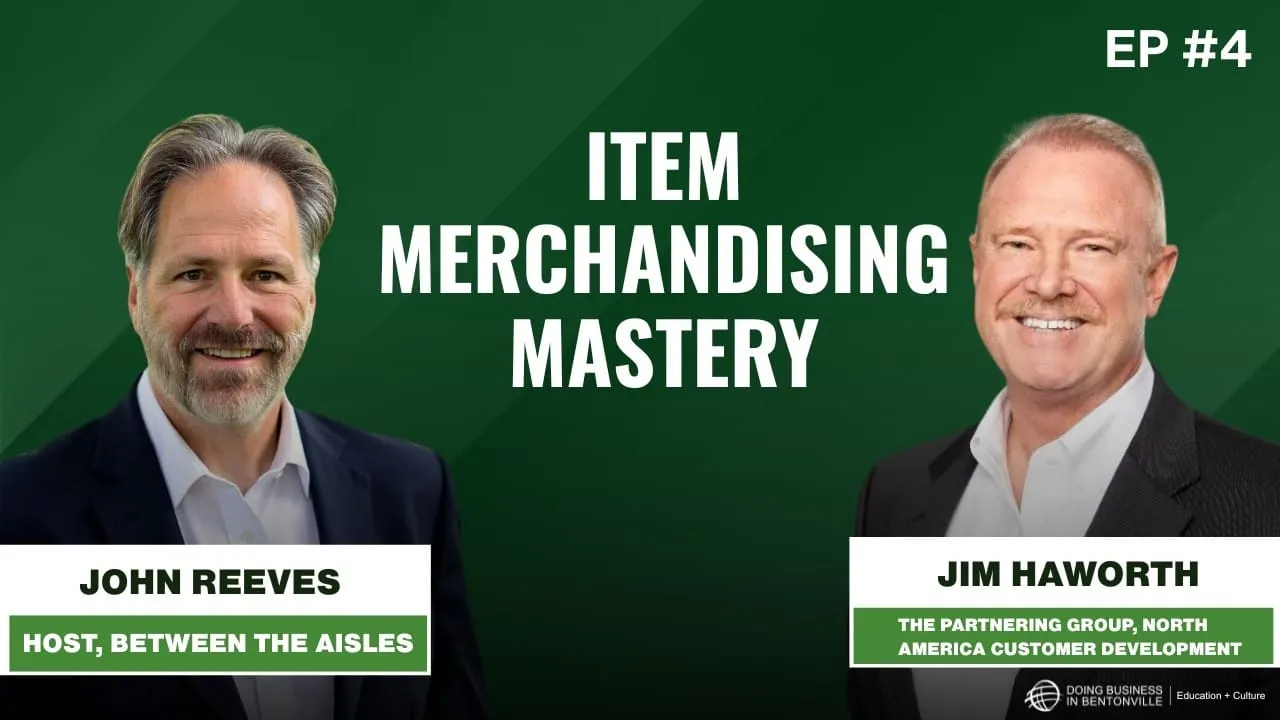
Factual data without deep customer obsession is just a spreadsheet, and culture without financial discipline is just a social club. In today's hyper-competitive business landscape, blending operational precision with genuine human connection is the only sustainable way to capture market share and defend margins. Former Walmart and Sam's Club Chief Operating Officer Jim Haworth joins the show to share his decades of executive leadership experience scaling global retail giants and directing brand turnarounds.
We sit down to unpack the mechanics of early metro market penetration and what it really took to go head-to-head against established discount chains in the trenches of Tulsa. Jim breaks down the distinct differences between standard assortment strategies and true pallet-driven item merchandising at Sam's Club, along with the operational adjustments required to run hypermarket stores in Shanghai. He also shares a core philosophy from his mentor network: sustainable growth relies on empowering the hourly associates on the shop floor and maintaining absolute respect for supplier relationships.
Scaling a business requires navigating brutal price wars, strict expense control, and the relentless travel demands of running international operations and live sports franchises. You will walk away with a clear framework for balancing strict financial accountability with treating people fairly, whether you are managing a complex supply chain or running a local storefront. The hardest lessons often come from the retail floor itself, where listening to the frontline workers loading the shelves matters far more than any executive theory.
If you care about item merchandising, corporate culture, and timeless retail operations, you’ll get a lot from this. Please subscribe to the Doing Business and Benbo podcast series and share this episode with a fellow operator or industry colleague. When you look at your own organization today, what is the single most important operational metric you rely on to gauge the health of your customer relationships?
More About this Episode
The Retail Operator's Playbook: Balancing Customer Obsession with Financial Discipline
Factual data without deep customer obsession is just a spreadsheet, and company culture without financial discipline is just a social club. In today's hyper-competitive business landscape, leaders are constantly told they must choose between operational precision and genuine human connection. The reality of modern commerce tells a completely different story. Blending strict financial accountability with a frontline-first culture is the only sustainable way to capture market share, defend operating margins, and build a brand that withstands the test of time.
Whether you are running a single local storefront or directing a global supply chain, the mechanics of sustainable growth remain remarkably consistent. Winning requires a relentless focus on unit economics, a deep respect for the hourly associates on the shop floor, and the strategic foresight to adapt item merchandising to changing consumer behaviors.
Here is a deep dive into the operational frameworks, merchandising strategies, and leadership principles required to scale retail organizations and drive successful brand turnarounds.
The Trenches of Market Penetration: Winning Against Entrenched Giants
Breaking into a new metro market against established discount chains is not for the faint of heart. When taking on entrenched competitors in highly contested regional markets, success cannot be achieved through clever marketing alone. It requires brutal operational efficiency and an unwavering commitment to everyday value.
When entering a competitive battleground, the primary objective is to establish immediate pricing authority while maintaining strict expense control. This requires a three-pronged operational strategy:
- Hyper-Local Supply Chain Density: Before opening doors to the public, your distribution network must be optimized to ensure daily shelf replenishment without inflating transportation costs. High out-of-stock rates during the initial launch window will permanently damage customer trust.
- Aggressive Expense Control: To survive brutal price wars, your overhead must be systematically lower than that of your competitors. Every dollar saved in administrative overhead is a dollar that can be reinvested into price leadership on the sales floor.
- The Hero SKU Strategy: You do not need to beat established chains on every single product line from day one. Instead, identify high-velocity, highly visible household staples and price them aggressively to break the consumer's habitual shopping patterns with legacy competitors.
Winning market share in tough regional markets teaches an invaluable operational lesson: customer loyalty is not bought through gimmicks. It is earned through the consistency of the shopping experience and the reliability of your pricing structure.
Standard Assortment vs. Pallet-Driven Item Merchandising
One of the most critical operational distinctions in modern retail is the fundamental difference between standard assortment strategies and true pallet-driven item merchandising. Misunderstanding this difference is why so many traditional retailers fail when attempting to scale high-volume, low-margin formats like warehouse clubs.
The Mechanics of Standard Assortment Merchandising
In a traditional retail store, the focus is on providing a comprehensive assortment within specific product categories. The merchandising goal is choice. You might offer twenty different brands of laundry detergent across five different shelf levels, catering to every conceivable consumer preference. While this drives high customer satisfaction for brand-loyal shoppers, it introduces significant operational friction:
- Higher inventory carrying costs due to broad SKU counts.
- Increased labor hours required for individual item stocking and shelf facing.
- Complex vendor management and supply chain forecasting across thousands of low-velocity items.
The Power of Pallet-Driven Item Merchandising
Pallet-driven merchandising operates on an entirely different set of unit economics. Instead of curating a broad assortment, the focus shifts to severe SKU rationalization and high-velocity item merchandising. You are not selling a category; you are selling a curated, high-value item directly off the shipping pallet.
This approach transforms store operations in several ways:
- Zero-Touch Replenishment: Products move directly from the distribution center dock to the sales floor on wooden or plastic pallets. By eliminating the need for associates to unpack boxes and place individual items on shelves, labor handling costs drop dramatically.
- Accelerated Inventory Turns: By offering only the top two or three fastest-moving items in a category at an unbeatable price point, inventory velocity skyrockets. In a well-executed pallet-driven model, inventory is often sold to the end consumer before the invoice is even due to the supplier, creating a powerful negative working capital cycle.
- The Treasure Hunt Experience: Item merchandising allows operators to introduce exciting, seasonal, or limited-buy items onto the floor alongside daily staples. This creates urgency for the consumer, driving larger basket sizes and repeat store visits.
Global Execution: Adapting the Hypermarket Model in International Markets
Scaling a retail model internationally is where theoretical leadership often collides with operational reality. A domestic strategy that generates billions in revenue at home can fail miserably if exported without cultural and structural adaptation. Taking the hypermarket model into complex global markets like Shanghai requires a profound willingness to adjust operational mechanics while preserving core financial discipline.
International expansion introduces severe logistical and operational variables:
- Real Estate and Foot Traffic Patterns: Unlike suburban American models that rely on sprawling parking lots and weekly bulk-shopping trips, urban hypermarkets in dense global cities must accommodate daily pedestrian traffic, smaller living spaces, and higher purchase frequencies with smaller basket sizes.
- Supply Chain Localization: You cannot efficiently ship domestic perishables halfway across the globe. Building an international footprint requires establishing an entirely new network of local agricultural, seafood, and manufacturing suppliers from scratch, adhering to local regulatory standards while enforcing strict quality controls.
- Consumer Palate and Assortment Shifts: In markets like Shanghai, the definition of freshness is radically different from western standards. Live seafood, daily harvest produce, and localized culinary items must take center stage on the retail floor. The physical layout of the store must be re-engineered to prioritize these high-touch, high-traffic zones.
Successfully managing international operations requires leaders who are willing to absorb the relentless travel demands and timezone challenges to inspect the floor in person. You cannot optimize a foreign supply chain from a corporate headquarters thousands of miles away.
The Heart of Sustainable Growth: Frontline Empowerment and Supplier Respect
When organizations experience rapid growth, corporate executives often fall into the trap of believing that success is generated in boardroom meetings. In reality, sustainable retail growth relies on two non-negotiable cultural pillars: empowering the hourly associates on the shop floor and maintaining absolute respect for supplier relationships.
Listening to the Shop Floor
The hardest and most valuable lessons in business come directly from the retail floor. The hourly associates loading the shelves, scanning the items, and greeting the customers know precisely where your operational bottlenecks are. They know which promotions are failing, which product packaging is prone to damage, and why checkout lines are stalling.
To build an organization that executes with precision, you must invert the traditional corporate hierarchy:
- Eliminate Operational Friction: Leadership's primary job is to remove the obstacles that prevent frontline workers from doing their jobs efficiently. If an associate tells you a piece of material handling equipment is slowing down pallet placement, fix it immediately.
- Decentralize Decision Making: Empower store managers and department leads to make real-time merchandising adjustments based on local store traffic and weather patterns. A rigid, centralized planogram fails when local market conditions shift unexpectedly.
- Reward Frontline Ownership: When hourly workers feel valued, fairly compensated, and heard, shrinkage decreases, customer satisfaction scores rise, and employee turnover plummets. In low-margin retail, high employee turnover is a silent killer of financial profitability.
Building Resilience Through Supplier Respect
In retail operations, your suppliers are not your adversaries; they are your operational partners. While strict expense control and aggressive negotiation are necessary to defend margins, treating suppliers with arrogance or disrespect is a catastrophic long-term strategy.
When global supply chains experience severe disruptions, suppliers face hard choices about where to allocate their limited inventory. Who receives the first shipment of high-demand products? The retailer who constantly attempts to squeeze every last cent out of the vendor through adversarial tactics, or the operator who negotiates fairly, pays invoices on time, and collaborates on long-term forecasting?
Respecting the supply chain means building transparent, data-sharing partnerships. When you help your suppliers reduce their own manufacturing and logistics costs through predictable volume forecasting, you create a shared margin pool that benefits both the manufacturer and the end consumer.
A Practical Framework for the Modern Operator
To successfully navigate today's retail environment, leaders must move away from isolated departments and adopt an integrated operational mindset. You do not have to choose between strict financial accountability and a positive workplace culture. In fact, you cannot achieve one without the other.
Here is your framework for operational balance:
- Audit Your Time on the Floor: Spend at least twenty percent of your work week walking the physical sales floor or distribution center dock. Engage with hourly workers without middle managers present to gather unfiltered operational intelligence.
- Focus on Velocity Over Variety: Regularly review your assortment. Identify dead inventory and slow-moving SKUs that are tying up working capital and labor hours. Replace them with high-velocity items that drive clear value for the consumer.
- Enforce Disciplined Expense Management: Treat every overhead expense as an ongoing interview for survival. Keep administrative costs lean so you can continuously invest in price competitiveness and frontline associate wages.
- Cultivate Vendor Transparency: Schedule quarterly business reviews with your top suppliers that focus not just on item cost, but on supply chain efficiency, collaborative forecasting, and mutual growth opportunities.
Factual data provides the roadmap, but customer obsession and frontline execution fuel the engine. When you build an organization where financial discipline is matched by a genuine respect for the people doing the physical work, you create a business that is virtually impossible to beat in any market.