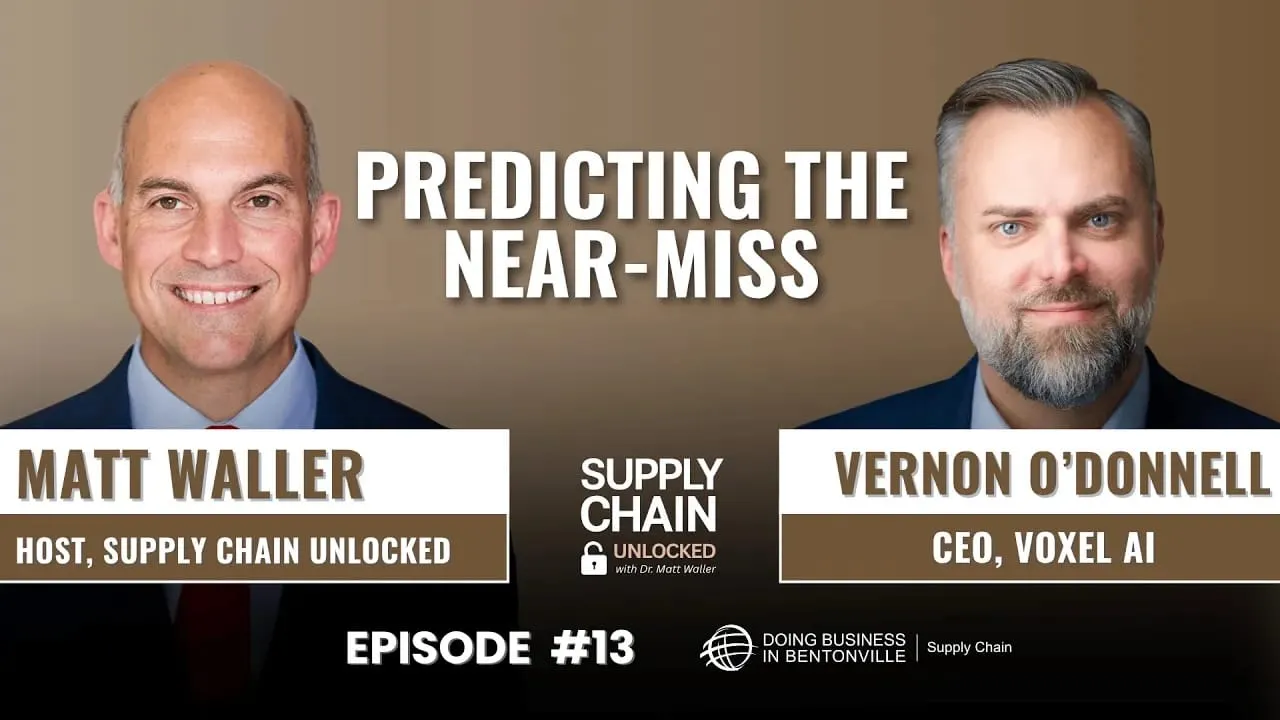
Safety is usually treated as a lagging indicator where leaders only react after a claim is filed or an injury occurs. This reactive stance is a massive profit leak and an avoidable human cost that traditional safety walks can no longer manage in complex industrial environments. Vernon O'Donnell, CEO of Voxel, explains how computer vision and AI are flipping this script by identifying risks before the collision happens.
We sit down to discuss the practical application of visual AI in distribution centers and manufacturing plants across the globe. The conversation covers the reduction of workers' comp claims through ergonomic heat maps, the removal of "noise" from thousands of daily alerts, and the transition toward 90% true automation in safety monitoring. Vernon shares how Voxel identifies operational choke points—like poorly managed dock doors or incorrect forklift governors—to solve the root causes of near-misses.
The unglamorous truth of industrial technology is that many companies fear a multi-year IT nightmare that never delivers. This episode highlights a shift toward lightweight edge devices and software integrations that provide measurable value in days rather than months. You will walk away with a clear understanding of how to treat safety as a strategic lever that increases throughput and reduces employee attrition rather than just a cost center or a compliance checkbox.
More About this Episode
The New Era of Industrial Intelligence: Safety as a Strategic Lever
In the high stakes world of industrial operations, safety has traditionally been viewed as a persistent challenge that we measure primarily after something goes wrong. For decades, the industry has relied on a reactive framework. We look at incident reports, workers’ compensation claims, and OSHA logs to tell us how safe we were yesterday. While these metrics provide a historical record, they do little to prevent the next accident from occurring. As we look at the landscape of modern logistics and manufacturing, it is clear that this old way of thinking is no longer sufficient. We need to flip the script entirely. Safety should not be an outcome you hope for at the end of a shift; it should be a strategic lever that you manage in real time.
By leveraging computer vision and artificial intelligence, we are moving beyond the era of post-mortems and into an era of proactive prevention. The goal is to identify risks before they manifest as injuries. This shift from reactive to proactive is not just a technological upgrade. It represents a fundamental change in how we value the human element within our supply chains. When we can see a risk coming and intervene before a person is hurt, we change the entire trajectory of an organization.
The scale of the problem in industrial environments is staggering. From massive distribution centers that span millions of square feet to complex manufacturing floors with hundreds of moving parts, the sheer volume of activity makes it impossible for human eyes to catch everything. Traditional safety programs rely on certified professionals walking the floor or on post-incident investigations. While these professionals are dedicated and necessary, they are inherently constrained by the limitations of human observation. A safety manager cannot be everywhere at once. When we integrated our technology across 250 sites worldwide, we saw an average reduction of 65 percent in workers’ compensation claims. That number is not just a statistic. It represents thousands of people going home to their families without injury every single day.
The Power of Computer Vision in Messy Environments
One of the biggest hurdles in applying technology to the warehouse or factory floor is the inherent messiness of the environment. These are not sterile laboratories. They are high velocity spaces with varying lighting, constant movement of forklifts, and congested aisles. A decade ago, computer vision struggled with this level of noise. The technology simply could not distinguish between a harmless shadow and a genuine hazard. However, the advancement in algorithmic depth and compute power over the last few years has created a sea change. We have reached a point where AI can see and understand the nuances of a busy warehouse floor with a level of precision that was previously unimaginable.
At Voxel, we have analyzed over five billion hours of video footage. This massive data set allows our models to parse out noise from actual risk with incredible detail. This is not about simple motion detection. It is about understanding the context of human movement and machine interaction. We focus on three primary categories of risk: human, vehicular, and environmental. Human risks involve ergonomics and the proper use of protective gear. We ask critical questions through our data. Are workers bending correctly, or are they overreaching in a way that leads to long-term shoulder injuries? These repetitive strain injuries are often the most common and costly issues in the workplace.
Vehicular risks involve forklift speeds and choke points where pedestrians and machinery interact. In a busy hub, the intersection of a person and a multi-ton machine is the highest risk zone. Environmental risks include spills, open dock doors, or cluttered aisles. These are the "silent" risks that often go unnoticed until someone slips or a forklift has to swerve. By processing existing camera feeds through our proprietary AI, we can identify these issues in near real time. We are talking about a window of 15 to 20 seconds from the moment an event occurs to the moment the data is captured. This speed is the difference between a near miss and a catastrophe.
Beyond Alerts: Data Driven Behavioral Change
A common concern when introducing AI into a workplace is the fear of being overwhelmed by alerts. If a system pings a manager every time a minor infraction occurs in a million square foot facility, the system will eventually be ignored. This is known as alert fatigue, and it is a real threat to the efficacy of any safety program. We solve this by making a clear distinction between data and alerts. Not every event requires an immediate siren or a text message. For something like ergonomic risk, you do not need an alert for every improper lift. Instead, you need data that identifies a hotspot.
Perhaps the data shows that on the second shift at the fresh dock, workers are consistently overreaching because of how cargo is stacked. This is where the true power of AI lies. We provide representative clips and heat maps so management can see the root cause of the behavior. This leads to systemic change rather than just punitive action. In many cases, what looks like a "bad habit" is actually a worker trying to do their job despite a flawed process.
For example, we worked with a Fortune 100 grocery retailer that saw frequent near misses at their dock doors. They could not figure out why these incidents kept happening until the AI revealed that an inefficient load and unload process was creating floor clutter. This clutter forced forklifts to veer into pedestrian lanes. The safety issue was actually a symptom of an operational bottleneck. By fixing the operation and clearing the flow, the safety problem vanished. This proves that data can bridge the gap between safety and operations in a way that benefits everyone.
Of course, for catastrophic risks, the approach changes. If the system detects someone working at heights without a harness or a forklift speeding toward a pedestrian, we trigger immediate alerts via SMS, email, or even IoT integrations like flashing lights in the warehouse. This ensures that life altering accidents are stopped in their tracks. By tiering the response based on the severity of the risk, we keep the management team focused on what matters most.
The Myth of the Safety versus Productivity Trade-off
There is an antiquated mindset that suggests you have to choose between being safe and being efficient. I have always detested the idea that safety is a drag on the bottom line. This myth persists because safety has historically been seen as a series of "stops" and "checks" that slow down the flow of work. In reality, a clean and safe environment is a more productive environment. Safety issues usually stem from unproductive habits or environmental chaos. When you eliminate the messiness that leads to accidents, you naturally improve the flow of goods.
We recently observed a cargo handling company that achieved a 15 percent increase in throughput alongside a 60 percent decrease in reportable injuries after implementing our platform. This was not a coincidence. By ensuring process compliance and reducing the uncertainty caused by accidents, they became a more reliable link in the supply chain. From an inventory perspective, reducing accidents also reduces the need for excessive safety stock. If a distribution center is consistent and safe, there are fewer delayed shipments or improperly filled trailers. This directly impacts the top line of the retail stores they serve. When things run smoothly, they run safely. When they run safely, they run fast.
The financial implications of this are massive. The indirect costs of an accident including lost productivity, administrative time, and damaged morale can be three to five times the direct cost of the medical claim. By treating safety as a core operational metric, companies can unlock significant hidden value. We are moving toward a world where the Chief Safety Officer and the Chief Operating Officer are looking at the same dashboard because their goals are perfectly aligned.
Human Centered AI and Culture
At the heart of this technological revolution is the worker. We take a very human centered approach to AI. It is not about automation or replacing workers. It is about providing intelligence to make the job better. One of the most important aspects of our deployment is privacy and trust. To protect privacy and focus on coaching rather than punishment, our system blurs faces. We want the technology to be viewed as a tool for positive reinforcement.
We even identify positive behaviors. For example, if the system sees a two-man lift for a heavy object, we flag that as a success. This allows management to recognize and reward best practices. This shift in culture is profound. Instead of the safety manager only showing up when something is wrong, they can now celebrate when things are being done right. This focus on a better work environment has an unexpected but significant impact on employee retention. In an era where competition for skilled labor is fierce, people want to work in facilities where they feel safe and valued.
Employees do not want to work in an environment where forklifts are driven like maniacs or where they feel their physical health is being compromised for a quota. When a company invests in safety technology, it sends a clear message to the workforce that their well being is a priority. We have seen a measurable decrease in attrition at sites using Voxel compared to those that do not. Safety is a retention strategy. It builds a culture of care that resonates far beyond the walls of the warehouse.
Rapid Deployment and Measurable ROI
In the past, implementing large scale warehouse management or transportation systems took months or even years. The complexity of the hardware and the need for extensive training often acted as a barrier to innovation. Modern AI does not have to be that way. Because our solution is purely software based and integrates with existing camera infrastructure, we can have a site live in about three weeks. We do not need to tear out wires or install thousands of new sensors. We use what is already there and make it smarter.
This speed of deployment allows for rapid scaling. We have deployed across 50 sites in 16 different countries for a single customer in just over four months. In the world of enterprise software, that is lightning fast. The return on investment is demonstrable and fast as well. We typically see a three to four times ROI in the first year alone. This is calculated through the direct reduction of insurance claims, OSHA fines, and lost workdays. When you move safety from a hidden cost to a visible, manageable metric, the financial benefits follow immediately.
The visibility provided by AI also helps in negotiations with insurance carriers. When a company can prove they have real time monitoring and a proactive safety culture, they are in a much stronger position to manage their premiums and self insured retentions. The data provides a layer of transparency that has never existed in the industrial sector before.
The Future of Industrial Safety
As we look toward the future, the goal remains the same. We want to use cutting edge technology to solve achievable, real world problems. We are bringing in the best engineers from institutions like Carnegie Mellon and Caltech because they want to work on a mission that has an immediate, positive impact on people’s lives. There is a profound sense of purpose in this work. Every time we prevent a collision or correct a dangerous ergonomic trend, we are proving that technology can be both high performance and high purpose.
The industrial world is the backbone of our global economy. It is where the physical goods we rely on are made, moved, and stored. For too long, the people doing this essential work have operated in a "blind spot" when it comes to technology. By bringing the power of AI to the warehouse floor, we are finally giving safety the tools it deserves. We are moving toward a world where industrial accidents are not an inevitable part of doing business, but a challenge that we have the intelligence to overcome. This is the new standard for excellence in operations. It is a world where safety is seen as a competitive advantage and where every worker can walk into their job knowing that the most advanced technology on the planet is looking out for them.