
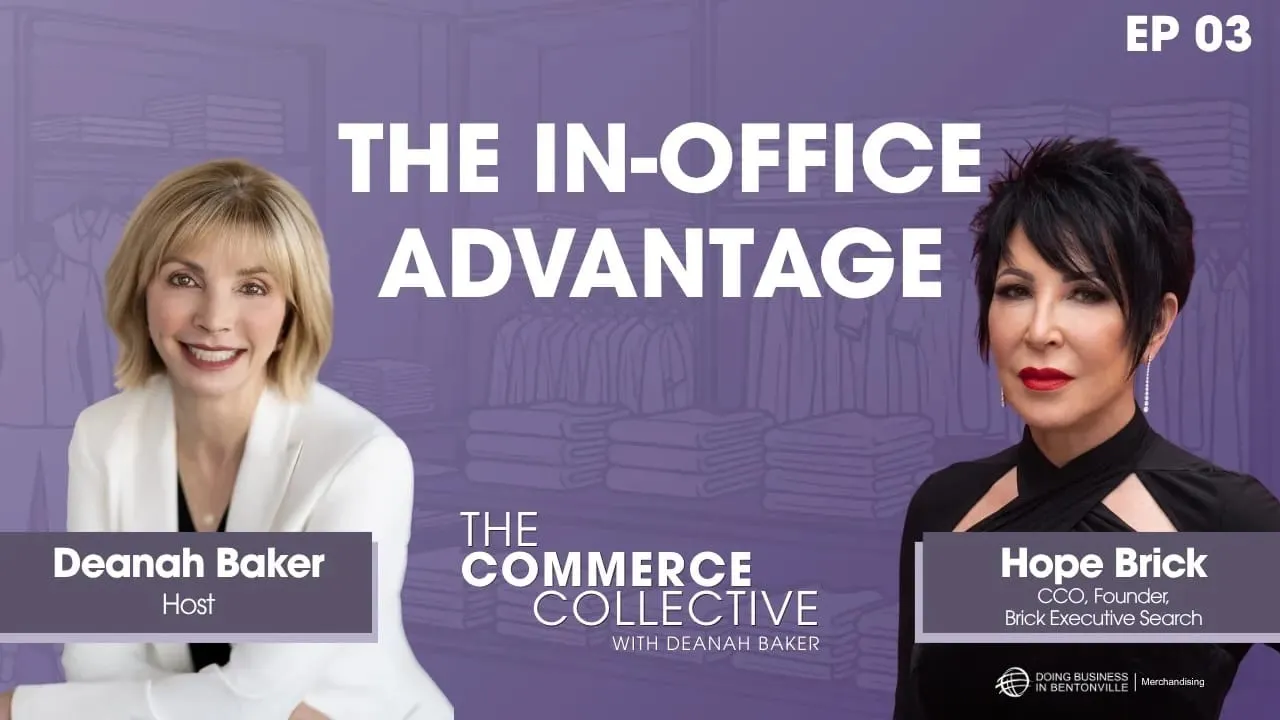
The power dynamic between employers and employees is hitting a massive breaking point. While candidates continue to demand absolute flexibility, remote setups, and rapid-fire salary bumps, business leaders are realizing that fragmented teams are quietly leaking profit, culture, and alignment. The gap between what talent wants and what a company actually needs to survive is wider than ever, and those who refuse to adapt are unknowingly leaving their careers on the table.
We sit down with Hope Brick, founder and CEO of Brick Executive Search, to dissect what is really happening behind closed doors in retail and consumer brand recruiting. Drawing from her thirty years of industry experience and her current front-row seat to matching C-suite talent, Hope pulls back the curtain on the changing landscape of executive hiring. We dive deep into why excessive job-hopping is destroying candidate credibility, the hidden overhead costs that make remote employees incredibly expensive to onboard, and the undeniable advantage of being physically "seen" by decision-makers. Hope also shares a powerful, real-life story of how a simple corridor interaction in the Empire State Building fast-tracked a young professional's career in a way that Zoom never could.
The reality of today’s market is that convenience often comes at the expense of mentorship. Building a legendary career requires sweat equity, and the silent cost of working from your laundry room is the forfeiture of organic, vicarious learning that only happens shoulder-to-shoulder. While technology like AI is excellent for removing administrative friction, it cannot replace the human intuition required to steer a major brand through economic uncertainty.
If you care about building resilient organizational cultures, navigating executive career progression, and understanding the macro trends shaping the future of work, you'll get a lot of value from this conversation. Please subscribe and share this episode with a colleague who is currently navigating the return-to-office transition.
What do you think is the biggest thing lost when teams go fully remote? Let us know your thoughts in the comments below!
More About this Episode
The Hidden Costs of the Remote Work Divide: Why Mentorship, Proximity, and Executive Leadership Still Win
The power dynamic between employers and employees has reached a critical breaking point. Over the past several years, the corporate landscape witnessed an unprecedented shift where candidates held nearly absolute leverage. Today, professional talent continues to demand total flexibility, fully remote setups, and rapid-fire compensation increases as standard requirements. Yet, behind closed doors in executive suites and boardroom meetings, business leaders are confronting a starkly different operational reality. They are discovering that highly fragmented, fully remote teams are quietly leaking profit, diluting corporate culture, and eroding strategic alignment.
The gap between what modern talent desires for personal convenience and what organizations require to survive in a volatile economy has never been wider. Professionals who refuse to recognize this fundamental shift and adapt to core business needs are unknowingly leaving their long-term career growth, earning potential, and executive trajectory on the table. Understanding this evolving landscape requires looking past surface-level hiring trends to examine the internal mechanics of retail, consumer goods, and C-suite recruiting.
Through the lens of executive talent acquisition and thirty years of industry evolution, a clear pattern emerges regarding how organizations are restructuring their leadership teams. Insights from Hope Brick, founder and CEO of Brick Executive Search, shed light on the realities of matching high-level executives with major consumer brands. By analyzing the current friction between flexibility and business performance, professionals and organizations alike can navigate the return-to-office transition and build sustainable, resilient careers.
The Evolution of Executive Search and the Shift in Market Leverage
To understand the current tension in the labor market, one must look at how retail, wholesale, and consumer brand leadership has evolved over the last three decades. The industry has moved through distinct cycles of boom and consolidation, but the foundational criteria for exceptional leadership have remained remarkably constant. Seasoned executive recruiters and C-suite leaders who have managed major turnarounds across global brands know that sustainable business growth relies entirely on high-impact teams.
In recent years, an artificial talent bubble created an environment where candidates could dictate terms without necessarily demonstrating the long-term commitment historically required for executive advancement. Today, that bubble is deflating. Decision-makers at top-tier consumer packaged goods and retail organizations are tightening their hiring criteria. They are moving away from speculative hiring and focusing intensely on proven commercial performance, operational rigor, and cultural alignment.
When executive search partners evaluate C-suite and managerial talent today, they are looking for candidates who embody three essential traits: they must be genuinely hungry, humble, and hardworking. This is not merely a recruitment catchphrase; it represents a fundamental shift back to foundational business values. Being "hungry" means demonstrating a relentless drive to solve complex operational challenges and grow revenue. Being "humble" requires the self-awareness to take accountability when strategies fail and to value cross-functional collaboration over individual ego. Being "hardworking" is about understanding that steering a major brand through economic uncertainty requires undeniable grit and focus. Candidates who exhibit these qualities are capturing the attention of boardrooms, while those who rely solely on past credentials while demanding frictionless work arrangements are finding themselves sidelined.
The Friction Point: Absolute Flexibility Versus Core Business Needs
The core friction in today's executive job market centers on a fundamental misunderstanding of organizational resilience. From an individual employee's perspective, absolute workplace flexibility is viewed as a standard benefit that enhances work-life balance. However, from the perspective of a chief executive officer or managing partner tasked with protecting a company's bottom line, absolute flexibility often translates into operational drag.
In fast-paced sectors like fashion retail, consumer goods, and global manufacturing, timing and cross-departmental synergy are everything. When product development managers, merchandising vice presidents, and wholesale directors operate in isolated silos, the speed of innovation dramatically slows down. A decision regarding supply chain logistics, pricing targets, or material sourcing that could be resolved in a five-minute, impromptu conversation in an office hallway often turns into a three-day email chain or a series of disjointed video conferences.
Business leaders are not pushing for a return to physical workspaces out of a desire to micromanage; they are doing so because they recognize that innovation is inherently collaborative. Building a brand that captures consumer loyalty requires spontaneous problem-solving, rapid brainstorming, and a unified sense of urgency. When an organization's workforce is entirely distributed across different time zones and communicating exclusively through scheduled calendar invites, the collective energy required to outpace competitors begins to dissipate. The companies that are currently thriving are those where leaders have established a clear boundary: flexibility is supported where it makes sense, but it can never come at the expense of core business needs and commercial execution.
The True Cost of Demanding Fully Remote Work
One of the most overlooked realities in modern hiring is the hidden financial and operational overhead associated with fully remote employees. While candidates often assume that working from home saves the company money on real estate and office overhead, the actual cost of onboarding, integrating, and managing remote talent is exceptionally high.
When an executive is hired into a remote setting, the organic assimilation into the company's culture is severed. In a physical environment, new hires absorb corporate values, communication nuances, and institutional knowledge simply by observing their peers and leadership in real time. In a fully remote setup, every piece of cultural context and operational training must be formalized, scheduled, and digitally delivered. This creates an enormous administrative burden on existing teams and leadership. Furthermore, remote integration frequently leads to slower ramp-up times, higher rates of miscommunication, and a greater likelihood of early turnover.
Beyond the onboarding costs, demanding a permanent remote setup can actively damage a candidate's credibility and career trajectory during the recruitment process. Excessive job-hopping combined with rigid demands for remote isolation signals to prospective employers that the candidate prioritizes personal convenience over organizational mission. In competitive executive search scenarios, when two candidates possess identical technical qualifications and industry experience, the candidate who demonstrates a willingness to be present, collaborate in person, and invest tangible energy into the company's physical ecosystem will win the offer every single time. Business leaders are increasingly treating rigid remote demands as a risk factor, viewing them as an indicator of potential detachment from the company's long-term survival.
The Proximity Advantage: Why Being Seen Drives Career Acceleration
There is an undeniable, powerful advantage to being physically seen by decision-makers. While digital tools have made it possible to execute isolated tasks from anywhere in the world, they have completely failed to replicate the relational dynamics that drive career acceleration. Proximity to leadership builds trust, fosters organic mentorship, and keeps high-performing individuals top-of-mind when promotional opportunities and high-stakes projects arise.
Consider the dynamic of a casual encounter in a busy corporate corridor. A powerful real-life example of this occurred in the corridors of the Empire State Building, where a simple, unplanned interaction between a young professional and a senior executive altered the trajectory of a career in minutes. An informal conversation about a product line, a quick exchange of ideas while waiting for an elevator, or an impromptu invitation to sit in on a high-level strategy meeting provides exposure that a video conference screen simply cannot offer. That corridor interaction fast-tracked a young talent's progression because the executive was able to witness their curiosity, energy, and communication style firsthand. Zoom meetings, by their very nature, are transactional; they have clear start and end times, rigid agendas, and an invisible barrier that prevents spontaneous human connection.
The silent cost of building a career exclusively from a home office or a laundry room is the complete forfeiture of organic, vicarious learning. Exceptional professional judgment is rarely learned from textbooks or formal training modules. It is acquired shoulder-to-shoulder with veteran leaders. Young professionals and mid-career managers learn how to navigate crisis, negotiate difficult terms, and lead diverse teams by watching how seasoned executives carry themselves under pressure. When talent removes itself from the physical room, they voluntarily cut themselves off from the most valuable educational currency in the business world: observational mentorship.
Raising the Next Generation of Leaders: Sweat Equity in the Age of AI
As organizations look toward the future, the challenge of raising the next generation of resilient leaders is complicated by the rapid integration of artificial intelligence and automated technologies. AI is proving to be an extraordinary tool for removing administrative friction, analyzing market trends, optimizing supply chain models, and streamlining workflow efficiencies. However, there is a dangerous misconception that technological efficiency can replace human leadership.
Artificial intelligence cannot replicate the human intuition required to steer a major retail or consumer brand through periods of intense economic volatility. Algorithms can predict inventory turnover based on historical data, but they cannot read the emotional room of a struggling executive team, negotiate a critical partnership with an overseas vendor, or inspire a creative department to reimagine a brand's identity. Those competencies require emotional intelligence, deep industry experience, and hard-earned intuition.
Developing that level of intuition requires what has historically been known as sweat equity. Building a legendary career demands putting in the hours, embracing difficult operational assignments, and actively participating in the messy, collaborative process of building a business from the ground up. To cultivate the next generation of executive talent, established leaders must re-emphasize the value of presence and persistence. Mentorship cannot be treated as an optional HR initiative; it must be treated as a core operational strategy. Executive leaders must create environments where returning to the office is not seen as a compliance mandate, but as an invaluable opportunity for professional development, collaborative problem-solving, and shared success.
Aligning Career Strategy with Organizational Reality
We are witnessing a fundamental realignment in the professional world. The era of unchecked employee leverage that prioritized isolation over integration is giving way to a more balanced, reality-driven paradigm. Organizations that want to survive and thrive in a competitive global marketplace must build cohesive, aligned teams that are deeply invested in a shared mission. Conversely, ambitious professionals who aspire to reach the C-suite and build enduring careers must recognize that true value is created through collaboration, adaptability, and visible commitment.
Bridging the gap between candidate expectations and business survival requires honesty from both sides of the hiring table. Companies must ensure that when they ask employees to show up in person, they are providing genuine mentorship, meaningful collaborative work, and a vibrant culture that justifies the commute. At the same time, professionals must understand that convenience is not the ultimate currency of career success. By leaning into sweat equity, valuing shoulder-to-shoulder mentorship, and aligning their personal ambition with the foundational needs of the business, aspiring leaders can future-proof their careers and position themselves at the forefront of the modern economy.