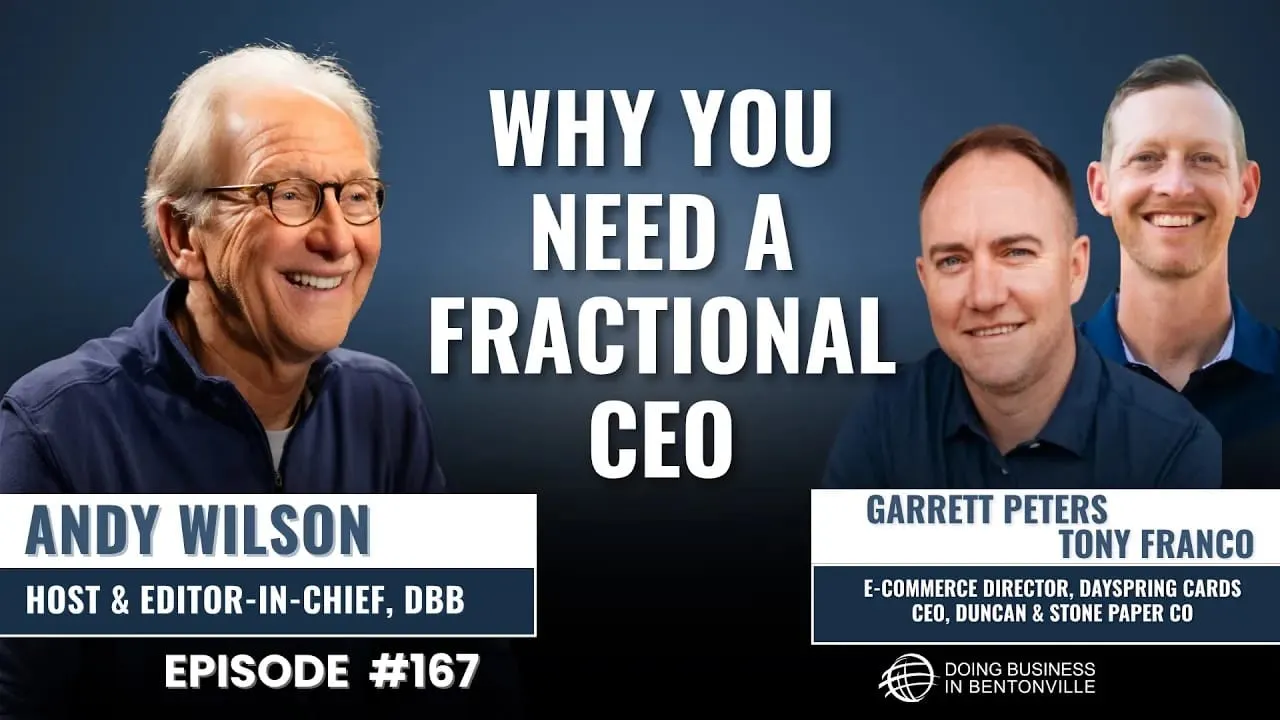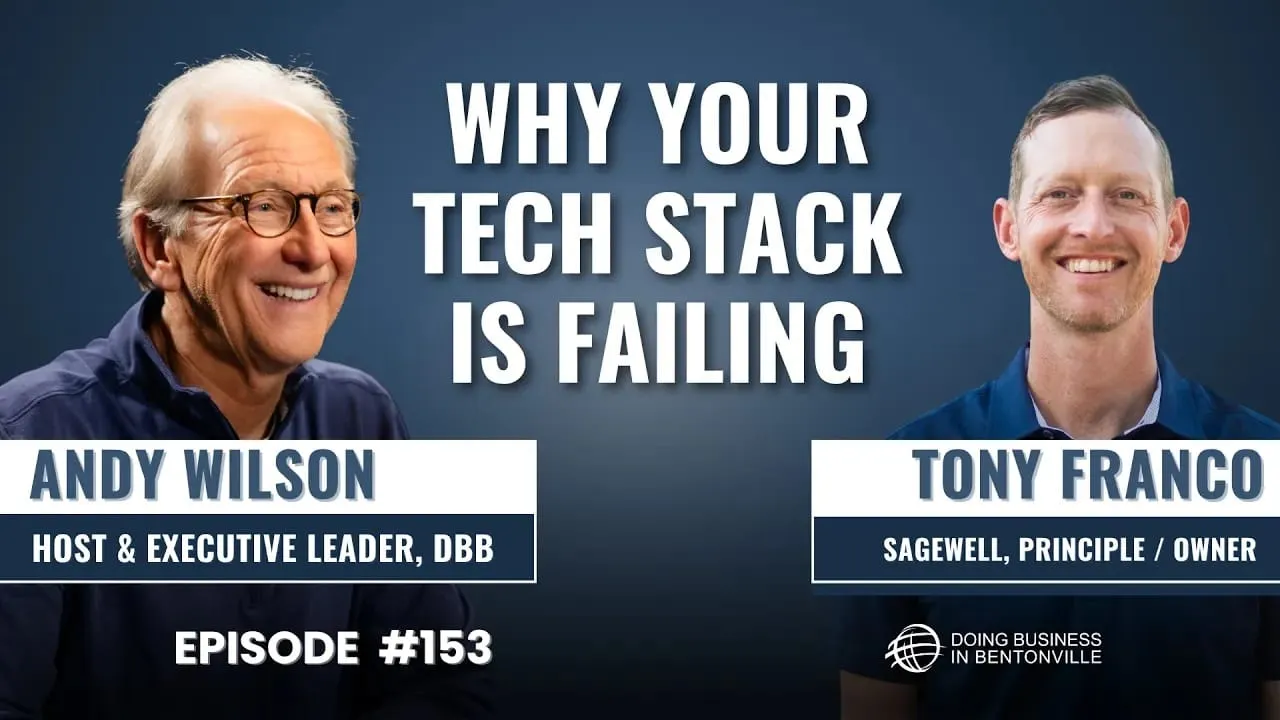
Pushing a business past the point of structural failure because you refuse to let go is the fastest way to kill it. The skills required to launch a startup are rarely the exact same operations needed to scale one, making the transition period critical for long-term survival. Tony Franco, a Fractional COO at Sagewell Advisors, sits down to explain how embedded, part-time leadership can rescue companies from their own operational bottlenecks.
We get into the actual mechanics of breaking out of the "founder trap" before a crisis forces your hand. This conversation breaks down the necessity of clean data architecture, simplifying a bloated SaaS tech stack, and narrowing your daily focus to three or four bellwether KPIs. A core philosophy Tony shares is that operations must serve the people, and if you find your team constantly feeding a broken system instead of growing the business, that process needs to be eliminated immediately.
Scaling a company often takes a brutal toll on a founder's mental health, personal relationships, and overall identity, leaving them isolated when the initial growth stalls. You will walk away from this discussion with a clear understanding of how to audit your internal systems, why implementing AI over bad data will simply compound your fragility, and how to find hidden margins within your own supply chain when facing heavy external retail price pressures.
If you care about process optimization, sustainable scaling, and mitigating operational risk, you’ll get a lot from this. Please subscribe and share this episode with an operator who needs to hear it. What is the single biggest operational bottleneck currently slowing down your daily workflow?
More About this Episode
Scaling Your Business and Overcoming the Founder Trap with a Fractional Executive
As a business owner or startup leader, you pour your blood, sweat, and tears into building your organization from the ground up. You possess a unique grit and tenacity that makes the impossible happen. However, the very superpowers that helped you launch your business can eventually become the exact bottlenecks that prevent it from scaling. I have seen this transition play out time and time again in the business world, and it is a critical inflection point that dictates whether a company will thrive or stall.
Today, we are diving deep into a strategic approach that remains underutilized by many midsize and startup organizations. We are talking about the fractional executive model. To understand this concept fully, I recently sat down with Tony Franco, a highly experienced fractional COO and the mind behind Sagewell Advisors. Our discussion illuminated the incredible value of bringing in part-time, embedded leadership to help navigate the complex hurdles of business growth.
Decoding the Fractional Executive Model
When we hear the term "fractional executive," it can sometimes sound intimidating or overly corporate. In reality, fractional simply means part-time. It is a highly effective, economical strategy for businesses that need top-tier leadership but are not quite ready to sustain a full-time, C-suite salary.
Many business owners assume that bringing in an external executive means hiring a traditional consultant who will swoop in, deliver a high-level presentation, and leave the execution to an already overworked team. The true fractional model is entirely different. A fractional Chief Operating Officer, for instance, embeds themselves directly into your organization. They roll up their sleeves and get to work alongside your team.
This approach is incredibly valuable for startups and midsize operations. You gain access to decades of deep, specialized experience on a budget that makes sense for your current financial realities. These leaders do not just offer advice. They build trust by tackling immediate operational obstacles and proving their value on the ground floor before architecting long-term growth strategies.
Recognizing and Overcoming the Founder Trap
One of the most profound challenges we explored is what is commonly known as the founder trap. In the early days of a startup, the founder must have their hands on everything. Your business is essentially a fingerprint of your own identity. You are intimately involved in product development, marketing, hiring, and even taking out the trash.
However, as the business begins to climb and gain traction, this centralized control mechanism begins to choke the organization. You might notice that your growth has plateaued, or perhaps you are not hiring the right people. Worse, you might feel an overwhelming sense of burnout.
The founder trap is deeply personal. Business leaders often push themselves far beyond a healthy threshold. They lose sleep, their personal relationships become strained, and the joy that once fueled their entrepreneurial journey completely evaporates. Because their identity is so tightly wrapped up in the company, they lose the objective perspective required to think about the business in a fresh, innovative way.
The key to overcoming the founder trap is recognizing that the methods that got you to your current level of success will not get you to the next. You must bring in outside help before you reach a state of absolute crisis. A fractional leader can walk alongside you, objectively assess the state of your operations, and institute tried and true business systems. This allows the founder to step back from the daily chaotic fires and return to their true superpower of visionary leadership.
The Reality of AI and Business Process Optimization
It is impossible to discuss the future of business operations without addressing Artificial Intelligence. AI is a required topic of conversation for any forward-thinking organization. The market is flooded with software-as-a-service solutions and AI tools that promise to revolutionize your workflow.
However, there is a massive warning sign that every business leader must heed. Operations must exist to serve the people, not the other way around. If you or your team find yourselves endlessly feeding data into a machine or managing convoluted software processes that drain your energy, you need to stop immediately.
AI possesses incredible power, but it will rapidly compound the fragility of your business if your foundational operations are unstable. If your company data is messy, if your team members lack clarity on their specific roles, or if you do not have a sharp understanding of your target customer, AI will simply make those problems worse at a much faster rate. It accelerates failure in broken systems.
Before you invest heavily in the newest technology, you must achieve operational readiness. Use technology and AI to shore up your fundamental processes. Fix your bad data, clarify your organizational chart, and streamline your workflows.
Furthermore, avoid the temptation to build a fractured stack of technology tools. It is incredibly common for businesses to utilize only a tiny fraction of the capabilities offered by dozens of expensive software platforms. You are far better off selecting a small handful of robust tools and training your team to utilize them fully. Consolidating your technology stack saves money and significantly reduces operational friction.
Narrowing Focus Through KPI Tracking
When it comes to analyzing the health of a business, many leaders fall into the trap of analysis paralysis. It is easy to construct massive, complex dashboards featuring forty different metrics and key performance indicators. The problem with this approach is that it rarely leads to actionable insights. You can spend an entire hour-long meeting just trying to understand the data, only to walk away without a clear directive on what to do next.
Effective business leadership requires a drastically narrowed focus. For optimal health tracking, you should identify just three or four vital metrics. These core KPIs act as the true bellwethers for your organization.
When you look at a refined list of crucial metrics on a Monday morning, you instantly know what actions to take. You know where to pour more resources and where to pull back. The vast majority of businesses are truly driven by just a few foundational levers. The rest of the data often serves as nothing more than a distraction. By narrowing your focus, you empower your team to make swift, confident decisions.
Navigating the Retail Supplier Landscape
For businesses operating in hubs like Northwest Arkansas, or anyone looking to break into major big box retail channels, there are distinct challenges and opportunities regarding vendor relationships. Securing space on the shelves of the largest retailers in the world is a massive accomplishment that creates immense gravity for a brand.
However, scaling into multi-channel retail brings intense external pressure on your pricing and margins. Founders who have enjoyed comfortable profit margins in a direct-to-consumer model are often shocked by the financial realities of large-scale retail distribution.
While you cannot always control the external pressures of the retail market, you absolutely can control your internal operations. This is where operational optimization becomes your greatest asset. You can reclaim your profit margins by tackling the unglamorous, unsexy work of tightening your supply chain.
Look closely at your inventory management. Do you have products sitting idle in warehouses? Is your data disorganized, leading to costly communication errors and a thousand minor paper cuts across your organization? By running a well-oiled, hyper-efficient business, you create internal cost savings that protect your bottom line against external retail pressures.
Actionable Steps for Sustainable Growth
If you recognize your own struggles in this discussion, it is time to take decisive action. Scaling a business requires intentional design and a willingness to ask for help. Here are the key steps you need to take to optimize your operations and prepare for the next stage of growth.
1. Name Your Systems: First, you must identify and name the systems currently running your business. Every business operates on systems, even if those systems are chaotic and reactive. If your current operational strategy consists of constantly putting out the next immediate fire, that is your system. By naming your processes, such as your cash flow system or your inventory management system, you take the first step in reclaiming control over them. Language is empowering, and clearly defining your operational reality allows you to start improving it.
2. Seek Out Specialized Help. Second, seek out specialized help to overcome immediate hurdles. You do not have to commit to a massive organizational overhaul right away. If you are curious about the fractional executive model, find a leader with deep expertise and bring them in for a narrowly scoped project.
3. Build Trust Through Execution. Give your fractional partner a specific, tangible problem to solve. This allows you to evaluate their impact without introducing unnecessary chaos into your daily operations. Once they prove their value and build trust by solving that initial pain point, you can confidently integrate them into your broader strategic planning.
Growing a business is incredibly demanding, but you do not have to navigate the journey alone. Reaching out for specialized, fractional support might be the exact catalyst you need to avoid burnout, streamline your operations, and build a truly resilient organization.