U.S. Crude Inventories Hit Near-Year Low Amid Record Exports and Global Disruptions
The United States has witnessed an unprecedented decline in its crude oil inventories, signaling significant shifts in global energy markets and highlighting the nation's pivotal role as a major supplier. This dramatic drop, fueled by soaring exports and strategic reserve releases, holds critical implications for businesses, supply chains, and consumer costs worldwide.
Industry professionals and local stakeholders need to understand the underlying dynamics of these market movements, which directly influence operational expenses and consumer behavior in the retail and logistics sectors. The ongoing evolution of global trade and supply disruptions necessitates a keen awareness of such developments for effective corporate strategy and business dynamics.
U.S. Emerges as a Critical Global Energy Supplier
U.S. crude inventories, encompassing strategic reserves, plummeted by a record 17.8 million barrels recently, marking the lowest levels observed in nearly a year. Excluding these strategic reserves, nationwide petroleum stocks still decreased by approximately 9 million barrels last week, according to data from the U.S. Energy Information Administration.
America has strategically positioned itself as a significant global supplier, especially as geopolitical events, such as the war in Iran, have disrupted access to Middle Eastern barrels for key buyers in Asia and Europe. This shift underscores the increasing interconnection of global supply chains and the immediate impact of regional conflicts on international commerce.
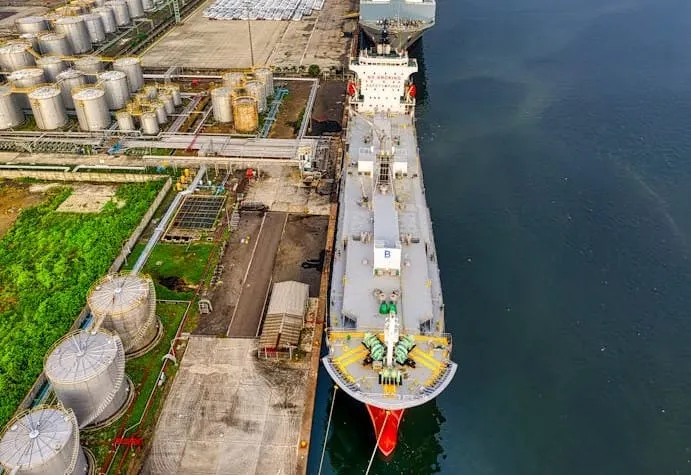
Overseas crude shipments have maintained an average of 5.3 million barrels a day this month, a pace that, if sustained, would establish a new historical record for the nation. The United States recently achieved the notable milestone of becoming a net-exporter of crude oil for the first time on record, fundamentally altering its position in the international energy landscape.
The effective blockage of the Strait of Hormuz, a critical chokepoint accounting for about a fifth of the world’s oil flows, has created a significant global crude supply shortfall. This disruption has compelled buyers worldwide to actively seek and secure alternative sources, further intensifying demand for U.S. crude oil exports.
Domestic Supply Cushions Erode Amid Strategic Releases
In an effort to mitigate the profound impact of the global supply shock, the U.S. has significantly tapped into its Strategic Petroleum Reserve (SPR), which consists entirely of crude oil. The flow of strategic reserve barrels into the market escalated to an unparalleled 1.4 million barrels a day last week, marking the biggest weekly pace on record.
Some of these critical strategic reserve barrels are being directed overseas to further cushion the international impact of the war-related supply disruptions. This dual strategy of increased exports and SPR releases is aimed at stabilizing global energy markets, though it has direct consequences for domestic supply levels.
The erosion of America’s oil supply cushion is occurring at a critical juncture, coinciding with the onset of peak summer driving demand, when consumer consumption typically surges. This confluence of factors places additional pressure on domestic energy resources and directly influences consumer purchasing power.
Pump prices across the U.S. have notably surged since the war began, with the national average now exceeding $4.55 per gallon, a level approaching highs last seen in 2022. Such elevated fuel costs have implications for retail logistics, transportation expenses, and ultimately, the broader economy and omnichannel retail operations.
Broader Implications for Business and Corporate Strategy
The current dynamics in the U.S. energy sector have far-reaching implications for corporate strategy, particularly within supply chain management and retail operations. Businesses must adapt to volatile energy costs, which directly affect transportation budgets, manufacturing expenses, and overall profitability.
For industry leaders, these developments underscore the importance of robust risk management and strategic sourcing within their global supply chain frameworks. The interconnectedness of energy markets with technology advancements and labor considerations means that fluctuations reverberate across multiple business functions.
The rising pump prices also have political ramifications, likely adding pressure on U.S. President Donald Trump to facilitate the resumption of oil flow through the Strait of Hormuz. This is especially pertinent with midterm elections approaching, as energy costs are a significant concern for the electorate.
Understanding these complex interdependencies is crucial for all stakeholders, from investors monitoring market stability to educational institutions preparing future supply chain professionals. The ability to navigate these global energy shifts will define success for businesses operating in today's dynamic environment.