

The retail industry is witnessing a pivotal change as Nordstrom and Macy's shift from traditional inventory accounting to cost-based methods, providing a clearer picture of profitability. This evolution emphasizes the need for accuracy and adaptability in modern retail to enhance financial health and transparency.
• Nordstrom and Macy's lead a transition in inventory accounting
• Traditional retail accounting creates distorted financial metrics
• Cost accounting offers a clearer view of profitability
• Advanced technology enables accurate financial tracking
• A broader trend in the retail industry emphasizes accuracy
• This shift is essential for competitiveness and investor appeal

Nordstrom and Macy’s Bold Move Towards Financial Clarity
Retailers examine new best practices for accounting
Related

Stop Testing Ideas. Start Testing Customer Problems.
Scott Benedict explains why ecommerce teams should stop testing random tweaks and focus on real customer friction points, using journey maps, session replays, and heatmaps to turn failed hypotheses into lasting revenue gains.

The AI Holiday Isn’t About Autonomous Shopping. It’s About Better Decisions.
Scott Benedict breaks down how retail AI will shape holiday 2026, showing why backend decision making and localized inventory allocation matter more than autonomous buying, with merchants still firmly in the driver's seat.
The Intelligent Retail Enterprise Is the Next Evolution of Retail
Scott Benedict explains why intelligent enterprises must orchestrate data across every business unit rather than stacking software, breaking down clean data, automation guardrails, and where human judgment still matters.
Retail Media Has to Earn the Next Dollar
Scott Benedict breaks down why brands are demanding proof of true incremental performance from retail media networks, contrasting platforms integrated with merchandising against those failing to justify their ad spend.
Latest

How Retail Leaders Can Move Beyond Fragmented Software Investments
Scott Benedict outlines how retail leaders transition from fragmented software to unified enterprise data, driving autonomous execution, clean product attributes, and scalable omnichannel supply chains.
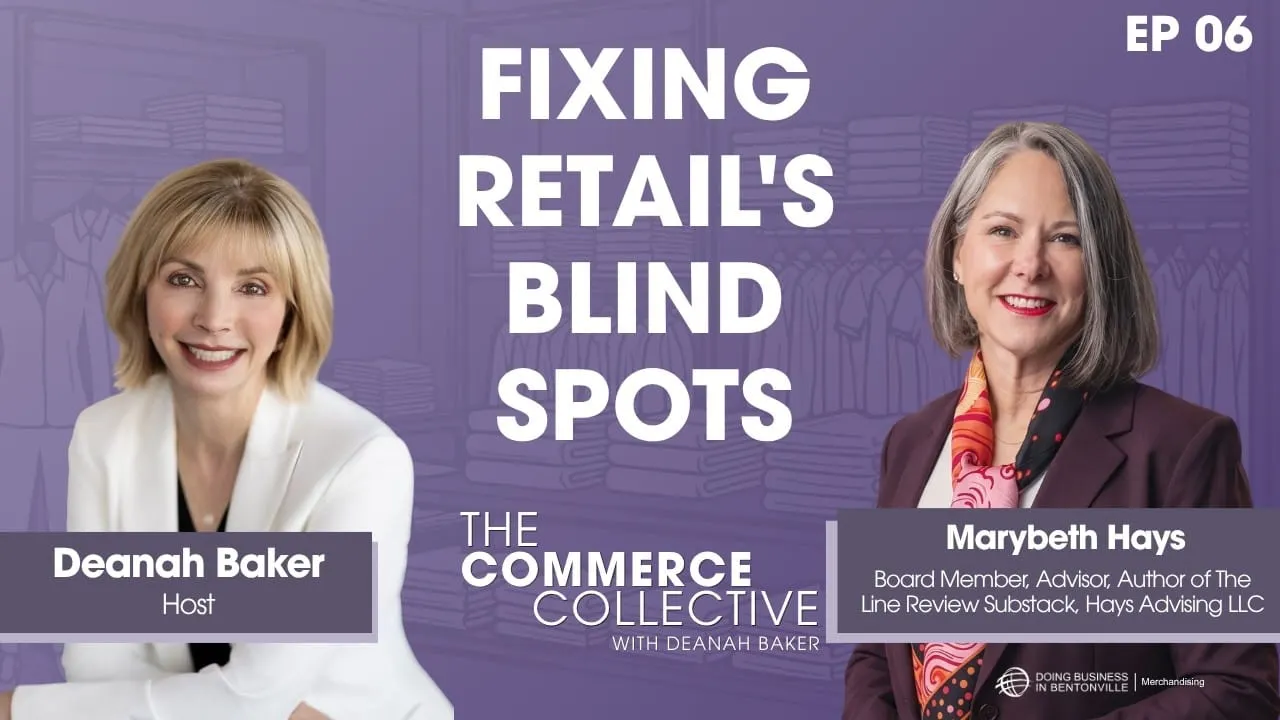
Ep. 6 - Ground-Level Operations: Bringing Context to the Board
Marybeth Hayes shares how she moved from running large retail operations at Walmart to the boardroom, breaking down how former operators spot micro failures, advise without micromanaging, and navigate succession planning.

Ep. 168 - Faith at Work: Navigating Corporate Pressures
Fritz Steiger, former Walmart Foundation executive director, shares how to balance personal conviction with corporate pressure, from Sam Walton’s early philanthropy to the tactical fight behind the school choice movement.
Stop Testing Ideas. Start Testing Customer Problems.
Scott Benedict explains why ecommerce teams should stop testing random tweaks and focus on real customer friction points, using journey maps, session replays, and heatmaps to turn failed hypotheses into lasting revenue gains.