

Retail's wholesale club landscape is changing dramatically, but are you aware of how these shifts might affect your shopping strategy or business approach? Drawing from my extensive career in wholesale club retail, I share fascinating insights from a recent Warehouse Club Focus analysis that reveals surprising trends in how the major players are positioning themselves today.
When Sol and Robert Price created the wholesale club concept in the late 1970s, it was fundamentally a business-to-business model targeting restaurants, convenience stores, and small offices. Today's reality looks remarkably different. BJ's has reduced its business-friendly assortment from 24% to just 18% since 2005. More dramatically, Costco's traditional clubs have slashed their wholesale focus from 54% in the late 90s to a mere 16% today (though they maintain 32 separate business-centered locations nationwide).
The standout finding? Sam's Club has maintained a stronger commitment to its business-member roots, with 35% of food items and 18% of non-food merchandise still targeting wholesale customers. This strategic divergence carries significant implications for manufacturers and shoppers alike. Suppliers need tailored approaches when working with each chain rather than a one-size-fits-all strategy. Meanwhile, consumers should carefully consider their needs—business or personal—when deciding where to invest their membership dollars.
Whether you're a small business owner looking for true wholesale opportunities, a manufacturer seeking the best retail partners, or a savvy consumer maximizing value, understanding these shifting priorities helps you navigate the evolving wholesale club marketplace. The next time you're considering which membership card to pull out, remember that behind the similar warehouse aesthetics lie increasingly different business strategies and customer focuses.

Wholesale Clubs: Business vs. Consumer Focus
As the wholesale club model rapidly evolves away from its business-to-business roots, understanding each chain's unique strategy is now essential for both suppliers and savvy shoppers alike.
Related
Retail Is Moving From Personalization to Prediction
Scott Benedict explains how retail is shifting from passive personalization to proactive prediction, breaking down how anticipating household purchase rhythms reshapes inventory planning, retail media, and AI agent discoverability.

Stop Testing Ideas. Start Testing Customer Problems.
Scott Benedict explains why ecommerce teams should stop testing random tweaks and focus on real customer friction points, using journey maps, session replays, and heatmaps to turn failed hypotheses into lasting revenue gains.

The AI Holiday Isn’t About Autonomous Shopping. It’s About Better Decisions.
Scott Benedict breaks down how retail AI will shape holiday 2026, showing why backend decision making and localized inventory allocation matter more than autonomous buying, with merchants still firmly in the driver's seat.
The Intelligent Retail Enterprise Is the Next Evolution of Retail
Scott Benedict explains why intelligent enterprises must orchestrate data across every business unit rather than stacking software, breaking down clean data, automation guardrails, and where human judgment still matters.
Latest
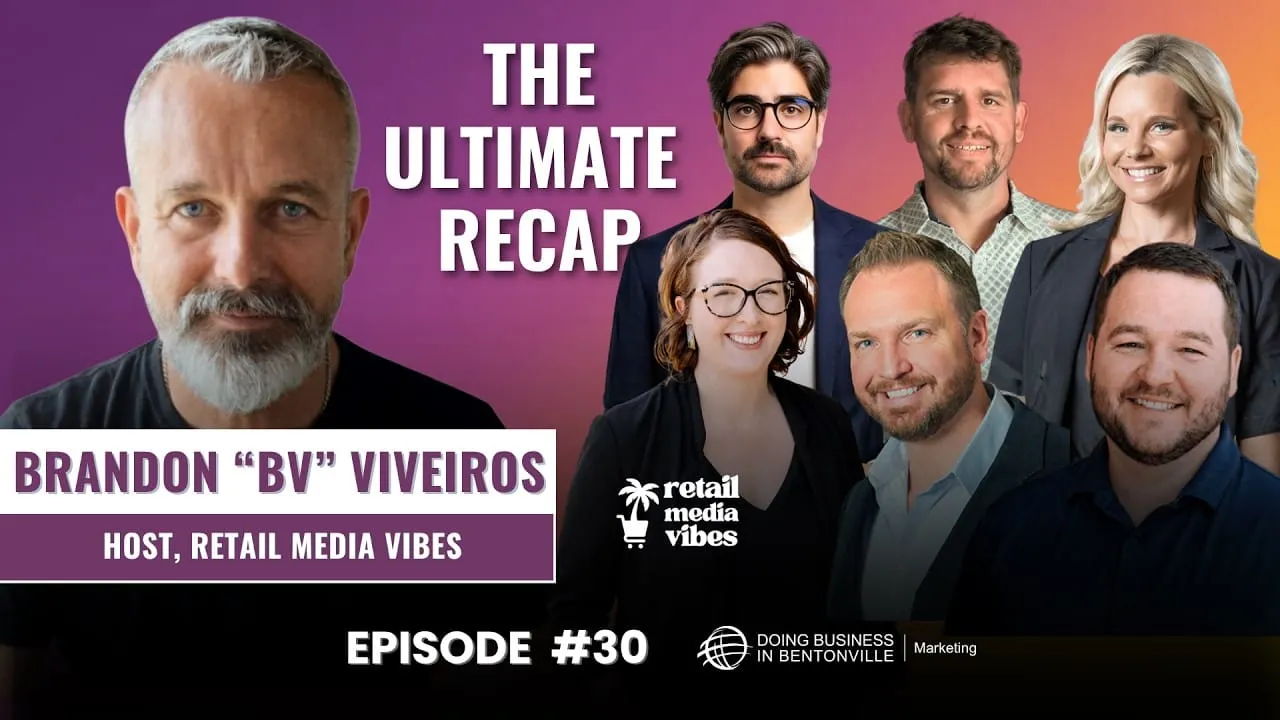
The Ultimate Recap
Wes Ryan, Alicia Watkins, and four other operators revisit what drives retail media performance, from club channel messaging and measurement frameworks to treating AI as a process engineer as it absorbs entry level roles.

Ep. 7 - Apparel Wars: Competing in the Omni-Channel Era
Former Walmart VP Deanah Baker draws on 30 years in apparel to explain how brands survive mid tier retail compression, balancing steady basics with nimble fashion testing, compressing production cycles, and moving from DTC to wholesale.

The Billion-Dollar Blind Spot: Is Your Supply Chain Exposed to Counterfeits?
Dr. Matt Waller and Daniel "Mr. Supply Chain" Stanton unpack vendor trust blind spots, high-tech tracking, gray markets, and supply chain resilience.

The Human Side of Retail: Designing Stores for Real Customer Behavior
Explore how retail CX strategist Chuck Palmer and Scott Benedict discuss retail customer psychology, self-checkout friction, and store layout design.