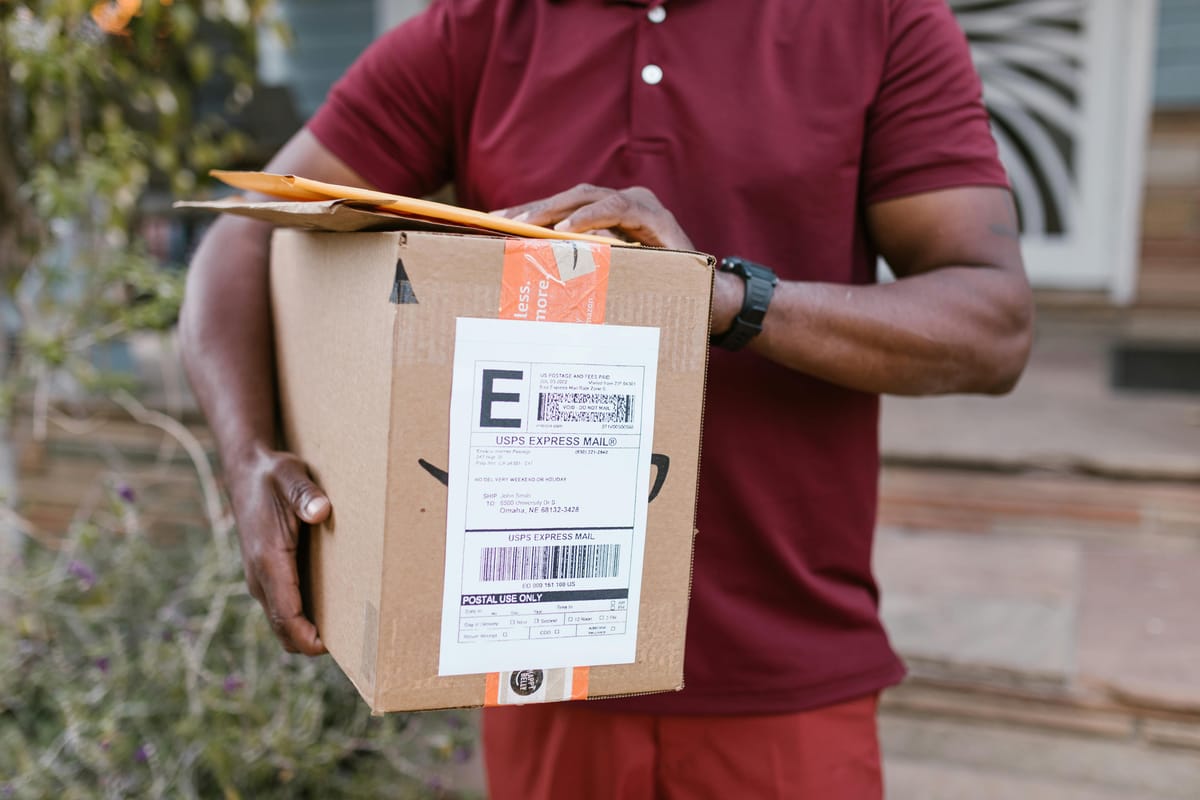

In a move to fortify its financial standing and challenge the dominance of private carriers, the United States Postal Service (USPS) is pivoting its operational focus toward heavier, higher-value shipments.
During a recent U.S. House of Representatives subcommittee hearing, Postmaster General and CEO David Steiner emphasized that winning these more profitable deliveries is essential for the agency’s long-term survival.
Currently, the Postal Service’s average package weight fluctuates between 1 and 1.2 pounds. In contrast, competitors like FedEx and UPS handle volumes that average closer to five pounds. Steiner noted that while the USPS network was historically optimized for lightweight mail and small parcels, it must now evolve to capture the heavier goods that drive higher margins in the modern e-commerce landscape.
The Financial Stakes of the Last Mile
This strategic shift comes at a critical juncture for the agency. The Postmaster General warned that the USPS is projected to exhaust its cash reserves within approximately one year. To mitigate this, the agency is undergoing a massive network overhaul intended to streamline logistics and reduce reliance on air transportation. However, infrastructure changes alone may not be enough to offset the looming loss of volume from major partners.
According to reports from the Wall Street Journal, Amazon—the agency's largest customer—intends to reduce its USPS-bound volume by at least two-thirds by October 2026. As Amazon continues to expand its own internal logistics network, the USPS is forced to find new revenue streams to fill the void. Capturing heavier shipments from the broader omnichannel retail sector is seen as the primary solution.
Adjusting the Pricing Architecture
The transition toward heavier parcels is already reflected in the agency's recent pricing adjustments. Analysis of rate hikes implemented in early 2026 indicates a tactical preference for mid-weight items. According to Supply Chain Dive, the USPS has introduced more modest price increases for Ground Advantage packages weighing between eight and 20 pounds compared to their lighter counterparts.
By making heavier shipments more price-competitive, the USPS aims to attract retailers who previously relied exclusively on private couriers for bulky items. This move is particularly relevant for the Bentonville business community, where suppliers and logistics providers are constantly seeking cost-effective ways to manage the "last mile" of the supply chain.
Implications for Omnichannel Retail
For the retail ecosystem centered in Northwest Arkansas, the USPS strategy represents both a challenge and an opportunity. As the global center of omnichannel retail, Bentonville-based companies rely on a diverse mix of carriers to maintain delivery speed and cost efficiency. A more competitive USPS in the 5-to-20-pound weight bracket could provide a necessary hedge against the rising surcharges often applied by private carriers during peak seasons.
Steiner also acknowledged the growing pressure from gig-economy delivery platforms that utilize flexible driver pools to handle low-cost, local deliveries. To compete, the USPS must leverage its universal service obligation and its vast physical infrastructure to prove it can handle the complexity of heavier freight with the same reliability as its private counterparts.
The Path Forward: Reform and Innovation
While the focus on heavier packages is a commercial necessity, Steiner maintained that legislative support remains vital. The agency is currently advocating for pension reform and an increase in its borrowing limit to provide a financial cushion during this transition. Without these reforms, the agency may be forced to consider more drastic service reductions or aggressive price hikes across all mail classes.
As the USPS continues to modernize its fleet and sorting facilities, its ability to integrate into the high-velocity supply chains of major retailers will determine its relevance. For now, the message from leadership is clear: the future of the Postal Service lies in its ability to carry a heavier load.
More about USPS:
 Staff Report
 Staff Report
 Staff Report