The American consumer in 2026 is no longer a monolith. According to the latest "Consumer Wallet Reset" report from PYMNTS Intelligence, a structural reallocation of spending has created two psychologically distinct shopping personas: the "disciplined survival optimizer" and the "aspirational reward-seeker."
This bifurcation is fundamentally shifting the balance of power in the retail landscape, moving away from a zero-sum contest toward a specialized segmentation of dominance between industry titans.
The Survival vs. Splurge Dichotomy
The "split spending" phenomenon describes a behavior where the same household fluctuates between extreme frugality for daily necessities and high-intent indulgence for discretionary items. This is not merely a reaction to macroeconomic pressure but a maturation of digital commerce where consumers have become experts at "platform-tasking."
The data suggests that the mid-market shopper—once the backbone of retail—is becoming an "endangered species." As households face a reset in their financial buffers, they are increasingly funneling their "survival" budget into high-efficiency value players while reserving their "splurge" budget for platforms that offer superior discovery and emotional reward.
Amazon vs. Walmart: A Specialized Duopoly
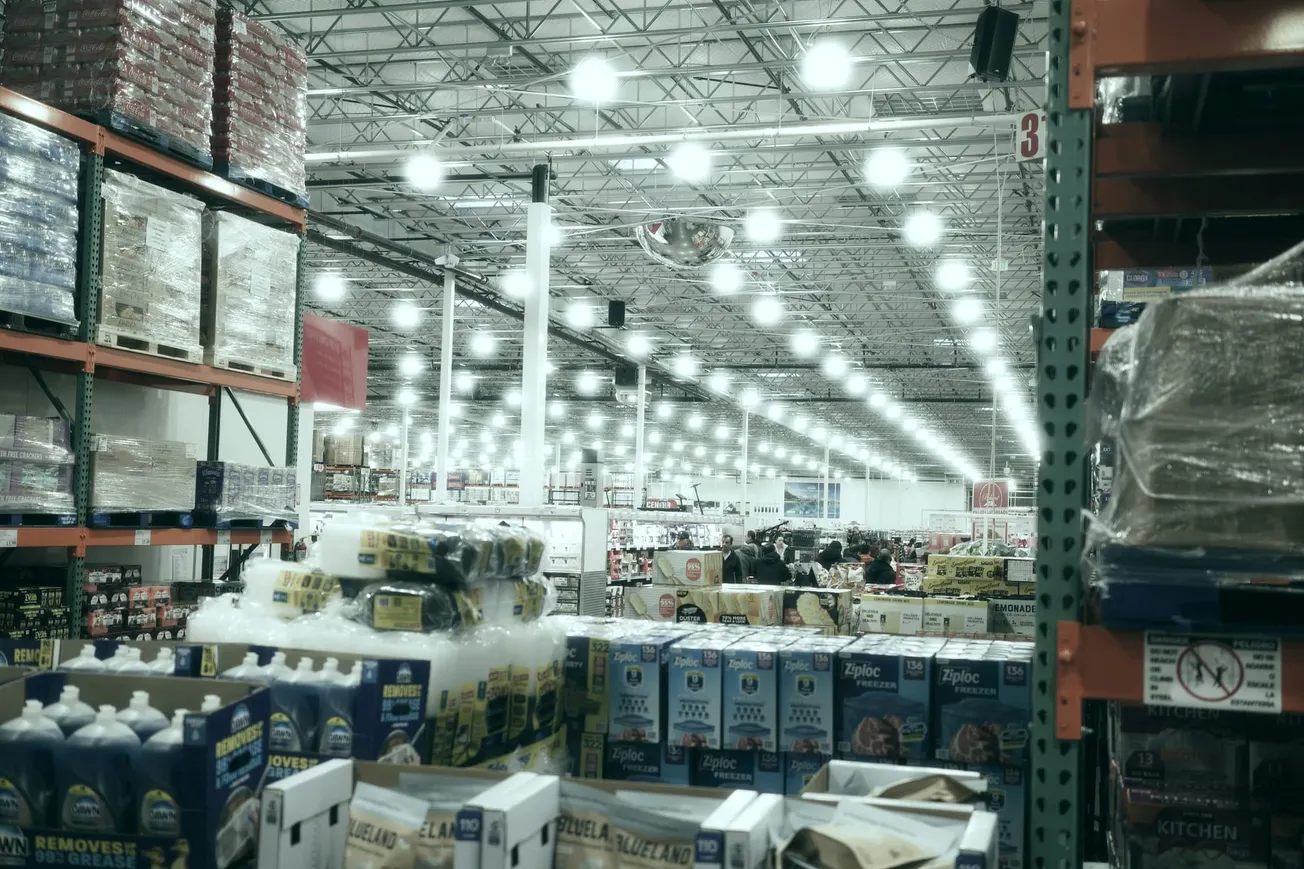
The report highlights a clear divide in how consumers utilize the two largest retailers in the United States. Walmart has solidified its position as the "anchor" for essential spending. Its mastery of the unglamorous capture of necessities—grocery, health, and household staples—has kept its share of overall retail spending remarkably stable. However, the data indicates Walmart has lost ground in high-margin discretionary categories like electronics and hobby goods.
Conversely, Amazon has become the default interface for the "splurge." By the fourth quarter of 2025, Amazon captured a record 11.1% of total U.S. retail spending. Its dominance is most pronounced in discretionary sectors, holding a 35% share in hobby goods and 32% in electronics. Amazon’s ability to convert browsing into buying through one-click checkouts and personalized AI-driven recommendations makes it the primary beneficiary of "reward-seeking" behavior.
Strategic Implications for Bentonville Stakeholders
For the thousands of vendors and agencies based in Northwest Arkansas, this bifurcation requires a more nuanced approach to merchandising and brand positioning. To win in 2026, brands must determine which "mode" their product serves. Products positioned in the middle—offering a generic mix of value and aspiration without excelling at either—risk becoming irrelevant.
The "Consumer Wallet Reset" also underscores the rise of "behavioral platforms." Retail is evolving from a collection of channels into a set of default responses to specific needs. When a household restocks the pantry, the pathway to Walmart is increasingly predetermined. When that same individual feels an impulse to treat themselves, the digital journey to Amazon is similarly preconfigured.
Navigating the "K-Shaped" Resilience
While overall consumer spending has remained surprisingly resilient, the underlying financial health of households is uneven. Research from PYMNTS and TD Economics suggests that while high-income households continue to drive growth through wealth gains and steady wages, lower- and middle-income groups are managing liquidity with extreme precision.
This "fragile resilience" means that even small price fluctuations can trigger demand destruction. In fact, nearly 52 million consumers reported they would stop purchasing certain goods after a mere 10% price increase. Retailers and suppliers must now leverage advanced data insights to manage this "price tipping point" without sacrificing brand equity.
As we move further into 2026, the challenge for retail leaders is to embrace this asymmetric market. Success no longer comes from capturing the "whole" consumer, but from dominating the specific behavioral mode—survival or splurge—that defines their journey in that moment.