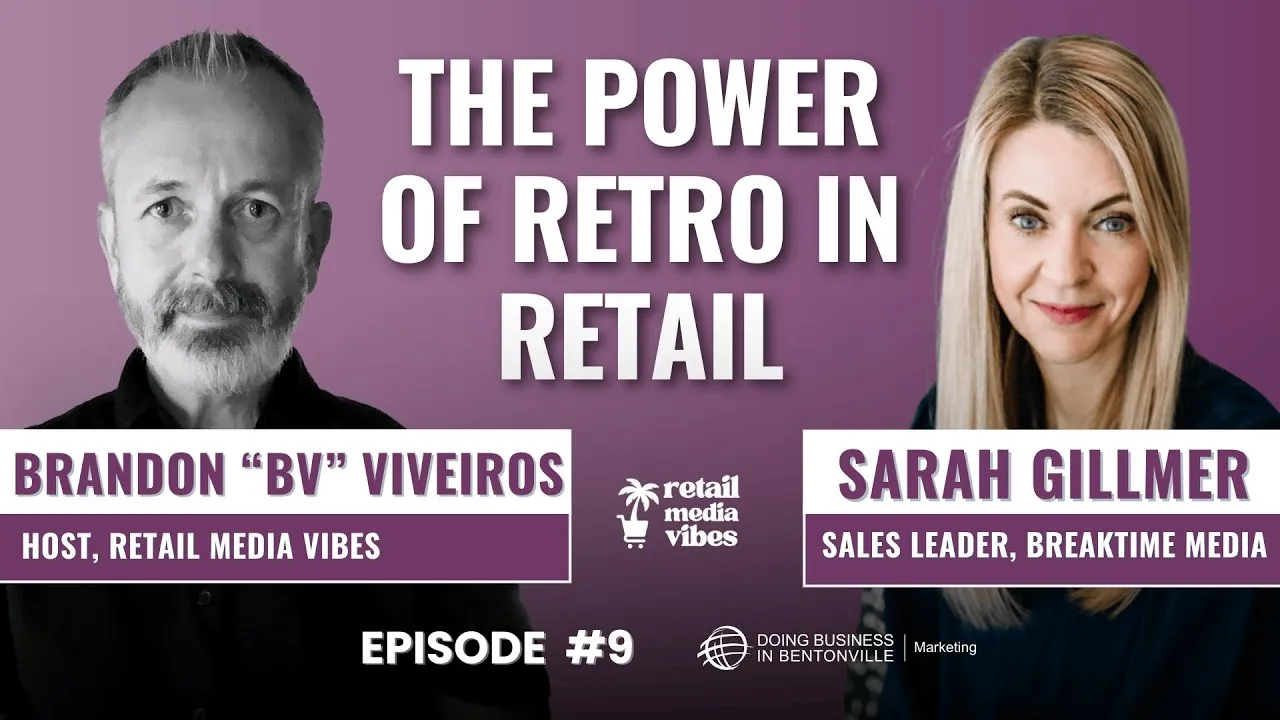
Nostalgia doesn’t just sell; it sticks. We sat down with Sarah Gillmer to explore how memory, family ritual, and pop culture can turn everyday products into emotional anchors, and why that approach still beats a thousand loud impressions. From Barbie’s cross-generational comeback to Nike’s retro magic and McDonald’s adult Happy Meal, we map when heritage fuels love and when brands risk costume-playing a past they never owned.
We also tackle the elephant in the media room: is traditional media dead? Not quite. Print catalogs with QR stickers are back on kitchen counters, local radio still drives action, and the right billboard can outwork a dozen forgettable banner ads. The smartest plans now pair tactile, trusted channels with digital precision. We talk about how to choose moments where analog wins; regional launches, community trust, and high-frequency routes, and how to keep the art in marketing without ignoring the numbers.
In quick hits, we react to Instacart’s variable pricing controversy and the transparency gap it exposes. Then we look ahead as Google signals ads inside Gemini AI chat, debating what “useful” looks like in an answer-first interface. Finally, we swap campaigns we love: Chevy’s memory-rich family spot that sells without shouting, and Dunkin’s munchkin tale that turns a donut hole into a holiday hero. If you care about brand building, media mix strategy, and the next wave of ad experiences, this one’s for you.
Enjoyed the conversation? Follow and share the show, and leave a review so more curious marketers can find us.
More About this Episode
The Emotional Power of Nostalgia Marketing and the Enduring Role of Traditional Media in Modern Retail
As marketers, we often talk about disruption, innovation, and new technologies that can elevate brand strategies. And yet, in the fast-paced world of retail media, some of the most resonant and effective strategies remain rooted in something deeply familiar: nostalgia. In this episode of Retail Media Vibes, I had the opportunity to sit down with Sarah Gillmer, sales leader at Breaktime and certified Enneagram coach, to explore the evolving world of consumer engagement through two compelling lenses, the power of nostalgia marketing and the often-dismissed yet surprisingly resilient world of traditional media.
These aren’t just passing themes. They’re strategies that tap into human emotion and behavior in powerful, lasting ways. Whether it’s reintroducing a product that evokes childhood memories or using a billboard to reach local shoppers in a hyper-targeted way, nostalgia and traditional media remind us that not everything needs to be new to be effective.
Nostalgia Marketing: More Than Just a Throwback
There’s a reason nostalgia works; it's emotional, familiar, and deeply human. As Sarah pointed out in our conversation, “The greatest gift you can give yourself is knowing who you are.” This applies not only to individuals but also to brands. When a brand understands its legacy and uses that history to connect with consumers across generations, the impact is undeniable.
One of the best examples we explored was Barbie. The recent Barbie movie wasn’t just a pop culture moment; it was a masterclass in nostalgia marketing. Mattel didn’t simply make a film, they invited every generation that ever played with Barbie to revisit a piece of their childhood. Moms who played with Barbie introduced her to their kids, effectively expanding Barbie’s consumer base while reigniting a legacy brand.
This is where nostalgia excels: building bridges between generations through shared experiences. Whether it’s toys, fashion, or food, legacy brands can use these emotional touchpoints to reintroduce themselves to a new audience while reinforcing their value with existing fans.
Authenticity is Key
But let’s be clear, nostalgia marketing isn’t just about slapping a retro label on a product. It has to be authentic and emotionally relevant.
Sarah highlighted a perfect example: Nestlé Toll House chocolate chips. She explained that in her family, certain ingredients like Toll House are non-negotiable in recipes that have been passed down through generations. “Does it really make a difference in taste? Maybe, maybe not. But it makes a difference in my heart.” That emotional connection is the essence of nostalgia marketing.
Similarly, when brands like Coca-Cola reintroduce “New Coke” in a campaign tied to Stranger Things, it only works because there’s an emotional association, not just with the drink, but with a moment in pop culture history. It’s the sensory triggers, the taste, the design, the commercials, that bring those memories flooding back.
Successful Nostalgia Strategies
For brands considering nostalgia marketing, there are a few key strategies that work particularly well:
- Understand the Generational TimelineTailor your nostalgic cues to the demographic you’re targeting. Gen Z’s nostalgia won’t look like Gen X’s.
- Blend Retro with ModernBring back beloved elements from the past, but update them in a way that fits with current sensibilities. Think Nike retros; shoes from the '80s redesigned with modern tech and storytelling.
- Tap into Shared Family ExperiencesWhether it’s Saturday morning cartoons and cereal or baking cookies with Toll House chips, nostalgia that’s rooted in family traditions hits especially hard.
- Stay True to Your Brand IdentityIf there’s no genuine connection between your brand and the nostalgia you’re trying to evoke, consumers will see right through it.
A brand like McDonald’s leaned into this beautifully with the Adult Happy Meal. It wasn’t just about the toy, it was about evoking the entire childhood experience of getting a Happy Meal and updating it for grown-ups who now want to relive those simpler times.
Traditional Media: Dead or Misunderstood?
Now, let’s pivot to another controversial topic: traditional media. Is it dead? In short, no, but it has changed.
The term “traditional media” often triggers a knee-jerk reaction in marketing conversations. Print ads, radio spots, TV commercials, and billboards are frequently dismissed as outdated. But that dismissal can be shortsighted.
As Sarah reminded us, “Consumers are still looking for these traditional options.” Whether it’s a print travel magazine her daughter treasures or a classic holiday TV spot, traditional media isn’t obsolete, it’s just not always measured the same way as digital.
And that’s part of the issue. Traditional media isn’t as easily trackable, so it often gets overlooked in favor of digital channels where ROI can be calculated down to the click. But focusing exclusively on performance metrics can lead marketers to ignore the emotional and long-term brand-building power of traditional formats.
When Traditional Media Still Wins
Certain scenarios make traditional media especially effective:
- Localized Marketing: If your product is only in select stores, a local radio ad, billboard, or direct mailer can have a huge impact.
- Credibility and Trust: Seeing a brand on a TV commercial or in a print magazine still carries a certain weight. It tells consumers that you’re established.
- Tactile and Sensory Experiences: Brands like Amazon and Target are still sending out physical toy catalogs for the holidays. Why? Because kids (and parents) engage with them. Circling your wishlist in a printed catalog taps into tradition and emotion in a way that digital can’t.
- Strategic Disruption: When everyone is zagging into digital, sometimes the best strategy is to zig. A well-placed print ad or out-of-home activation can cut through the clutter in a way digital can’t.
Sarah cited another great example, the backlash to Cracker Barrel’s logo redesign. In trying to modernize, the brand removed elements of its nostalgic identity, like the old man in the rocking chair. That backlash highlighted just how powerful and deeply held brand associations can be when they’re rooted in memory.
Measurement vs. Magic
Of course, we can’t ignore measurement. Marketing teams are responsible for results, and traditional media doesn’t always provide the cleanest data. But as we discussed, “If you want to know if marketing is working, stop doing it, and you’ll find out fast.”
The challenge is to balance the science of marketing with the art. That’s especially important as we head into a future where even AI chat platforms like Google’s Gemini will soon integrate ads. As ad models become more data-driven and personalized, marketers must also remember the timeless strategies that drive emotional engagement and build brand love over time.
Campaigns We Love
To wrap the episode, we each brought forward a campaign that we’re loving right now.
Sarah highlighted Chevrolet’s recent holiday ad, a heartfelt spot showing how memories are made over time in the family car. There was no direct product push. No sales language. Just emotional storytelling done well. And it worked.
For me, I brought in Dunkin’s holiday campaign centered around their Munchkins. Narrated by Mindy Kaling, the spot featured a lonely donut hole who finally finds purpose when a child selects him. Yes, it was a little dark if you really think about it: this adorable donut hole gets eaten, but it was whimsical, emotional, and backed by merchandise and even a children's book. It’s that kind of full-circle campaign that brings marketing to life.
Final Thoughts
Nostalgia and traditional media aren't relics of the past. They’re powerful tools when used intentionally and authentically. Whether it’s leveraging a legacy product to introduce your brand to a new generation or choosing a tactile medium like print to stand out in a digital world, these strategies still have relevance in 2026 and beyond.
In the end, marketing isn’t just about the click or the impression. It’s about connection. And when you can tap into memory, emotion, and human behavior, that’s where the real magic happens.
Until next time, keep building, keep connecting, and never underestimate the power of a well-timed memory.