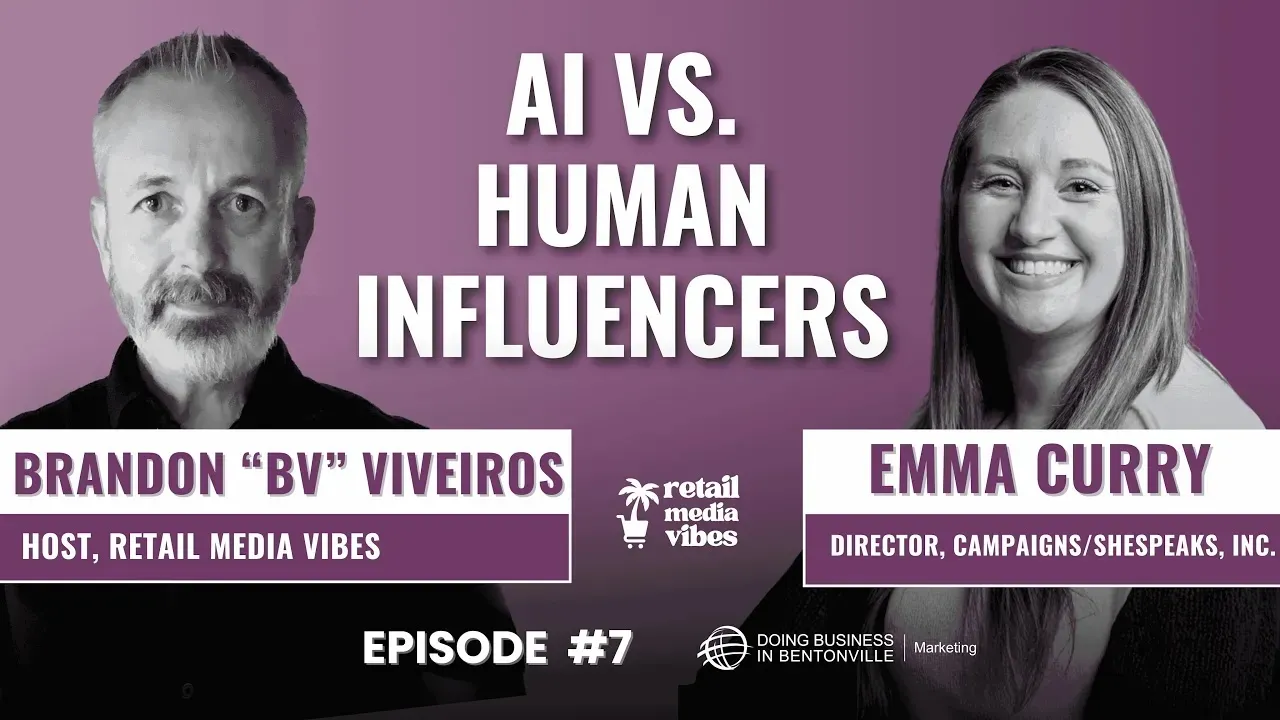
What happens when brand safety and speed meet the messy magic of real human influence? We bring on influencer marketer Emma Curry to explore where AI-driven creators can help, where they can harm, and how transparency keeps audiences on your side. From synthetic personas that never miss a talking point to the irreplaceable trust earned by human voices, we map the tradeoffs and share a practical framework: keep humans in the loop, use AI to pressure-test briefs, and pick categories wisely so you don’t sell perfection where people need honesty.
Then we get tactical. Retail media keeps accelerating, demanding more assets, more often. We break down how to structure creator shoots for evergreen use, capture both short video and lifestyle stills, and design modular CTAs that swap by retailer without losing the story. Emma shares a favorite move, bring social into the store. An original song cut for in‑store radio during the holidays became prime exposure and a masterclass in stretching one asset across channels where buying actually happens.
We also wade into the contracts that decide your ROI: usage windows that match retail turnover, the extra costs of in‑store and CTV, and when SAG-AFTRA rules apply. The headline: don’t commission content without a plan. Decide where it will live, how it will refresh, and what success looks like before you press record. Plus, we have fun with quick hits on ads in public restrooms and smart fridges, BNPL holiday habits, and “Campaigns We Love,” featuring Huggies’ cheeky “Do It for the Team” and Walmart’s nostalgia-rich WhoKnewville.
If this gave you ideas for your next creator brief or retail media pitch, subscribe, share it with a colleague, and leave a review so more marketers can find Retail Media Vibes.
More About this Episode
AI Influencers, Creative Content, and the Future of Retail Media: Navigating the Next Evolution of Shopper Marketing
The retail media landscape is transforming faster than ever, fueled by innovations in AI, shifts in shopper behavior, and the ever-growing influence of content creators. One of the biggest questions being asked across marketing departments right now is this: how do we take the content we’re already creating, the influencer posts, the videos, the social storytelling, and make it work harder for us, especially in retail channels?
In this episode of Retail Media Vibes, I sat down with my friend and former colleague Emma Curry, a seasoned influencer marketer at SheSpeaks, to dig into two of the most relevant (and at times controversial) topics in the industry right now: the rise of AI influencers and how to effectively translate influencer content into high-performing retail media assets.
Let’s break it down.
AI Influencers: Trend, Tool, or Trouble?
The idea of AI-powered personalities isn’t exactly new, Lil Miquela, one of the earliest AI influencers, has been around since 2016, locking down real brand deals and accumulating millions of followers. But what was once a fringe concept has rapidly moved toward the mainstream, especially as generative AI tools make it faster and easier than ever to create believable, engaging virtual personas.
As Emma and I discussed, AI influencers bring several benefits to the table for marketers:
- Speed: Brands can respond to trends almost in real-time by programming an AI influencer to act, speak, or share content instantly, without the traditional time required to brief, contract, and coordinate with a human creator.
- Control: AI influencers never go off-script. The brand message is always delivered as intended, with zero risk of deviation or controversial takes.
- Cost-efficiency: Depending on the use case, AI-generated content may be more budget-friendly than working with high-tier influencers, especially for brands looking to scale across channels.
But there are also real challenges — and not just technical ones.
One major concern is authenticity. Influencer marketing works best when audiences feel a genuine connection to the creator. That trust is hard-earned and easily lost, especially if people feel misled. Just like the backlash that hit Milli Vanilli decades ago, any attempt to pass AI-generated personas off as real can backfire without full transparency.
And let’s not ignore the cultural sensitivity factor. If you're creating synthetic humans, how do you ensure they authentically represent the audience you're trying to reach? What are the implications of creating a perfect, flawless virtual beauty icon to promote makeup or fashion? As Emma rightly pointed out, this gets especially tricky in beauty, where messaging around self-image and confidence can easily cross ethical lines.
Still, AI influencers could be a powerful tool when used responsibly. Imagine using AI personas to pressure-test creative briefs before working with real creators — a “sandbox” to see what works. Or developing category-specific virtual influencers that allow brands to test content quickly across various platforms before investing heavily.
For now, the key is to keep humans in the loop. Human oversight, strategic alignment, and transparent labeling (such as platform AI disclosures) will be essential for maintaining trust as this space evolves.
Influencer Content as Retail Media: Extending the Life and Value of Creator Assets
Influencer marketing has long been seen as a top-of-funnel tactic, great for brand awareness and engagement, but not always aligned with the conversion-driving goals of retail media. But that mindset is shifting fast.
Retailers and brands are recognizing the unique power of influencer content in driving performance at the digital shelf, particularly when repurposed thoughtfully across retail media networks.
Emma and I explored how to make this shift effectively. The first step is to start with the end in mind. That means knowing from the outset what channels the content will need to live in, whether that’s social, product pages, sponsored displays, or even in-store digital screens.
Here are some key tactics for maximizing the retail value of influencer content:
1. Vary the Content Types
Don’t just capture one format. Mix up vertical video, lifestyle stills, product close-ups, and more to ensure you have assets that work across multiple placements. Some content performs best in social feeds, others in shoppable ads, and some in PDP galleries.
2. Design for Evergreen Use
Create assets that focus on product usage and benefits, with retailer-specific messaging layered in selectively. That way, content can be repurposed for longer periods and even across retailers when permitted.
3. Work with Retail-Savvy Influencers
Not every influencer understands the nuances of shopper marketing. Those who have previously worked with Walmart, Target, Amazon or other major retailers can bring an edge in knowing how to position products in a way that feels authentic, but still meets compliance and performance needs.
4. Think Beyond Digital
One of the best examples Emma shared was a program where an original song, created by an influencer for a CPG brand, was repurposed for in-store radio during the holidays at Walmart. That’s the kind of creative extension that can differentiate a brand, catch shopper attention at the moment of truth, and still stay true to the tone and personality of the influencer.
When influencer content extends beyond social and into the full retail ecosystem, you maximize your ROI and deepen the shopper connection.
Don’t Forget the Legal Fine Print
A lot of brands get tripped up in one crucial area: usage rights. Just because you’ve paid an influencer to create content doesn’t mean you automatically own it or can use it wherever you want.
Key things to nail down up front:
- Usage Duration: Most influencers won’t agree to perpetual use, nor should they. Negotiate reasonable usage terms based on your campaign timeline.
- Media Rights: Social and web use might be standard, but retail media, in-store usage, or connected TV often require additional licensing fees or contracts.
- Content Type Restrictions: If you’re hoping to use static images in paid media but only asked for video, you’re out of luck unless that was built into the original task.
Emma emphasized the importance of building a content plan before production starts, so you’re not left scrambling later, or worse, unable to use your favorite piece of content.
The Content Demand Is Only Getting Bigger
Retailers are asking for more assets. Retail media platforms are hungry for variety. Shoppers want content that speaks to their needs, at their retailer of choice, in a tone that feels native to the platform they’re on.
This means marketers must think more like content strategists, and that’s where influencer creators can truly shine, especially when aligned early with the retail goals of a campaign.
A few best practices we recommend:
- Create influencer tiers by retailer: Consider matching influencers with specific retailers and customizing their content accordingly.
- Map content types to funnel stages: Use influencer content not just for awareness but also for conversion, repurposing video into shoppable ads or stills for PDPs.
- Invest in content intelligence: Test what types of influencer content perform best on different platforms and retailers, then scale what works.
Campaigns We Love: Huggies and Walmart Deliver the Vibes
Before wrapping up, Emma and I highlighted a couple standout campaigns we loved, ones that show just how creative brands can get with retail media when they lean into fun, nostalgia, and cultural timing.
Huggies: “Do It for the Team”
In a clever tie-in with the World Cup, Huggies dropped a cheeky campaign nine months ahead of the tournament encouraging couples to “do it for the team.” It’s bold, it’s timed perfectly, and it offered a playful sweepstakes for free diapers in June 2026, just in case the campaign worked a little too well. A great example of joy marketing meeting smart product relevance.
Walmart: “Who Knewville” Holiday Campaign
Walmart has been using its “Who Knew?” platform to shift consumer perceptions and reintroduce its value and variety across categories. With “WhoKnewville,” the retailer wrapped its holiday messaging in Dr. Seuss-inspired storytelling and vivid nostalgia, reminding shoppers that Walmart offers more than just the basics, it offers holiday magic, too.
These campaigns are strong reminders that retail media doesn’t have to be cold and conversion-only. It can also spark emotion, create memories, and build brand affinity.
Final Vibes
As we head deeper into the holiday season and into a new year, one thing is clear: the worlds of content, commerce, and culture are only becoming more interconnected. Whether it’s AI influencers pushing boundaries, or creators becoming vital partners in retail storytelling, brands that win will be the ones that know how to blend creativity with commerce, and human connection with performance metrics.
Thanks again to Emma Curry for joining the conversation and bringing her wisdom and wit to Retail Media Vibes. And as she reminded us, it’s the season for giving. If you’re able, consider supporting your local food bank through FeedingAmerica.org and help bring good vibes to someone’s holiday.
Stay tuned for more insights, more experiments, and more vibes. And as always, I’ll try to do better next time.