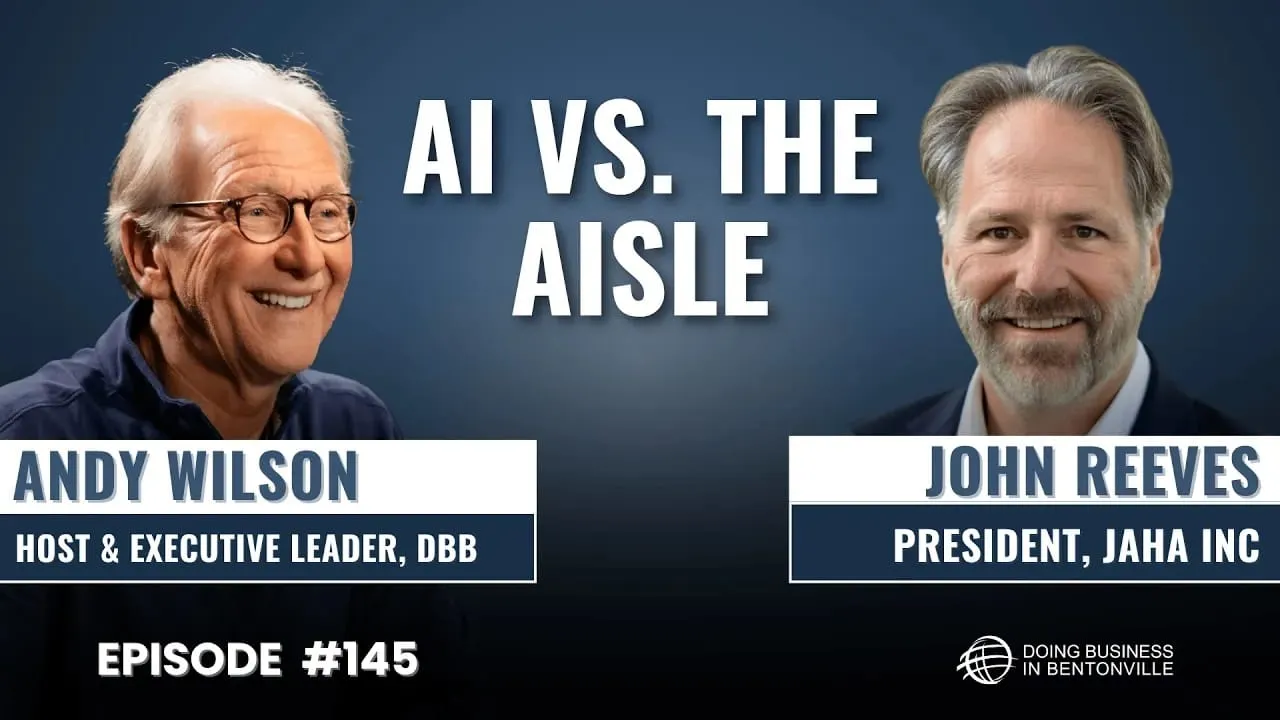
Shoppers don’t think in channels, they remember how your last interaction made them feel. We sit down with leaders from Google, Hershey, AdFury, and HashKu to show how AI can meet that rising bar by turning messy data into crisp experiences across search, store, service, and even gaming. The throughline is clear: when your brand story is structured and accessible, agentic systems can personalize creative, refresh copy before fatigue sets in, and keep a consistent message from Walmart Connect to Amazon to social and beyond.
We dig into what “good” looks like behind the scenes: consolidating product data, enriching PDPs, and using models to compress planning cycles from weeks to days. AdFury explains how agent networks generate platform‑specific assets that stay on‑brand while adapting to audience context. HashCube opens the door to gaming as a retail channel, where co‑playing families and 13+ environments offer brand‑safe ways to build affinity, think seasonal moments like Halloween in Roblox, where virtual wearables connect with real‑world baskets. Hershey’s perspective underscores the power of heritage storytelling, especially when expanding to global markets without built‑in nostalgia.
We also get practical about getting started. Use consumer tools to build prompting skills, then move into enterprise setups to protect corporate data. Ask for sources, push for specificity, and treat AI as a magnifier that clears low‑value tasks so teams can focus on strategy and relationships. If you’re aiming for results in the next 90 days, define your narrative, clean your data, pilot agentic creative in one channel, and expand what works.
Subscribe, share with a teammate who needs a nudge, and leave a review to help more brand leaders find the show.
More About this Episode
How AI Is Reshaping Retail Media, Brand Storytelling, and Consumer Expectations
Artificial intelligence is no longer a future-facing concept for retail media and brand marketing. It is already reshaping how consumers discover products, how brands tell their stories, and how teams execute campaigns at scale. What is happening right now across retail media networks, creative workflows, and consumer touchpoints represents a structural shift, not a trend.
At the center of this shift is a simple reality. Consumer expectations are being rewritten by their most recent experiences. Every interaction with a personalized chatbot, a frictionless shopping journey, or a contextually relevant ad becomes the new baseline. Brands that fail to meet that baseline do not feel outdated. They feel broken.
AI is the engine driving this change, especially within retail media ecosystems like Walmart Connect and other commerce-driven platforms. The opportunity for brands is not just efficiency. It is relevance, speed, and depth of connection with consumers at moments that actually matter.
The New Consumer Expectation: Known, Seen, and Served Efficiently
One of the most important ideas shaping modern retail media is that customers now expect to be recognized without asking for it. They want brands to understand who they are, why they are there, and what problem they are trying to solve.
This expectation did not emerge from retail. It emerged from AI-enabled experiences across customer service, search, and digital platforms. When consumers experience fast resolution, contextual awareness, and personalized responses in one area of their lives, they expect it everywhere else.
In retail and commerce, this expectation shows up clearly in shopping behavior. Consumers want faster paths to the right product. They want filters that reflect values like sustainability, origin, dietary needs, and lifestyle. They want answers, not friction.
AI enables this by making vast amounts of structured and unstructured data usable in real time. But the technology alone is not enough. Brands must do the hard work of understanding their own data, organizing it, and making it available across systems so that AI can deliver meaningful outcomes.
Why Content Depth Is Becoming a Competitive Advantage
For years, brands have invested in content primarily for SEO and conversion. Product titles, bullet points, images, and basic brand stories were designed to satisfy algorithms and shoppers scanning quickly.
AI changes that equation. Large language models and agent-based shopping experiences do not just scan content. They ingest it, synthesize it, and use it to answer questions consumers have not explicitly typed yet.
This is where content depth becomes critical.
When a consumer asks an AI-powered shopping assistant for the best chocolate made in the United States or a brand aligned with sustainability values, the system can only respond based on the data it has been given. Brands that have invested in rich storytelling, detailed product attributes, and clear differentiation are rewarded. Brands that have not become invisible.
This is not about marketing fluff. It is about operationalizing brand truth. Why the product exists. How it is made. What the brand stands for. How it has evolved. Those narratives need to live everywhere consumers might encounter them, including PDPs, retail media placements, and AI-driven discovery tools.
Retail Media Meets AI: From Targeting to Systematic Flows
Retail media has historically been fragmented. Media planning, creative development, product detail pages, and in-store execution often lived in separate silos, owned by different teams or agencies.
AI is beginning to stitch these pieces together.
Agent-based platforms now allow brands to personalize creative at scale, adjusting messaging, imagery, and context across retail media networks, social channels, and onsite placements while maintaining a consistent brand ethos. This solves one of the most persistent problems in retail marketing: ad fatigue.
Instead of running the same creative for months until performance declines, brands can now rotate and adapt assets dynamically. AI-generated variations allow messaging to stay fresh while remaining on strategy. The result is higher engagement and stronger trust throughout the consumer journey.
At the same time, AI-driven PDP optimization enables brands to refresh product content faster than ever. This is especially critical in retail environments where competition is one click away and relevance determines visibility.
Gaming, Culture, and the Next Retail Media Frontier
One of the most underappreciated shifts in retail media is the rise of gaming as a legitimate brand channel. Gaming is no longer a niche activity. It is multi-generational, social, and deeply embedded in daily life.
Consumers are not just watching content anymore. They are co-playing. Families, friends, and communities are spending hours together inside digital worlds. These environments represent powerful discovery moments for brands when approached thoughtfully.
AI plays a key role here by helping brands understand how to show up in gaming spaces in ways that feel authentic and brand-safe. Context matters. A Halloween moment inside a gaming platform like Roblox can align perfectly with a seasonal retail strategy when executed with intention.
The most effective activations are not intrusive ads. They are experiences. Virtual wearables, branded environments, and culturally relevant moments allow consumers to build affinity long before a purchase decision is made. This is especially important during the imprint years when brand preferences are first formed.
Strategy at the Speed of AI
What once took weeks of research and planning can now happen in days or even hours. AI-powered strategy tools enable agencies and brands to analyze audiences, understand brand fit, and identify activation opportunities faster than ever before.
This speed does not replace human judgment. It amplifies it. Teams can spend less time gathering information and more time applying insight. The result is smarter planning, faster testing, and more confident decision-making.
As these systems evolve, AI will increasingly support asset development itself, further compressing timelines and enabling rapid iteration across channels.
Overcoming Fear and Finding a Starting Point
Despite all of this potential, many brands still hesitate. AI can feel overwhelming. New tools, new acronyms, and constant innovation create uncertainty, especially for teams already under pressure.
The answer is not mastery. It is curiosity.
The most effective way to begin is personal use. Start with tools that solve real problems. Eliminate tasks you dread. Overcome the blank page. Automate the repetitive. When people experience firsthand how AI saves time and unlocks creativity, confidence follows.
From there, the learning transfers naturally into the workplace. Concepts like prompting, contextual memory, and agent workflows become intuitive rather than intimidating.
It is also critical to be thoughtful. Protect corporate data. Understand the difference between personal and enterprise environments. Use AI as a partner, not an authority. Always verify outputs and push deeper with follow-up questions.
AI as a Magnifier of Human Capability
AI is not replacing human creativity or strategic thinking. It is magnifying it.
Much like design software transformed creative agencies decades ago, AI is becoming foundational infrastructure. In a few years, it will be impossible to imagine retail media, brand strategy, or commerce operations without it.
The brands that win will not be the ones chasing every new tool. They will be the ones that start early, learn continuously, and integrate AI thoughtfully into how they tell stories, serve customers, and execute at scale.
This moment is not about perfection. It is about participation.
The future of retail media is being built right now, one experiment, one prompt, and one consumer experience at a time.