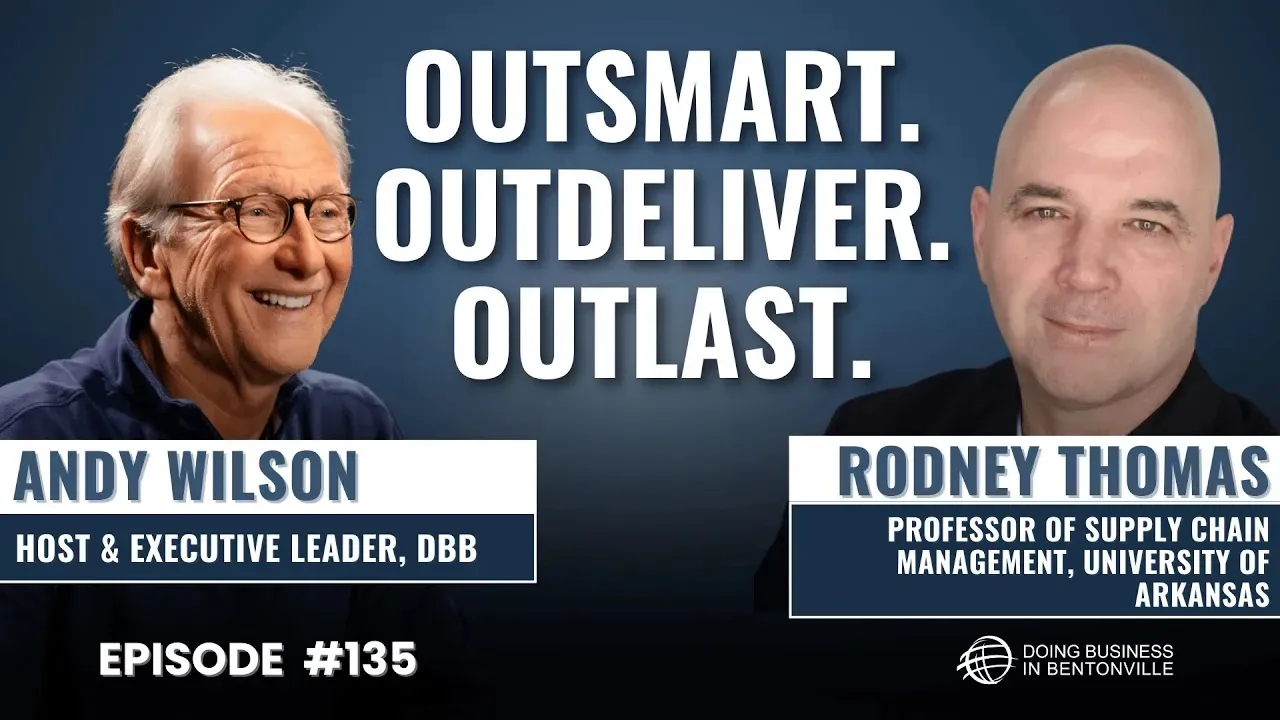
What if your supply chain could both thrill customers and quietly kneecap competitors? We sit down with Rod Thomas, Associate Professor of Supply Chain Management and former retail operator, to unpack how logistics design becomes a decisive competitive weapon. The conversation moves beyond cost cuts and into bold moves that reset expectations, accelerate growth, and force rivals into bad choices.
We start with a standout story: Lowe’s reengineers distribution centers to handle major appliances and flips from shared direct-to-store shipments to daily flow. The result is higher in-stock, faster turns, and a strategic squeeze on Home Depot, which must either ship air or accept slower replenishment. From there, we explore Delta insourcing aircraft maintenance to regain scale and service, Shein compressing lead times with small-batch agility, and Amazon setting the bar on two-day delivery and effortless returns, proof that service, speed, and certainty are the new product.
The strategy extends upstream. Tesla’s early bets on batteries and minerals and Apple’s ownership of critical components show how locking constrained inputs stabilizes your business and destabilizes others. Then we dig into owning the demand signal with connected devices, subscriptions, and loyalty apps. When printers reorder ink or tractors schedule parts before failure, customers never feel a pinch point and competitors never see the demand.
You’ll walk away with a clear playbook: escape shared-resource traps, raise service bars competitors can’t match, secure capacity where it’s scarce, and build direct data loops that predict need. Do it ethically and deliberately, and you’ll deliver better for customers while quietly reshaping the field.
If this conversation helps sharpen your strategy, follow, share with your team, and leave a quick review, what supply chain move are you planning next?
More About this Episode
Weaponizing the Supply Chain: How Strategic Logistics Decisions Can Cripple Competitors and Create Market Advantage
In today’s highly competitive and capacity-constrained marketplace, supply chain management is no longer a back-end operational function. It’s front and center, a powerful lever for strategic disruption. The concept of weaponizing your supply chain may sound aggressive, but at its core, it’s about rethinking how logistics and infrastructure decisions can not only improve your internal operations but also weaken your competitors in the process.
This is more than a conversation about efficiency or customer service, this is about building competitive moats using logistics intelligence, strategic capacity control, and infrastructure integration. It’s about shifting the rules of the game in your favor.
Let’s break down what it means to weaponize your supply chain, explore examples across industries, and close with an executive playbook on how to apply this strategy in your own business.
What Does It Mean to Weaponize the Supply Chain?
Traditionally, supply chain strategy is about optimizing your own operations: improving speed, reducing costs, increasing resilience, and delivering on customer expectations. But there’s another layer, a more aggressive layer, that draws inspiration from military strategy: instead of just enhancing your capabilities, you also undermine your opponent’s. In military terms, it’s like cutting off the enemy’s supply line.
In business, that might look like owning distribution infrastructure your rival lacks, locking up key suppliers in capacity-constrained industries, or creating customer experiences so frictionless that your competitors are forced to play on your terms.
This is not about being unethical or predatory. It’s about smart, forward-looking strategy that leverages supply chain innovation to drive dual outcomes: internal gains and external disruption.
Real-World Examples of Strategic Supply Chain Disruption
Lowe’s vs. Home Depot: The Appliance Masterstroke
Rod Thomas, Associate Professor of Supply Chain Management at the University of Arkansas, shared a compelling personal example from his time at Lowe’s. For years, major appliances (a category that includes large, difficult-to-handle items like refrigerators and washing machines) were delivered directly to stores by suppliers like Whirlpool, often sharing truckloads between Lowe’s and Home Depot.
This created two key inefficiencies:
- Limited delivery frequency (once or twice a week)
- Shared transportation infrastructure with their largest competitor
Lowe’s made the bold move to bring appliances into their own distribution centers. This required tens of millions of dollars in investments, equipment, training, layout redesign, but the payoff was massive. Overnight, Lowe’s could replenish stores daily, increase in-stock levels, reduce damage, and customize deliveries store by store.
The side effect? Whirlpool trucks no longer made deliveries to both retailers on the same route. Home Depot either had to ship half-empty trucks (increasing costs) or accept slower replenishment. That move not only enhanced Lowe’s performance, it kneecapped Home Depot’s ability to compete in the category.
To this day, Lowe’s dominates major appliances, and it’s not because of pricing or product, it’s because they controlled the flow better.
Delta Airlines: Internalization of Maintenance to Disrupt the Market
Delta Airlines made another strategic shift when it pulled maintenance operations in-house. Initially, this was about improving service and controlling costs. But there was a ripple effect: third-party maintenance providers, now lacking Delta’s volume, couldn't offer the same level of service to Delta’s competitors. JetBlue, Alaska Airlines, and others were left with diminished leverage and slower turnaround times.
Again, Delta improved itself and simultaneously made life harder for others.
Amazon: Redefining Customer Expectations
Perhaps no company has weaponized logistics more successfully than Amazon. By offering two-day, one-day, and even same-day delivery, they reset customer expectations across retail. Consumers didn't even know they wanted this level of convenience, until they experienced it.
Amazon didn’t just make logistics better. They made it the core value proposition. Their competitors, including Walmart and Target, have spent years catching up. Amazon has invested heavily in fulfillment centers, last-mile delivery, and reverse logistics, offering frictionless returns and near-instant gratification.
By doing so, Amazon not only attracted customers but created new standards the rest of the industry has struggled to meet.
Shein: Speed, Not Scale
Fast-fashion disruptor Shein turned the traditional retail supply chain on its head. Rather than producing in bulk and discounting unsold inventory, Shein uses small, agile production runs and real-time trend monitoring. They identify demand signals quickly and adapt within days.
Competitors, who often plan inventory nine months in advance, can’t keep up. Their supply chains are built for scale, not speed. Shein wins by being nimble, and in the process, exposes the rigidity of traditional fashion models.
Tesla and Apple: Vertical Integration for Strategic Control
Tesla recognized early that batteries and rare earth minerals would become chokepoints. They invested in raw material sourcing and brought battery manufacturing in-house, ensuring consistent access to critical components. The side effect? Competitors faced material shortages and longer lead times.
Apple followed a similar path, acquiring key component suppliers to guarantee availability. When you own or lock up a unique input, you reshape the market in your image, forcing others to either pay more or face delays.
John Deere: Proactive Maintenance with IoT
John Deere’s use of Internet of Things (IoT) in agricultural equipment is another standout example. They monitor machine usage, predict maintenance needs, and deliver parts before a failure occurs. This minimizes downtime for farmers, who can’t afford delays during peak seasons.
And because John Deere owns the data and the distribution, they control the aftermarket. Competing parts suppliers are essentially boxed out of the customer relationship.
Executive Playbook: How to Weaponize Your Supply Chain
If you’re an executive looking to apply these concepts, here’s where to start:
1. Audit Shared Resources
- Are you using the same third-party logistics providers, manufacturers, or carriers as your competitors?
- If so, are your operations subsidizing theirs?
Look for ways to decouple, own the asset, lock in exclusive contracts, or vertically integrate.
2. Identify Supply Chain Bottlenecks
- What materials or components are scarce, expensive, or have long lead times?
- Can you secure exclusive rights or become a preferred partner?
Control the inputs, and you control the market.
3. Redefine Customer Expectations
- What can you do that your competitors can’t replicate easily?
- Amazon taught us that speed and convenience can win over price.
Deliver a differentiated logistics experience, something unique and hard to mimic.
4. Leverage Data to Own the Demand Signal
- Apps, IoT, and connected devices provide a window into real usage.
- Use that data to optimize replenishment, reduce forecast error, and proactively serve customers.
Owning the demand signal lets you bypass the middleman and own the customer relationship directly.
5. Segment Suppliers and Strengthen Critical Relationships
- Not all suppliers are equal. Prioritize those producing scarce, high-impact items.
- Partner deeply, sign long-term agreements, or bring production in-house where feasible.
If you're not your supplier’s top priority, you're vulnerable.
6. Think Strategically About Returns and Reverse Logistics
- Returns are often an afterthought, but they’re a critical part of customer experience.
- Make it frictionless, like Amazon’s return-at-Whole-Foods model, and you build trust that keeps customers loyal.
Deliver. Disrupt. Dominate.
Ultimately, a weaponized supply chain strategy comes down to three principles:
- Deliver superior performance for your customer, faster, more accurately, and more reliably than anyone else.
- Disrupt your competitor’s ability to do the same by owning key resources, controlling data, or reshaping customer expectations.
- Dominate your category by doing both simultaneously.
It’s not enough to play defense. In today’s volatile and fast-moving market, supply chain leadership can be your offense. Use it not just to serve your customers, but to outmaneuver your competition.