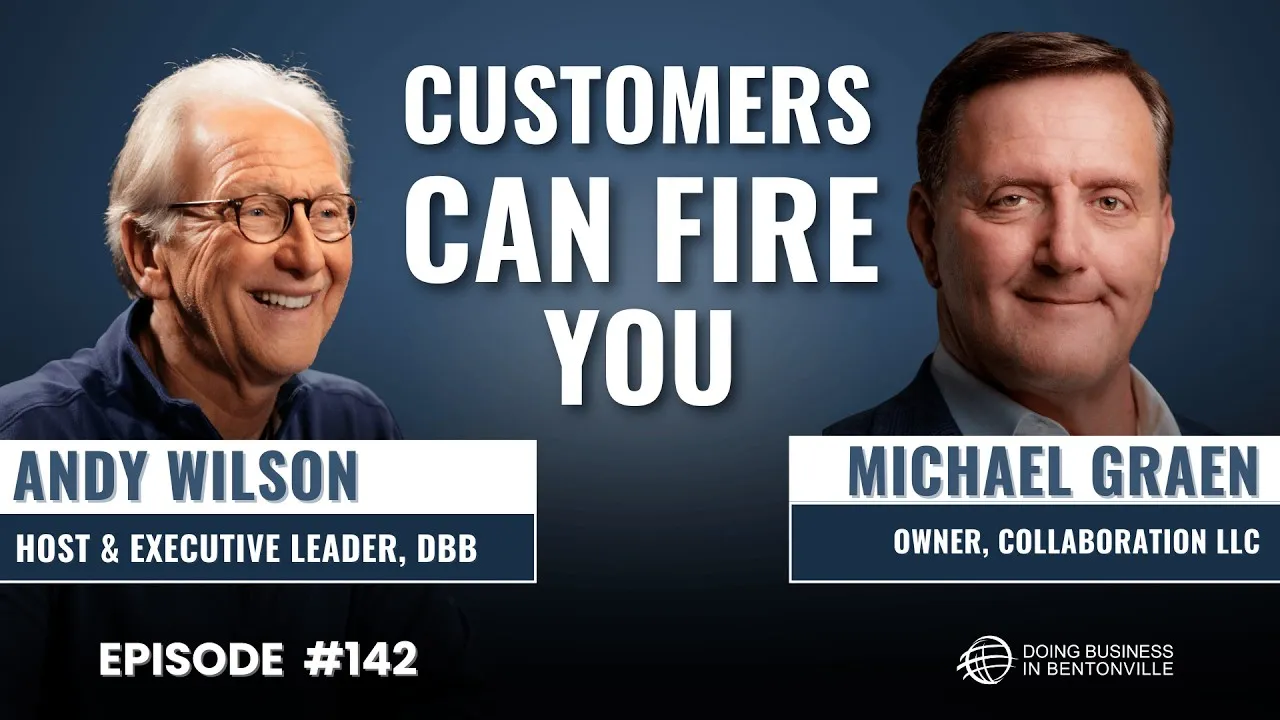
Shoppers aren’t loyal to logos anymore, they’re loyal to getting exactly what they want, exactly when they want it. When the shelf is empty, the phone in their hand becomes your fiercest competitor. We sit down with retail veteran Michael Graen to unpack a hard reset for modern stores: treat on-shelf availability as a mission-critical KPI, use sensors to see the truth in real time, and let AI prioritize the few fixes that protect the most customers and the most sales.
Michael demystifies RFID as core retail infrastructure, brilliant for apparel, general merchandise, tires, and now perishables where date-aware tags prevent expired sales, while being honest about limits in water and metal-heavy items. We walk through how shelf-scanning robots, fixed cameras, Bluetooth, and 2D barcodes create a sensor fabric that answers two essential questions: what do we have, and where is it? Then comes the part most retailers miss, turning those answers into action before the shopper gives up. Think thermostat, not thermometer.
Service isn’t a nice-to-have; it is the differentiator. We talk about the lost 10‑foot rule and why associates are buried in tasks instead of helping people. Michael shows how AI can change that day-to-day reality by collecting overnight, ranking the five actions that matter each morning, and freeing teams to greet, guide, and sell. He also teaches the consumer decision tree, brand, form, scent, feature, so gaps get fixed in order of what customers actually choose. From vertically integrated winners to complex mass merchants, the path forward is the same: tighter collaboration, role clarity, and a handful of KPIs that everyone lives by.
If you lead in retail or supply chain, this is a practical playbook for fewer empty shelves, smarter labor, and trips that feel human again. Subscribe for more conversations like this, share it with a teammate who owns store execution, and leave a review with the one change you’ll make this week.
Connect with Michael Graen:
LinkedIn Profile: https://www.linkedin.com/in/michaelgraen/ (https://www.linkedin.com/in/michaelgraen/)
Email: Mike.graen@collaborateretail.com
Supply Chain Video: https://www.youtube.com/shorts/TY9xsT6S75A (https://www.youtube.com/shorts/TY9xsT6S75A)
More About this Episode
The Executive Gap: Why Retailers Must Evolve from Measurement to Action
The energy at the 2026 National Retail Federation event in New York was a stark reminder of how far we have come and yet how much of the "old guard" thinking still lingers in the aisles of modern retail. Walking the expo floor, I was struck by a powerful realization: the industry is finally hitting a wall where it can no longer afford to talk about what might work. We have reached a point of alignment around what must work. In Northwest Arkansas, the epicenter of the retail universe, the pace of change is not just a topic of conversation; it is a matter of survival.
I am Andy Wilson, and on this episode of the Doing Business in Bentonville Podcast, we sat down with Michael Graen, a man whose forty-two years of experience across Procter & Gamble, Walmart, and Crossmark make him one of the most seasoned voices in the industry. Michael recently published a piece reflecting on the state of retail infrastructure that stopped me in my tracks. He isn't interested in the hype of the "next big thing." He is interested in the execution gap, the space between an executive’s vision and the reality of a customer staring at an empty shelf.
The Problem with Digital Thermometers
One of the most compelling analogies Michael shared during our deep dive was the difference between a thermometer and a thermostat. For the last two decades, the retail industry has been obsessed with thermometers. We have invested billions into sensors, shelf-scanning robots, and manual audit processes that tell us exactly what is wrong. We know the temperature is too high, so to speak, but we haven't built the cooling system.
A thermometer measures the state of the room, but it has no power to change it. A thermostat, however, is a closed-loop system. It measures the deviation and then triggers a mechanical response to fix it. In a retail environment, we have thousands of "thermometers" in the form of data points. We know an item is out of stock. We know an associate is in the building. But the "thermostat" function, the part that actually forces the associate to stop what they are doing and move the product from the back room to the sales floor, is often broken or non-existent.
Just knowing where an item is located is insufficient for the modern consumer. If I have four phones sitting in the back room and three are supposed to be on the sales floor, RFID tells me exactly where they are. But if the associate is tied up untangling spider wraps or performing a manual price check, that data is dead weight. We have to move toward a sensor-driven vitality where the technology doesn't just collect data but prioritizes the human labor in the store.
The Consumer Decision Tree and the Cost of Disappointment
We often forget that the customer is the ultimate decision-maker. As Sam Walton famously said, the customer can fire everyone in the company, from the chairman on down, simply by spending their money elsewhere. In 2026, that "elsewhere" is only a thumb-press away. Michael shared a personal story that perfectly illustrates the danger of the modern retail blind spot. He went into a local store looking for a specific hitch pin for his RV. The shelf was empty.
The associate he spoke to was polite but dismissed the issue as a likely result of the weather. At that moment, the retailer lost more than a twenty dollar sale. Michael stood in their aisle, used their guest Wi-Fi, and ordered the part from a competitor for next-day delivery. The retailer’s systems likely recorded that as a "no-sale" or didn't record it at all. They have no data on the disappointment of that customer. They don't know that Michael went in for one specific item and left with nothing.
This brings us to the "Consumer Decision Tree." Every shopper has a mental hierarchy. If you are out of Tide with Oxy, the customer has to decide: Do I buy regular Tide? Do I buy a different brand with Oxy? Or do I leave? AI has a massive role to play here by helping retailers understand which out-of-stocks are catastrophic and which are merely inconvenient. If you are out of milk, that customer is leaving. If you are out of a specific scent of laundry detergent, they might switch. Retailers need to prioritize their labor to fix the "deal-breakers" first.
AI as the Great Prioritizer
Artificial Intelligence was everywhere at the NRF show, but Michael noted a clear shift in how the most credible companies are talking about it. The "hype cycle" of AI predicting the future is being replaced by the "utility cycle" of AI managing the present. The real job of AI in a retail store is not to replace the human being, but to act as a filter.
Currently, we ask associates to spend hours collecting data. They scan labels, they take pictures of endcaps, and they perform cycle counts. This is a waste of human potential. A shelf-scanning robot can autonomously navigate the store at three in the morning and take those pictures. The AI then processes that imagery and presents the associate with a "hit list" when they clock in at seven. It says: "Don't worry about the rest of the aisle; these four items are missing, and we have them in the back. Fix this first."
This is the shift from manual data collection to action-oriented execution. When we free up the associate from the burden of being a data collector, we allow them to return to the role they were actually hired for: taking care of the customer. However, this requires a fundamental change in how we train and reward our people.
The Erosion of the Ten-Foot Rule
There is a growing service erosion in big-box retail that we cannot ignore. Sam Walton’s "Ten-Foot Rule,” the idea that you greet and offer help to anyone who comes within ten feet of you, is largely dead. If you walk into a store today, you are more likely to see an associate staring at a handheld device or rushing past you to fill an online pickup order than you are to receive a greeting.
This isn't necessarily because the associates are lazy. It is because we have created a conflict of interest in our reward systems. If an associate is being measured solely on how many items they can pick per hour for online orders, a customer asking for help is a distraction from their goal. They are literally being paid to ignore the person standing in front of them.
Michael’s experience as a "TV Expert" in a Fayetteville store years ago highlights the power of the human touch. By moving away from a script and asking customers about the room they were buying for or the specific features they needed, he sold six televisions in a single afternoon. That is six high-ticket items that might have stayed on the shelf if the customer was left to navigate the specs on their own. We need to create environments where associates are empowered to be experts again, backed by the data that technology provides.
Collaboration as a Foundational Element
The name of Michael’s company, Collaboration LLC, isn't just a brand; it’s a philosophy. Retail is a "three-legged stool" consisting of the supplier, the retailer, and the solution provider. If any one of those legs is shorter than the others, the stool topples. The complexity of getting a single product, like a number two pencil, onto a shelf involves thousands of people, from loggers and rubber harvesters to logistics experts and shelf-stockers.
True collaboration means all these parties are aligned around the same goal: the customer’s satisfaction. It means the supplier is using RFID to ensure the retailer gets exactly what they paid for. It means the retailer is sharing real-time inventory data with the supplier to prevent out-of-stocks before they happen. And it means the solution provider is building tools that solve real-world problems rather than just chasing the latest tech trend.
Michael’s role is often that of a "pothole finder." Having sat in the seats of the supplier, the retailer, and the consultant, he can see the obstacles before the team hits them. He helps companies avoid the mistakes he made over forty years, ensuring that the integration of new technology like Bluetooth, 2D barcodes, and RFID actually leads to a better experience for the shopper.
The Road Ahead for Retail Infrastructure
As we look toward the end of the decade, the winners in the retail space will be the ones who treat their technology as infrastructure rather than a series of one-off projects. Just as you wouldn't run a store without electricity or Wi-Fi, you won't be able to run a store without real-time inventory visibility.
The vertically integrated retailers, the ones who own the product from manufacture to sale, are currently leading the way because they have total control over their data. For the mass merchandisers who deal with thousands of third-party suppliers, the challenge is much greater. But the goal remains the same: 100% on-shelf availability and a seamless customer experience.
We have the tools. We have the data. Now, we need the executive will to close the gap between measurement and action. We need to stop acting like thermometers and start acting like thermostats. Retail is, and always will be, a people business powered by technology. If we lose the people in the pursuit of technology, we lose the customer. And if we lose the customer, nothing else matters.
We are incredibly grateful to Michael Graen for sharing his deep institutional knowledge with us. The retail world is changing fast, but the basics of serving the customer remain the foundation of everything we do in Bentonville.