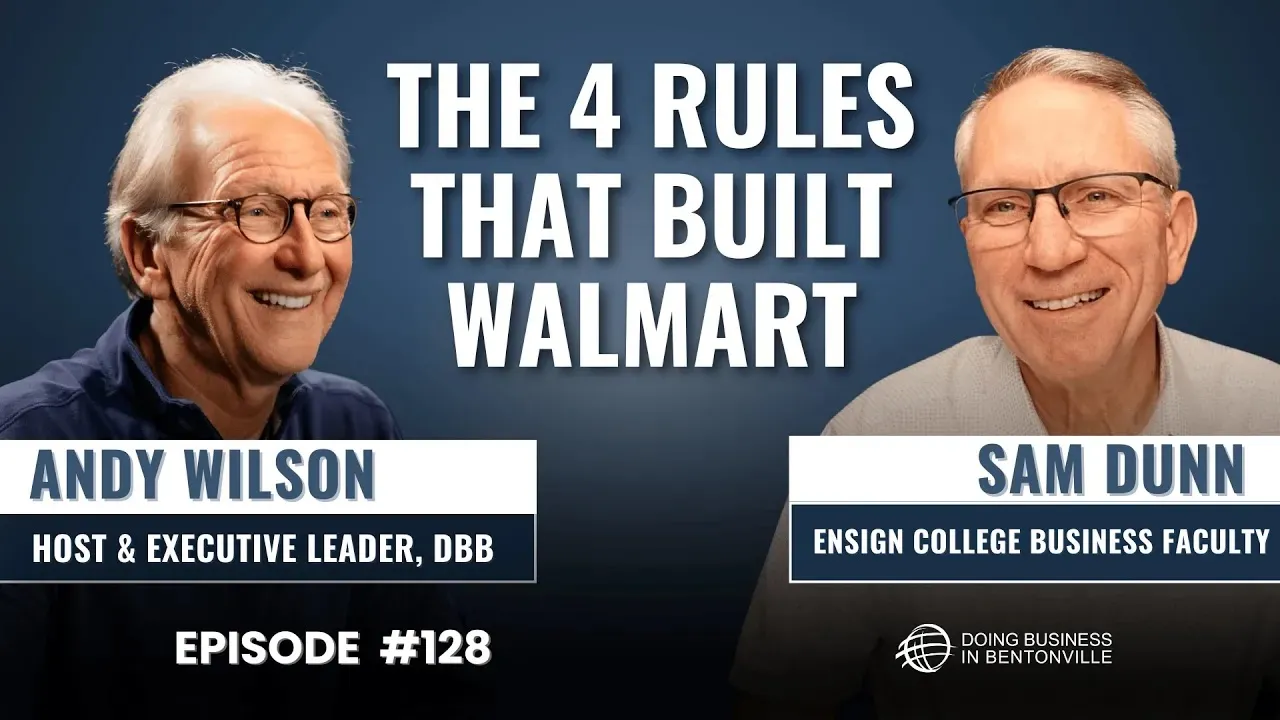
Big results come from simple rules practiced every day. We sit down with longtime Walmart leader Sam Dunn to unpack the principles from Don Soderquist’s "The Walmart Way" and trace how culture, vision, and speed transformed small ideas into system-wide advantages. From the four basic beliefs, respect for the individual, service to the customer, strive for excellence, and act with integrity, to the rituals that made them real, we share firsthand stories that reveal why these weren’t slogans but a decision system used in tough moments.
You’ll hear how bold vision stayed grounded in details: a better fixture spotted in a competitor store, a people greeter that lifted service and cut shrink, and an open door moment that saved a driver’s career and strengthened trust. We break down the cadence that powered execution, Friday morning management meetings, fast cross-functional solutions by noon, and field-facing updates the same day, plus the early investment in communication tools that carried clarity to every store. Speed shows up as a quiet superpower: closing the books in three days, acting on facts while rivals were still waiting, and iterating faster than the market could respond.
We also talk about the discipline to stick to the basics even while testing new formats, and how leaders can translate these ideas today: get closer to the front line, shorten decision cycles, invest in the right tools, and let shared beliefs guide tradeoffs. It’s a practical playbook for operators, founders, and managers who want a stronger culture and sharper execution without adding complexity. If you’re ready to lead with clarity and move with urgency, this conversation will give you concrete steps and fresh conviction.
Enjoy the episode? Follow the show, share it with a teammate, and leave a quick review. Tell us: which principle will you put to work this week?
More About this Episode
The Walmart Way: Timeless Leadership Principles That Still Power Modern Business
By Andy Wilson
When we talk about transformative leadership in business, it’s often tempting to focus on disruptive innovation, rapid scalability, or the latest digital tools. But every now and then, it’s worth pausing to ask: what are the enduring principles that make a company great? What cultural foundations continue to deliver results, even as the business world shifts beneath our feet?
That question brought me back to The Walmart Way, a book written by Don Soderquist, a former COO and Vice Chair of Walmart and one of the most respected voices in Walmart’s rich history. Alongside my longtime friend and colleague Sam Dunn, who served for nearly three decades in leadership roles at Walmart, we took a deep dive into Soderquist’s insights. What we found wasn’t nostalgia, but an essential leadership manual that still resonates today.
This article explores the leadership principles from The Walmart Way and explains how they can be directly applied to today’s business challenges, no matter the size of your organization.
The Man Behind the Book: Don Soderquist’s Legacy at Walmart
Don Soderquist wasn’t just a top executive, he was one of the foundational architects of Walmart’s culture. When he left a stable position as president of Ben Franklin stores to join Sam Walton in 1980, it was a leap of faith, at a time when Walmart was still considered a risky upstart.
Soderquist helped bring structure to Sam Walton’s visionary ideas. As COO and later Vice Chair, he cemented the company's values into daily operations. After Sam Walton passed away, Don became the keeper of the culture, ensuring that principles like respect, service, and excellence continued to guide decisions at every level.
It’s this fusion of vision and execution that makes The Walmart Way more than a memoir. It’s a leadership blueprint built from decades of real-world application.
Principle 1: Dream Big, Then Build the Vision
At the heart of Walmart’s success was a relentless dream. When Sam Walton predicted Walmart would jump from $40 million in sales to $2 billion over a decade, many laughed. But he wasn’t joking. That dream, and the vision that followed, was essential fuel for Walmart’s unprecedented growth.
Vision isn’t about empty ambition. It’s about clarity, purpose, and a forward-facing mindset that rallies people to something bigger than themselves. As leaders, our job is to communicate that vision over and over again, to make sure it's not just a slide in a presentation, but something embedded in the hearts of our teams.
When Sam Walton toured competitor stores, he didn’t just see outdated displays or pricing mistakes. He saw opportunities. He once spotted a pantyhose rack he liked so much that he copied the manufacturer’s details and asked for it to be replicated across Walmart stores. Vision is about seeing what others miss. And often, it’s right in front of you.
Principle 2: Shared Values Aren’t Optional, They’re Operational
One of the most powerful tools in Walmart’s culture was the set of Basic Beliefs. Originally three, Respect for the Individual, Service to the Customer, and Strive for Excellence, a fourth was added later: Act with Integrity.
These weren’t hollow slogans. They were the decision-making compass used every day at every level. When you faced a tough call, you went back to the beliefs. When new associates joined, they were introduced not just to procedures, but to values.
Don Soderquist didn’t just write them down, he activated them. He instituted monthly “Culture Saturdays,” where leaders would share personal stories about how they lived one of the values in their day-to-day roles. It made the culture real, relatable, and replicable.
The question for today’s leaders: Do your people know your company’s values, and do they see you living them?
Principle 3: Respect for the Individual Begins with Listening
Respect is shown in actions, not policy. One of the strongest expressions of that at Walmart was the Open Door Policy. Any associate, from the warehouse to the home office, could bring a concern or idea directly up the chain, including to Sam Walton himself.
Don shares a memorable story in the book about a truck driver who had made repeated mistakes and was about to be let go. The driver used the Open Door to speak directly to Sam. Despite his leadership team’s recommendation to terminate, Sam said: “If we don’t listen to our people and come down on their side from time to time, what good is the Open Door Policy?”
They re-hired the driver, and he turned things around completely.
That kind of trust sends a powerful message. It says, You matter. And it encourages people to speak up, contribute, and improve. Listening isn’t just a soft skill. It’s a competitive advantage.
Principle 4: Lead by Walking Around
Another core practice from The Walmart Way is MBWA, Management by Walking Around. Don, Sam Walton, and many of us in leadership learned early that the best insights don’t come from spreadsheets or dashboards. They come from real conversations with the people doing the work.
I still remember the story of a front-line associate in Louisiana who suggested putting a greeter at the store entrance. The idea seemed impractical at first, how could we afford it on our tight payroll budgets? But Sam loved it. We made it work.
It turned out to be a game-changing customer service move, one that also helped reduce theft. More importantly, it reminded us all: great ideas don’t just come from the boardroom.
Principle 5: Execution is a Discipline, Not an Option
Walmart’s speed of execution was one of its greatest strengths. Sam expected problems to be solved the day they appeared. That kind of agility was built on communication, accountability, and collaboration.
Every Friday morning, we’d gather for a closed-door leadership meeting to review the business. It was intense, honest, and action-oriented. Immediately afterward, each department would break off to solve the key challenges. By mid-afternoon, we were rolling out new plans to stores across the country.
The culture said: Decide fast, act fast, and don’t wait to be perfect.
This wasn’t chaos, it was alignment in motion. When you embed shared values and clear vision into a culture, speed becomes natural. Execution becomes consistent. And that’s when you start pulling ahead of competitors still stuck in “analysis paralysis.”
Principle 6: Invest in the Tools to Win
One of Don’s unsung contributions was his belief in investing in tools that helped associates do their jobs better. He championed Walmart’s satellite communication system, which allowed us to broadcast live messages and align the organization in real time.
Information was no longer trickling out over days, it was immediate. That meant less confusion, faster action, and better performance. Don didn’t view technology as overhead. He saw it as a way to empower people, simplify operations, and accelerate results.
In today’s digital-first world, this principle still rings true. If your tools aren’t empowering your team, they’re holding them back.
Principle 7: Stick to the Basics
Don’s message here was simple but profound: don’t stray too far from what made you successful. Walmart tried many new ventures, some worked, some didn’t. But what never changed was the commitment to being a great merchant, delivering low prices, and serving customers well.
It’s easy in today’s fast-moving market to chase the next trend. But sometimes, the most powerful move you can make is doubling down on what you do best.
Building a Culture That Outlasts You
One of the most powerful lessons I’ve carried from my years at Walmart, and from working directly with Don Soderquist, is that culture must outlive the founder. Sam Walton knew that his time would eventually end. Don took it upon himself to make sure the culture didn’t end with him.
Every company has the opportunity to build something enduring. Not just a business model, but a belief system. Not just profits, but people.
If you’re leading a business today, whether it’s 10 people or 10,000, ask yourself:
- What are your foundational beliefs?
- Are those beliefs clear to your people?
- How are they reinforced in everyday decisions?
- Are you listening deeply, communicating clearly, and executing quickly?
Because when you do, you’re not just building a business. You’re building the way your company will do business, for generations.