In the fast-paced world of omnichannel retail, we often celebrate the arrival of a package at a doorstep without considering the industrial symphony required to produce its contents.
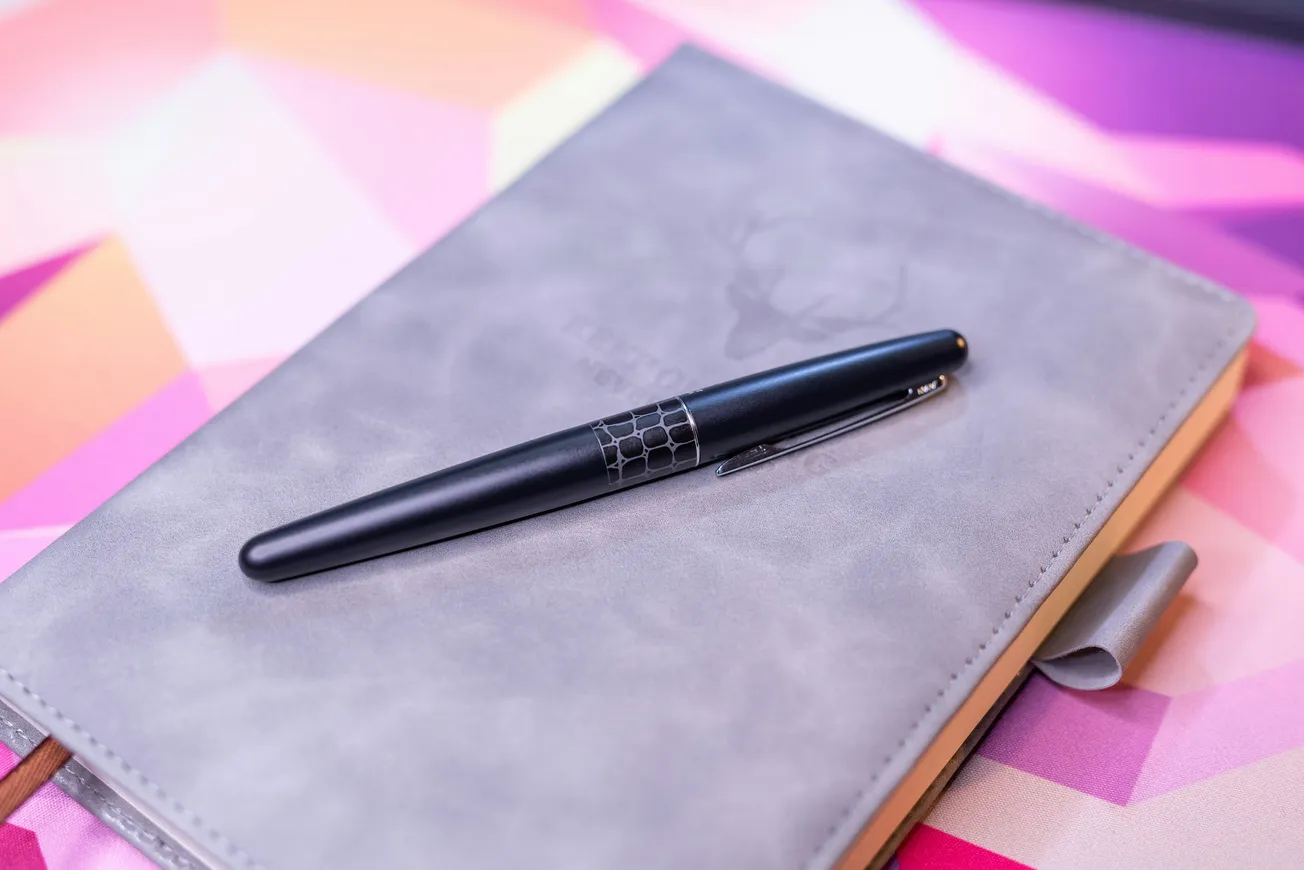
Take, for example, the ballpoint pen.
It is a simple tool, often ignored until it runs dry, yet its creation is a thousand-mile odyssey involving three continents, specialized chemistry, and precision engineering that would make a watchmaker blush.
For the business community, the pen isn't just stationery; it is a masterclass in global logistics and micro-manufacturing.
The Engineering of a Miniature Marvel
The journey begins not in a factory, but in the earth. The "ball" of a ballpoint pen is typically made of tungsten carbide—a material nearly as hard as diamond. The raw tungsten is often mined in China or South Africa before being sent to specialized processors in Europe or Japan. There, it is ground into a perfect sphere with a tolerance of less than 0.0001 inches.
Simultaneously, the pen’s brass or stainless steel tip is being precision-machined. This tiny housing must be perfectly calibrated to hold the ball while allowing it to rotate freely, feeding a controlled amount of ink onto the page. If the fit is too tight, the pen skips; too loose, and it leaks. This is high-stakes technology hidden in plain sight, ensuring the "phygital" transition of a person's thoughts to a physical record remains seamless.
A Global Chemistry Experiment
While the hardware is being perfected, the "software"—the ink—is undergoing its own transformation. Modern ballpoint ink is a complex cocktail of synthetic pigments, resins, and lubricants. The oil-based dyes are often sourced from chemical plants in Germany or the United States, designed to dry instantly on paper but remain fluid inside the pressurized ink reservoir.
The plastic barrel and cap are typically injection-molded from polypropylene or polystyrene pellets, often produced in massive petrochemical hubs like those in the Gulf Coast or Southeast Asia. These components are then funneled into a central assembly plant, where high-speed robotics snap them together at a rate of thousands of units per hour. This is where the "community" of raw materials finally takes the form of a finished product.
The Last Mile to the Bentonville Shelf
Once boxed, our pen joins a palletized shipment, entering the vast network of international shipping lanes. It may cross the Pacific on a mega-freighter, clear customs at the Port of Long Beach, and travel by rail to a massive distribution center in the Midwest. In the world of omnichannel retail, this is where the data takes over.
Using advanced inventory management systems, retailers track the pen’s journey to ensure it arrives at a local storefront or an e-commerce fulfillment center exactly when the consumer needs it. The coordination required to get a $1.00 item across the globe with a profit margin still intact is a testament to the efficiency of the modern supply chain.
When a student in Bentonville picks up that pen to sign a lease or a CEO uses it to authorize a merger, they are holding the culmination of a global effort. The "Secret Life" of the ink pen reminds us that in our interconnected world, no object is truly simple. It is a tiny, plastic-and-metal ambassador of the global economy, proving that even the smallest tools require a world-class strategy to succeed.
More about supply chain:
 Staff Report
 Staff Report
 Staff Report