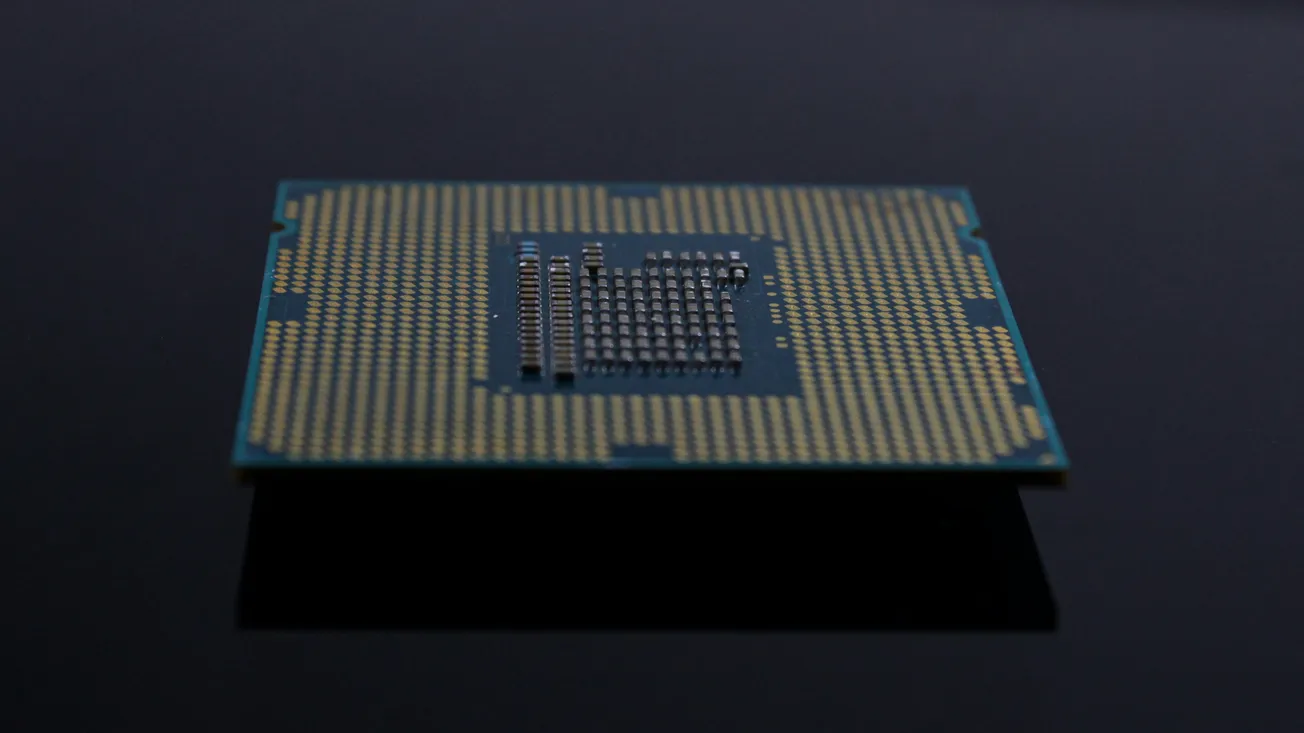
The global semiconductor landscape is witnessing a significant bottleneck as Intel Corporation struggles with persistent manufacturing capacity issues. In a March 2026 update, Intel executives and industry analysts confirmed that the journey to rebuild the company’s production prowess and meet the explosive demand driven by Artificial Intelligence (AI) will be a multiyear endeavor.
As reported by Supply Chain Dive, the company is currently operating "hand-to-mouth," prioritizing high-margin server chips at the expense of its traditional consumer segments.
Redirecting Production to Meet AI Demand
To capitalize on the surge in data center requirements, Intel has redirected several production lines from consumer-grade processors to its Xeon server chips. CFO David Zinsner recently noted that while wafer supplies are expected to improve over the next six months, the first quarter of 2026 remains heavily constrained. This shift has resulted in a 7% decline in consumer sales, even as the data center segment grew by 9% to $4.7 billion.
Intel CEO Lip-Bu Tan expressed disappointment over the company's inability to fully meet market demand, describing the current phase as a "multiyear journey" that requires significant resolve. Unlike "fabless" competitors such as AMD and Nvidia—who rely on external partners like Taiwan Semiconductor Manufacturing Co. (TSMC)—Intel’s dual role as both a chip designer and manufacturer means its success is tethered to its internal "foundry" performance.
The TSMC Bottleneck and Yield Challenges
Despite owning its own fabs, Intel remains entangled in the broader global supply chain. For its most advanced future products, Intel still relies on TSMC for compute chiplets. Analysts from Omdia point out that the current bottleneck for Intel is often the availability of these third-party components rather than just internal manufacturing limits. With TSMC’s leading-edge nodes fully booked by Apple, Nvidia, and AMD, Intel finds itself in a queue for the very parts needed to complete its high-end processors.
Furthermore, Intel’s internal foundry business is facing execution hurdles. Bank of America analysts have noted that the company’s current 18A process node is struggling with low yields. If Intel cannot achieve "flawless execution" on its current nodes, external customers may hesitate to commit to the more advanced 14A process slated for future production. This technical friction is estimated to keep Intel’s foundry business from reaching its full potential for another two to three years.
Strategic Implications for the Bentonville Ecosystem
For the retail and logistics stakeholders in Bentonville, the chip shortage has direct implications for the availability of high-performance hardware and the advancement of agentic AI. As retailers look to implement more sophisticated AI for inventory management and customer service, the "heat" felt by chip manufacturers translates into longer lead times for server infrastructure and specialized hardware.
The situation underscores a critical lesson in supply chain transparency: even the world’s largest integrated manufacturers are vulnerable to localized capacity issues and third-party dependencies. As Intel works to ramp up its Ohio-based campus and other domestic facilities, the industry is watching closely to see if the company can transition from a "reactive" production model to a "proactive" foundry powerhouse.
In the near term, the "flight to capacity" will continue to define the semiconductor market. For omnichannel leaders, this means diversifying tech stacks and planning for infrastructure cycles that account for a volatile, multiyear recovery period in the chip sector.
More about technology:
 Staff Report
 Staff Report
 Staff Report