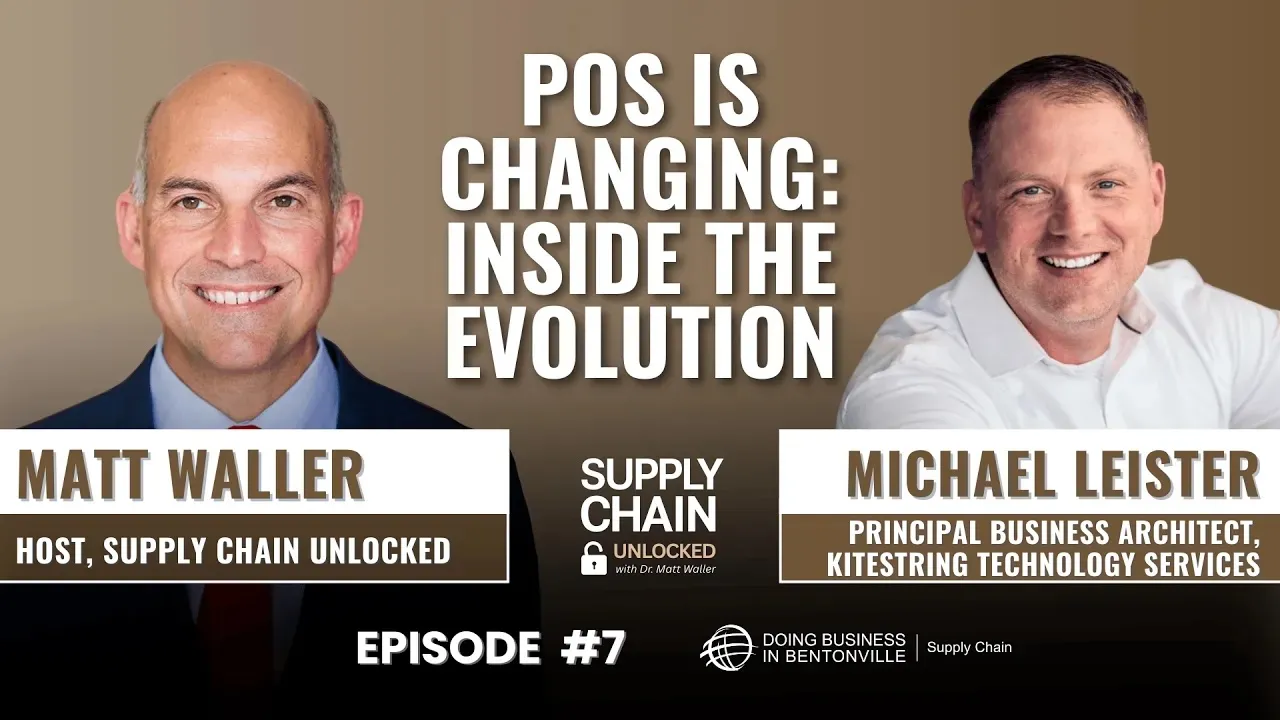
Checkout isn’t a place anymore. It’s a strategy. We dive into how modern POS now spans mobile devices in the aisle, self-checkout, curbside pickup, and scan-and-go, and what that means for customer experience, associate workflows, and the bottom line. With guest Michael Leister, who helped deploy hundreds of thousands of devices across Walmart and Sam’s Club and later supported Amazon’s last mile, we unpack the operational playbook behind retail hardware and software that actually scales.
We start on the floor, not in a slide deck: observing shoppers, mapping associate tasks, and finding the gaps before drafting requirements. From there, we compare the strengths of enterprise vendors, NCR Voyix, Toshiba, Fujitsu, Diebold Nixdorf, HP, and the fresh pressure from Elo that’s pushed the market toward sleeker, modular, and configurable systems. Michael shares why mobile-first models like JCPenney’s ELO M60 transform a handheld into a dockable fixed lane, a line-busting tool, and an endless-aisle clienteling device that saves the sale when inventory is elsewhere.
ROI hides in serviceability. We break down how remote management, over-the-air updates, and AI-guided diagnostics (think on-screen self-checkout fixes and one-tap ticketing) cut downtime and truck rolls. We also look at NRF trends such as smart carts, computer vision, scan-to-add, and retrofits, along with the real hurdles of charging, shopper adoption, and defining where a transaction “closes.” Call 2025 a turning point: retailers need hardware and software that flex across kiosks, fixed lanes, mobile, and self-checkout without ripping and replacing every few years.
If you care about faster queues, higher conversion, and fewer abandoned baskets, this conversation gives you a clear path to modernize with less risk. Listen, share with your ops and tech teams, and subscribe for more pragmatic deep dives. Got a checkout pain point we should tackle next? Send it our way and leave a review to help others find the show.
More About this Episode
The Strategic Role of Point of Sale Technology in Modern Retail
Point of sale technology sits at the center of modern retail, even though many people still think of it as nothing more than a cash register at the front of the store. In reality, POS has become one of the most important strategic tools retailers have to manage operations, serve customers, and compete in an increasingly complex omnichannel world. When you look closely at how POS hardware and software have evolved, you can see how deeply they influence the customer experience, associate productivity, and return on investment across the entire retail value chain.
At its core, POS simply means point of sale, the moment and place where a transaction occurs. Historically, that point was fixed. It lived at a counter, wired into the back office, and was largely isolated from the rest of the business. Today, that definition no longer holds. The point of sale can exist anywhere a customer decides to buy, fundamentally reshaping how retailers design stores and deploy technology.
From Fixed Registers to a Distributed Point of Sale
The evolution of POS mirrors the broader evolution of retail itself. Early large scale retailers like Walmart recognized decades ago that transaction data was strategic. Long before cloud computing or high speed internet were widely available, they invested heavily in satellite systems to move POS data from stores to headquarters. That visibility into sales, inventory, and demand became a major competitive advantage.
Today, POS technology is no longer exclusive to the largest players. Cloud based platforms and modular hardware allow retailers of all sizes to access real time data and analytics. The difference at the enterprise level is scale. Supporting thousands of stores and hundreds of thousands of devices introduces operational and technical challenges that go far beyond basic transaction processing.
POS as the Foundation of the Omnichannel Experience
Modern POS systems are central to omnichannel retail. Customers expect to move seamlessly between buying online, picking up in store, curbside pickup, and home delivery. Within the store, they expect flexibility, speed, and minimal friction. POS technology enables all of it.
The point of sale may now exist at self checkout, on a mobile device in an associate’s hand, or even at the exit door. Scan and go experiences, like those used at Sam’s Club, eliminate traditional checkout lines altogether. Customers complete their transactions while they shop, and the final interaction simply verifies the purchase as they leave the store. This model not only improves the customer experience, but also changes how labor is deployed inside the store.
Mobile POS and the Rise of the Endless Aisle
One of the most impactful shifts in POS has been the move toward mobile first strategies. Handheld devices now function as full point of sale systems, inventory tools, and customer service platforms all in one. When docked, these devices can operate as traditional fixed registers. When undocked, they allow associates to move freely throughout the store.
This flexibility makes the endless aisle possible. If a product is not available in the right size, color, or configuration, associates can locate it elsewhere in the network and complete the sale on the spot. The customer does not have to leave the store or shop with a competitor online. POS becomes the connective tissue between physical stores and the broader supply chain.
Scaling POS Technology at the Enterprise Level
At the enterprise level, POS decisions are driven as much by serviceability and manageability as by features. Retailers must consider how easy it is to replace components, how often technicians need to be dispatched, and whether software updates can be completed remotely.
Mobile device management platforms are critical in this environment. As retailers deploy thousands of mobile devices, centralized control becomes essential. The ability to push updates remotely and manage devices by exception significantly reduces operational costs and improves uptime. These efficiencies directly impact return on investment and long term scalability.
Competition and Innovation Among POS Hardware Providers
The POS hardware market is dominated by a small group of vendors capable of supporting enterprise scale deployments. Providers such as NCR Voyix, Toshiba, Fujitsu, Diebold Nixdorf, and HP have the infrastructure and support models required for complex retail environments.
Competition among these companies has driven meaningful innovation. Hardware has become more modular, more configurable, and more adaptable to different store formats. Retailers can now choose screen sizes, mounting options, and form factors that best fit their environments rather than settling for one size fits all solutions.
Hardware and Software Agnosticism in Modern POS Systems
Another major shift in the POS landscape is the move toward hardware and software agnosticism. In the past, retailers were often locked into a single vendor ecosystem. Today, modern architectures allow retailers to pair best in class hardware with the software that best fits their operational needs.
This flexibility reduces vendor lock in and makes it easier to evolve over time. Retailers can upgrade components, add new capabilities, and adapt to changing customer expectations without replacing entire systems.
The Role of AI in POS Hardware and Store Operations
Artificial intelligence is beginning to enhance POS systems in practical ways. Intelligent self checkout support tools can guide associates through troubleshooting steps directly on the screen, complete with visuals and automated ticket creation. These tools reduce downtime, improve service response, and keep registers operational during peak periods.
AI driven capabilities are not just about automation. They are about empowering store teams to resolve issues faster and focus more on customers rather than technology problems.
Why 2025 Marks a Turning Point for POS Hardware
The last several years have marked a decisive shift in what retailers expect from POS hardware. The idea of a single checkout location has disappeared. Devices must now support self checkout, assisted checkout, mobile transactions, and kiosks within a single ecosystem.
Future ready POS hardware must be upgradeable rather than disposable. Retailers are looking for platforms that can adapt as new technologies emerge, rather than requiring costly rip and replace cycles. This flexibility is becoming a baseline requirement, not a differentiator.
Emerging Concepts: Smart Carts and the Future of Checkout
One of the more experimental areas of POS innovation is the smart cart. These carts integrate scanning, weighing, or computer vision technology to track items as customers shop. While adoption in the United States remains limited, international markets are moving faster in this space.
The challenge is not the technology itself, but operational execution. Charging, maintenance, customer education, and defining the checkout moment all present hurdles. Whether smart carts become mainstream or remain niche, they highlight how far the concept of point of sale has expanded.
Leadership, Teams, and Execution in Large POS Deployments
Technology alone does not determine success. Large scale POS implementations depend on strong leadership and well managed teams. High pressure environments, tight timelines, and complex store operations require disciplined execution and clear definitions of success.
Effective POS strategies align technology decisions with customer needs, associate workflows, and business outcomes. When these elements work together, POS becomes a driver of competitive advantage rather than just an operational necessity.
POS as a Competitive Advantage in Modern Retail
Point of sale technology has evolved from a simple transaction tool into a strategic platform that shapes how retailers compete. From mobile POS and endless aisle to scan and go and AI enabled self checkout, the point of sale now exists wherever the customer chooses to engage.
Retailers that understand this evolution and invest in flexible, scalable POS ecosystems are better positioned to meet customer expectations today while adapting to the demands of tomorrow.