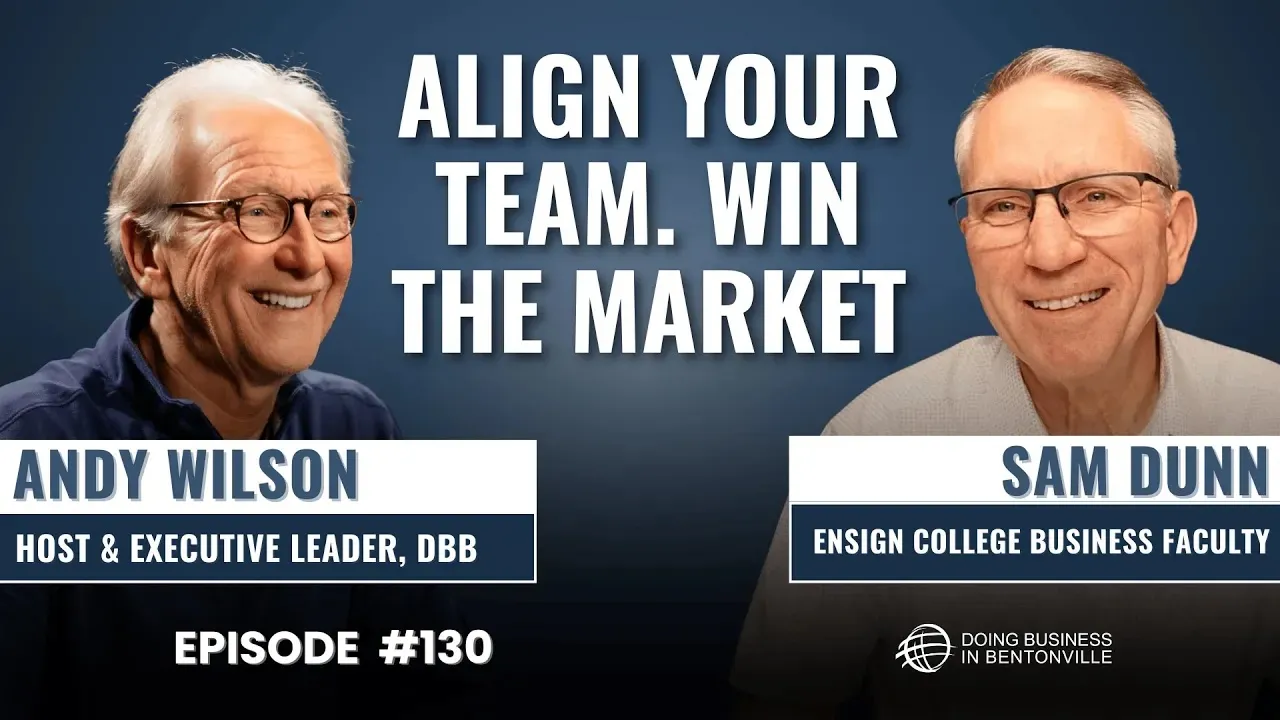
Want a talent strategy that actually moves the numbers? We unpack how to connect mission, vision, and core values to daily execution so your team delivers where it counts: with customers. Drawing on decades inside Walmart and insights from Don Soderquist’s The Walmart Way, we get specific about hiring better than yourself, building a bench for the next role, and protecting mavericks who push boundaries and spark breakthroughs.
We walk through the CASH model: customer, associate, shareholder, to reframe strategic choices in the right order. You’ll hear why three sharp priorities beat a bloated to-do list, how to set high expectations without burning people out, and what it takes to share rewards in ways that unlock ownership. From speeding up P&L visibility to simplifying metrics, we show how execution becomes a strategy, not just a phase, and why alignment starts with the leader when teams slip into the fog.
This conversation is rich with frontline stories: management by walking around that turns associate ideas into action, handwritten recognition that fuels discretionary effort, and moments of real care that bond teams beyond KPIs. We also spotlight community service as a competitive advantage: showing up locally builds trust, attracts talent, and reinforces brand promise where it matters most.
If you lead people or want to, this is a blueprint you can use tomorrow: hire for the next job, cross-pollinate to grow faster, communicate everything, and celebrate the wins.
Subscribe, share with a colleague who hires or runs ops, and leave a review with the one practice you’ll implement this week.
More About this Episode
Integrating Leadership Principles Into Talent Strategy and Execution
In today's hyper-competitive environment, there is no substitute for exceptional talent. Yet, attracting, developing, and retaining high-performing individuals remains one of the most challenging aspects of running a successful business. In this episode, we expanded on some foundational leadership principles from Don Soderquist’s The Walmart Way, focusing not just on what great leadership looks like, but how to apply those principles to build stronger teams and execute business strategy effectively.
At the core of everything we discussed is this central truth: Your business strategy is only as good as your talent strategy. The best ideas in the world won’t succeed without people who are capable, aligned, and inspired to carry them out. Great organizations recognize this and ensure their mission, vision, values, and strategy are deeply intertwined with how they hire, train, empower, and retain their people.
Let’s dive into the key takeaways from this conversation and explore how leaders can create alignment between vision, people, and performance.
People Are the Strategy
You may have a brilliant business model, innovative products, or a strong market position, but your people are your most enduring competitive advantage. In fact, many organizations spend nearly a third of their total revenue on wages and benefits, yet very few have a real strategy to maximize the return on that investment.
As we discussed, any business strategy, regardless of company size, must start with a clearly articulated mission, vision, and set of core values. But those principles mean little unless they are anchored in the day-to-day behaviors, hiring decisions, and leadership expectations across the organization.
Three key hiring questions can guide leaders:
- Can they do the job?
- Do they want the job?
- Can they do the next job?
That third question is the game-changer. You’re not just hiring to fill an opening, you’re hiring to build a leadership pipeline. That mindset shifts how you evaluate candidates and how you plan for future growth.
Cross-Pollination Builds Leaders
One of the leadership lessons we revisited was the concept of cross-pollination, as emphasized by Don Soderquist. This is the practice of intentionally moving high-potential individuals into roles outside their comfort zones, into different departments, functions, or geographies, to stretch them and expose them to more of the business.
It’s uncomfortable. It’s challenging. But it’s also how you build resilient, well-rounded leaders who understand your organization deeply.
Both of us experienced this firsthand during our time at Walmart. When you're dropped into unfamiliar territory, you discover more about yourself, and more about what your company needs to thrive. These rotational experiences are often the catalyst for exponential leadership growth.
Don’t Kill the Mavericks
Innovation often comes from the edges. The mavericks, the rule-benders, the iconoclasts, they may be harder to manage, but they are often the very people who bring about transformational change.
At Walmart, we had a few of these folks, and Don Soderquist’s advice was clear: Don’t kill the mavericks. Channel them. Support them. Help them execute responsibly. But whatever you do, don’t stifle the creativity and ambition that sets them apart.
Organizations that reward only conformity limit their ability to evolve. Leaders must balance discipline with space for innovation.
Execution Is a Strategy
It’s easy to see strategy and execution as separate disciplines, one more visionary, the other more operational. But in high-performing organizations, execution is the strategy.
Execution requires discipline. It’s not just about getting things done, it’s about getting the right things done, consistently, across all levels of the organization.
A few key pillars of effective execution include:
- Clarity around business goals and individual responsibilities
- Communication at every level of the organization
- Focus on a small number of high-priority initiatives
- Speed, driven by alignment and decision-making at the edge
Without alignment, execution falters. And alignment starts with leadership.
If something seems off in the performance of a team, don’t just focus on the team, start with the leader. Misalignment at the top filters down fast. As leaders, it’s our job to get out of the fog, reset the direction, and ensure our teams can see the road ahead clearly.
Communicate Everything
Sam Walton’s leadership principles emphasized the importance of transparency and information-sharing. His belief? Communicate everything you possibly can.
In today’s fast-paced environment, leaders often withhold information unintentionally, assuming people already know or won’t understand the complexity. But withholding information kills trust, slows execution, and creates disengagement.
At Walmart, we didn’t have ivory towers. Leaders were expected to be out in the field, talking with associates, asking questions, and listening. That Management By Walking Around (MBWA) approach made people feel seen, valued, and heard. It also gave leaders a ground-level view of what was really going on.
A simple, powerful example: Sam Walton carried a tape recorder in his pocket, recording conversations with associates and forwarding their insights directly to decision-makers. That kind of real-time, grassroots communication is what kept Walmart agile and responsive, even at scale.
Recognition and Care Inspire Performance
People don’t care how much you know until they know how much you care.
We’ve both experienced firsthand how a simple handwritten note, a thoughtful gesture, or a moment of recognition can deeply impact an employee’s engagement and loyalty. In fact, some of those notes from decades ago still sit in boxes in our homes, serving as reminders of the meaningful relationships we built.
One particularly moving story shared in this conversation was about how the leadership team showed up to support Sam at his mother’s funeral. No fanfare. No announcement. Just a quiet act of compassion and solidarity. That’s leadership. That’s culture. And those moments matter more than any business metric ever will.
Lead Through Values
Every strategic initiative, every hiring decision, and every execution plan must be filtered through the values of the organization. At Walmart, we lived by principles like:
- Commit to your business
- Share your profits
- Motivate your team
- Communicate everything
- Celebrate success
- Listen to your people
- Exceed customer expectations
- Control expenses better than competitors
- Swim upstream
Each of these principles is more than a slogan. They are operating instructions for how to lead.
8. Involve the Community
Finally, we touched on something that often gets overlooked in strategy conversations: your community. Sam Walton believed in being active in the community because those are your customers. If you want your people to be proud of their company, let them contribute to something bigger than themselves.
Encourage service. Support local causes. Show up in times of need. That’s not just good citizenship, it’s good business.
Final Thoughts
If you want to build a high-performing organization, start with your people. Integrate your talent strategy directly into your business strategy. Commit to execution as a discipline. Create alignment through clarity and consistent communication. Recognize contributions. Lead through values. And never forget the impact of listening.
At the end of the day, it's about trust. Trust in your mission, trust in your team, and trust in your leadership principles to guide the way.
Because the companies that win long-term are the ones that invest in their people, live their values, and execute with clarity and care.