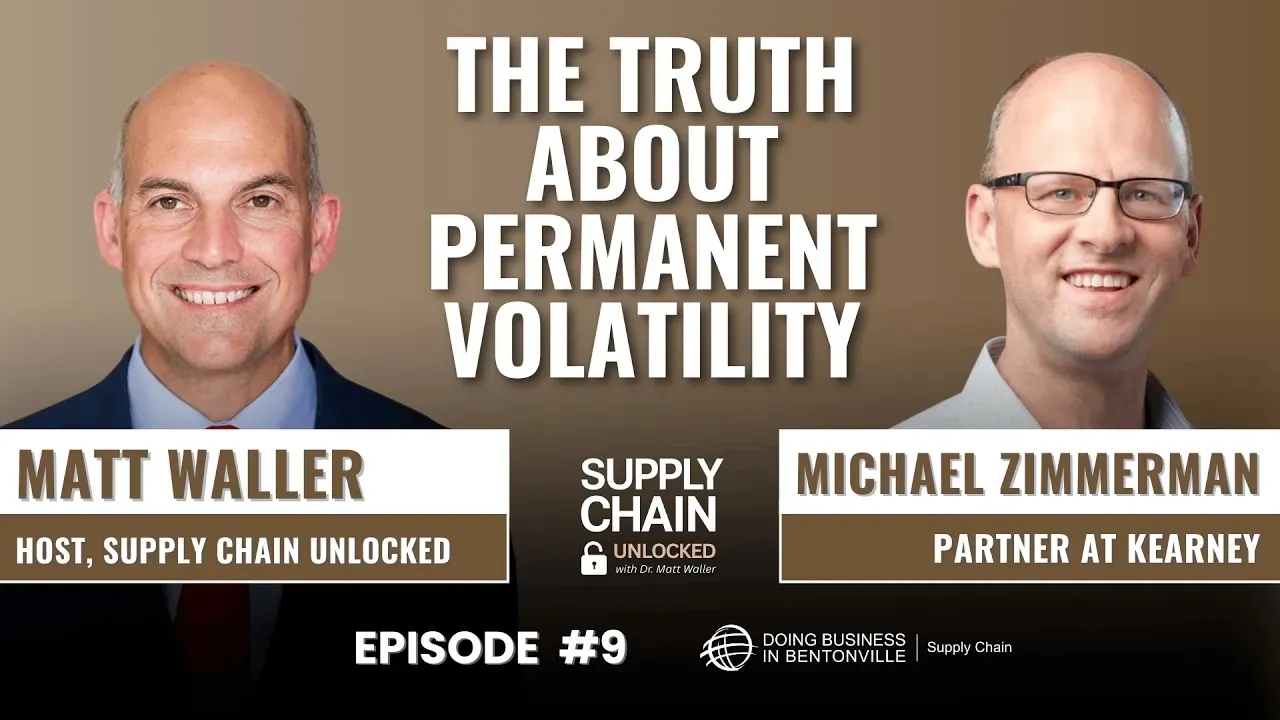
Volatility isn’t a phase to ride out, it’s the operating system of modern logistics. We sit down with Michael Zimmerman, partner at Kearney and veteran of Fortune 500 supply chains, to unpack how structural shocks from trade policy, weather, and geopolitics have rewritten the rules of planning, sourcing, and execution. The throughline is clear: decision advantage beats tool accumulation.
We dig into layered planning that replaces single-point bets with capacity portfolios, flex clauses, and warehouse swing space. Michael shares how to define explicit triggers so teams can reconfigure within days, not weeks, and why the real breakdowns happen at cross-functional seams, order management to load planning, forecasting to capacity commitments. On the people side, we talk about preserving contextual experience, building durable playbooks, and resisting rotations that erase hard-won pattern recognition.
If you’re drowning in tech pitches, this conversation recenters the target: invest where most spend and resilience are decided, transportation sourcing, network design, capacity assurance, and supplier performance. We explore why big-bang transformations often fail and how to layer practical use cases on top of ERP, TMS, and WMS. On AI, Michael is blunt: real wins today live in decision compression, freight audit and pay, spend visibility, exception workflows, and sourcing support, while humans keep the negotiation and relationship work that sets advantage when markets tighten.
Walk away with a playbook to prepay for optionality, fix the seams, and focus your bets where they change outcomes. If you’re aiming to sense, decide, and reconfigure faster, without torching your budget, this is your roadmap to resilient, high-velocity logistics. Enjoy the episode, then subscribe, share with a colleague, and leave a quick review to help more leaders find the show.
More About this Episode
The Decision Advantage: Turning Volatility into a Strategic Edge
The retail and logistics landscape is currently navigating a period of unprecedented turbulence. For years, we operated under the assumption that global supply chains were essentially stable systems that experienced occasional, cyclical disruptions. We built our models around efficiency, single-source lean methodologies, and annual bidding cycles designed to lock in the lowest possible cost. But those days are gone.
What we are witnessing today is not a temporary spike in chaos; it is a structural shift. Volatility has become the new normal. From geopolitical tensions weaponizing trade policy to the increasing frequency of climate-driven disruptions, the variables we must manage have multiplied in both severity and frequency. As we look toward the future of the retail value chain, the ultimate competitive differentiator will no longer be who can build the most efficient plan, but who can achieve a "Decision Advantage,” the ability to sense, decide, and reconfigure faster than the competition.
Why Volatility Is Now Structural
To understand why our planning models must evolve, we have to look at the data. Insurance and reinsurance giants have cataloged a multi-decade upward trend in risk factors. Whether it is ocean schedule reliability failing to return to pre-2020 levels or the sudden implementation of tariffs and export controls, the shocks are now constant.
We are seeing a fundamental move away from global integration toward regionalization, near-shoring, and friend-shoring. These aren't just buzzwords; they are defensive maneuvers in a world where trade policy is used as a tool of statecraft. For logistics leaders, this means that uncertainty is no longer an exception to be managed, it is a design constraint that must be hard-coded into our networks. We are permanently trading a slice of pure efficiency for the sake of resilience.
Rethinking the Planning Paradigm
Historically, supply chain planning was a linear, lock-in exercise. You forecast demand, you optimized for cost, and you managed exceptions as they arose. That model breaks in an asymmetric world. If your plan is rigid, it doesn't just bend under pressure; it convulses and collapses.
The shift we must make is toward "Layered Planning." This involves moving away from single-point commitments and toward ranges, options, and constraints.
- Capacity Portfolios: Instead of a static annual bid, think of your ocean and road lanes as portfolios. This includes pre-negotiated alternatives and flexibility clauses that allow for surges or pullbacks without destroying the relationship or the budget.
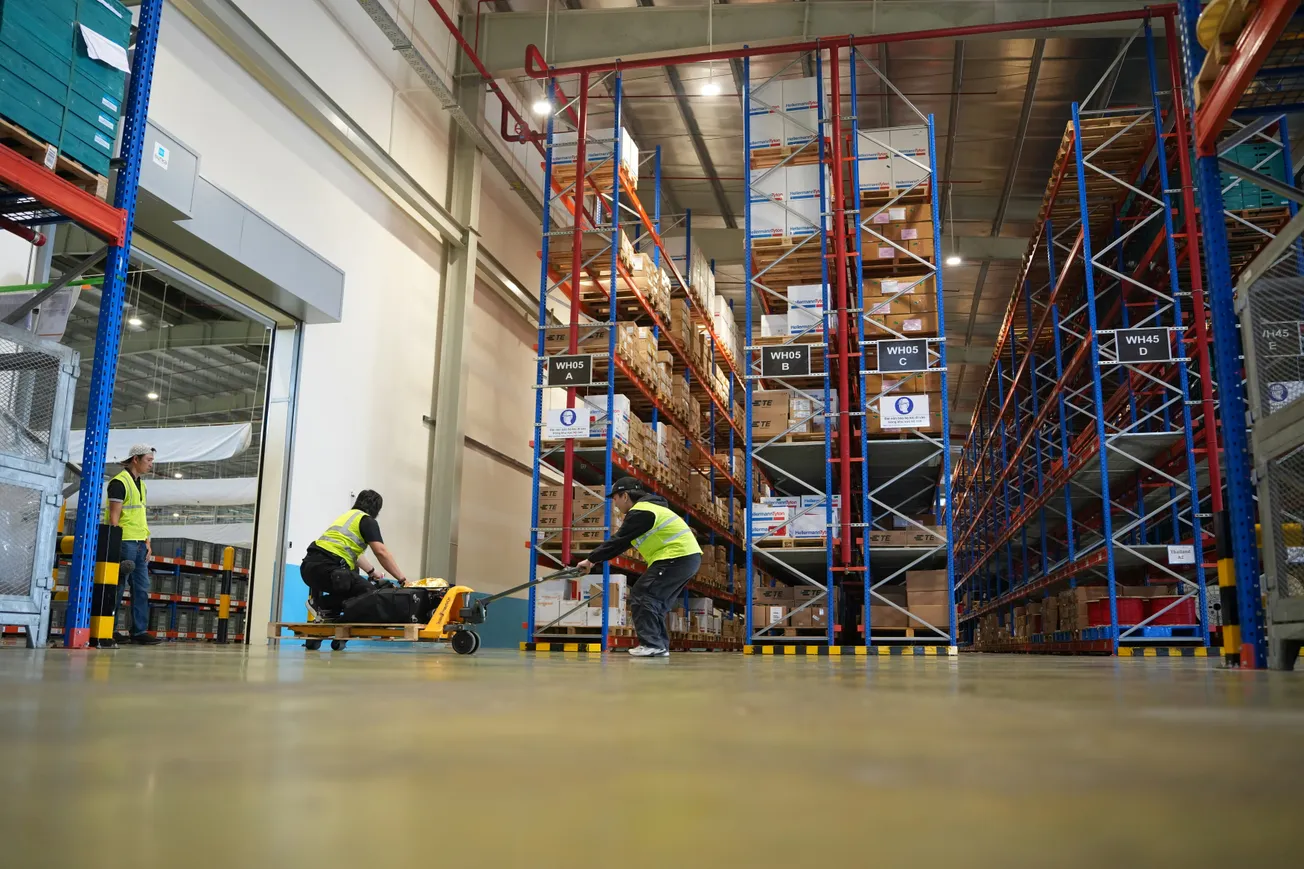
- Swing Capacity: Warehousing networks must be designed with "exit ramps" and the ability to scale labor up or down quickly. Resilience is essentially "pre-paid" insurance. You might pay a slight premium for the option to flex, but it is far cheaper than the alternative of exploding expedited costs and blown-out budgets when a crisis hits.
- Decision Triggers: Short-term planning needs explicit triggers. We cannot afford to debate options in real-time while a vessel is blanked or a port is closed. The moves should be pre-modeled and executable in days, not weeks.
The Seams of the Organization: People and Processes
Agility often breaks down not within the silos of an organization, but at the seams between them. You can have the best load planning in the world, but if the handoff from order management or forecasting is flawed, the system fails. To build a truly resilient organization, we must focus on three core pillars:
1. Experience and Pattern Recognition
In an era of high volatility, contextual experience is a premium asset. There is a trend in corporate culture to rotate leaders quickly to build general management breadth. While this has its merits, it can weaken resilience. Hard-earned pattern recognition, the kind that comes from navigating tsunamis, trade wars, and demand shocks, is difficult to codify. If you must rotate leaders, you must have powerful playbooks and disciplined handovers to ensure institutional knowledge isn't lost.
2. Cross-Functional Process Design
Resilient processes must be designed around collaboration to resolve constraints. We need to move away from locally optimized silos and toward systems that understand the downstream impacts of every decision.
3. Strategic Technology Investment
I am a firm believer in evolution over revolution when it comes to the tech stack. Big transformations often fail because they overload the people and the processes simultaneously. Instead, focus on high-value use cases that offer a high return on investment (ROI). Ask two questions: Is this activity strategically differentiating for us? And are we better at it than the market? If it’s a transactional task like freight audit or track-and-trace, automate it or outsource it to a capable 3PL. Save your internal talent and technology spend for strategic sourcing and network design.
The Role of AI: Decision Compression, Not Just Labor Reduction
We cannot discuss the future of the supply chain without addressing Artificial Intelligence. However, the value of AI today isn't in making blanket improvements to everything; it is in "Decision Compression."
Agentic AI excels at plowing through massive amounts of disparate data to provide visibility and insight. It is incredibly effective at the "scut work" of data extraction, cleansing, and normalization, tasks that historically cost teams weeks of productivity. For example, AI can identify that volumes are down at a specific distribution center for four consecutive weeks and prompt a human leader to adjust trailer pools before the carriers suffer.
AI should be used to collapse the time from raw data to actionable insight. This elevates the work of our people, allowing them to focus on high-value activities like cross-functional teaming and supplier relationship management. While AI can analyze data, it cannot yet have a nuanced conversation with a supplier about capacity commitments or brand heart. We use the machine to clear the fog, but the human still steers the ship.
Moving Toward 2026: The Path Forward
As we look toward 2026, the goal for every senior leader should be to achieve a "Decision Advantage." This means creating an organization that can reconfigure itself faster than the market shifts.
To succeed, we must be ruthless in our prioritization. We should focus our people and our technology on the logistics conditions that actually move the needle on spend and service. We must accept that resilience has a cost, but it is a necessary investment to avoid the catastrophic expenses of unplanned disruptions.
The profession of logistics has become "too exciting" for some, but for those who can master the art of the agile response, it is a frontier of immense opportunity. By building optionality into our designs, investing in the seams of our processes, and using AI to compress our decision cycles, we don't just survive volatility, we use it to win.