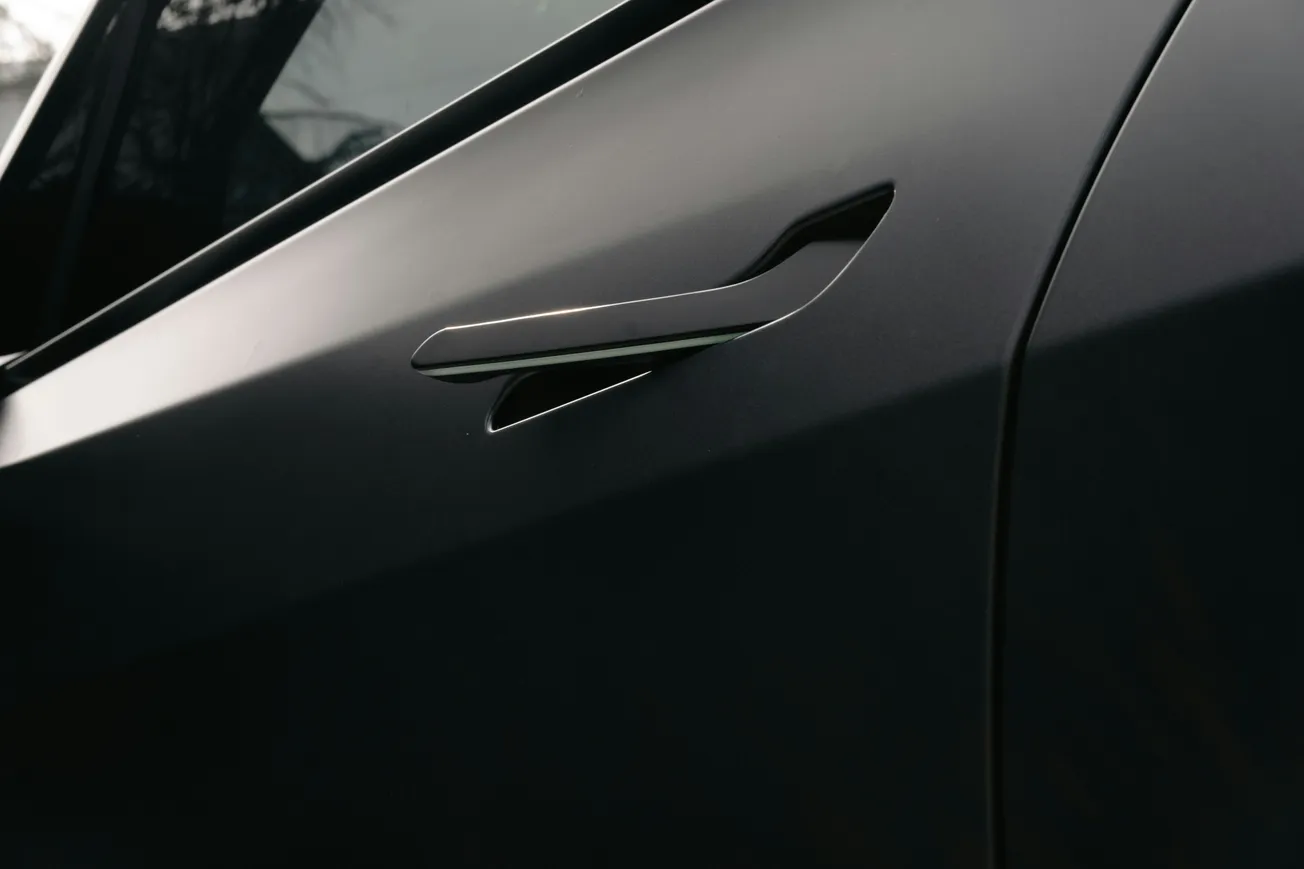
China’s Ministry of Industry and Information Technology (MIIT) has taken a major step in automotive safety policy by announcing that hidden or retractable door handles, popularized by Tesla and widely used in electric vehicles (EVs), will be banned on passenger cars sold in China starting January 1, 2027. The regulation aims to ensure door operability in emergency situations and follows safety concerns linked to electronic handle failures that reportedly trapped occupants inside vehicles during crashes.
What the New Regulation Requires
Under the new rules, all automobile doors (excluding tailgates) must have mechanical release door handles that can be operated both from inside and outside the vehicle without relying solely on electronic systems. Vehicles equipped with press-to-release or electrically deployed hidden door handles — a common aesthetic and aerodynamic choice for many modern EVs — will no longer meet the new standard unless redesigned. Automakers whose vehicles were already approved for sale in China will have a compliance window until January 1, 2029 to update designs.
This mandate targets both Tesla-style flush handles and similar concealed systems found on numerous EV models, including offerings from Chinese and international manufacturers.
Safety Concerns Driving the Change
MIIT’s decision stems from public safety concerns following a series of incidents in which electric door handles failed during accidents or power loss, hampering rescue efforts and occupant escape. These failures predominantly occur when an EV’s electrical system is compromised — for instance, due to a collision impact or battery outage — leaving doors effectively sealed despite an emergency.
Industry analysts in China and abroad have noted that while hidden handles helped improve aerodynamic efficiency and contributed to EV styling, the trade-off with practical emergency access has emerged as a serious safety issue. China’s move to regulate the design directly responds to these concerns and reflects a broader reevaluation of emerging automotive design trends versus fundamental safety necessities.
Impact on Automakers and EV Design
The ban will have widespread implications for automakers selling vehicles in China, the world’s largest automotive market. For brands like Tesla, whose Model 3 and Model Y rely on flush mechanical handles, the new requirements will necessitate engineering changes to incorporate traditional handles or redundant mechanical release systems. European, U.S., and Chinese EV lines with similar handle designs may likewise need modifications to remain compliant.
Automotive consultants expect these changes to influence design priorities globally, given China’s market scale and influence on the EV supply chain. Redesigning vehicles to meet China’s safety standards could drive broader adoption of revised handle mechanisms, even in markets without explicit bans.
Regulators Abroad and Broader Safety Context
Safety authorities in other major automotive markets are also scrutinizing hidden door handle designs. For example, the U.S. National Highway Traffic Safety Administration (NHTSA) has investigated similar door handle failures in Tesla vehicles, including multiple reports of inoperable doors following electrical system issues. Such global regulatory attention adds pressure on automakers to reexamine handle design and redundancy to ensure occupant safety.
China’s forthcoming policy is unique in its explicit prohibition of these designs, making it the first major automotive market to formally ban hidden door handles and set a national safety standard framed around mechanical operability in emergencies.
More about electric vehicles:
 Dan Craft
 Staff Report
 Staff Report