
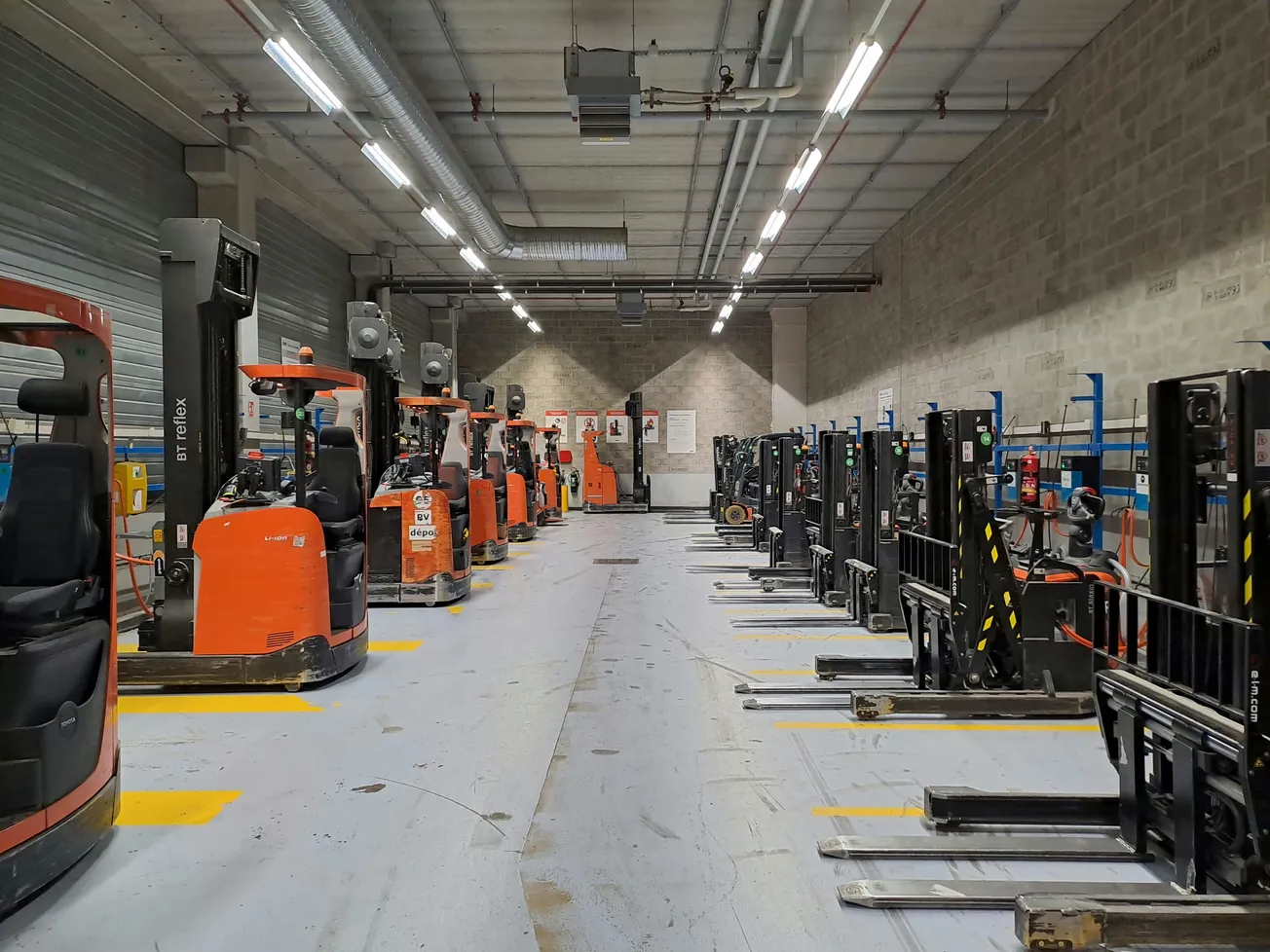
The supply chain industry is currently captivated by the promise of humanoid robotics, yet the most significant productivity gains are quietly occurring on the warehouse floor through the deployment of autonomous forklifts.
In a strategic deep dive with Andy Wilson, Dr. Matt Waller, Brian Nachtigall of ArcBest Vaux, and Brad Umphres of Deloitte highlight how "capital deepening" in proven platforms is outperforming the "rip and replace" philosophy of emerging tech.
The Power of Human-in-the-Loop Teleoperation
While fully autonomous systems are the end goal, the reality of a modern distribution center (DC) is often messy and unpredictable. The integration of sensors and remote teleoperation onto existing forklift platforms allows for a "human-in-the-loop" model. This approach ensures that while the machine handles repeatable, long-haul pallet moves, a human operator can intervene remotely to manage exceptions or navigate changing floor layouts.
This hybrid strategy thrives in dynamic environments where a complete facility redesign is financially or operationally unfeasible. By layering machine vision and software onto a tool that is already a staple of global logistics, companies are finding a faster path to value.
Data Integrity: The Engine of Speed
The true advantage of autonomous pallet movement is not just physical speed, but the generation of clean, trustworthy data. Every movement made by an autonomous forklift is time-stamped and recorded with precision. This creates a level of inventory visibility that manual scanning simply cannot match.
When Warehouse Management Systems (WMS) and AI engines ingest high-fidelity data, the "decision latency" of the entire operation drops. Reliable data allows for:
- Smarter Slotting: Placing high-velocity goods in optimal locations based on real-time movement patterns.
- Interleaving Optimization: Reducing deadheading by coordinating drop-offs and pick-ups in a single fluid motion.
- Predictive Logistics: Connecting warehouse data with Transportation Management Systems (TMS) to adjust for forecasted weather or traffic disruptions.
From Pilots to Programs: The Scaling Blueprint
A recurring theme among supply chain leaders is the "pilot purgatory" trap. Many organizations test AI and robotics in a vacuum, failing to scale because of a lack of top-down sponsorship. The consensus from Deloitte and ArcBest experts is a "burn the ships" mindset. For automation to succeed, leadership must commit to it as the primary operational direction rather than an optional side project.
Successful implementations prioritize high-impact use cases—such as cross-docking or long-distance put-away—and set hard metrics for success. Education and change management are equally vital; as AI changes job descriptions, the workforce must be reskilled to focus on oversight and system tuning rather than manual labor.
The Economic Ripple Effect
The shift toward autonomous material handling is already visible in corporate capex trends and earnings reports. As productivity rises and labor resilience improves, these efficiencies contribute to moderating inflation within the broader economy.
However, experts issue a stern warning: do not automate a broken process. Automation and AI act as amplifiers; applying them to a flawed workflow only accelerates failure. The strategic imperative for 2026 is clear—organizations must refine their processes, secure their data streams, and operationalize AI where the physical and digital supply chains collide.
More about AI:
 Staff Report
 Staff Report
 Staff Report