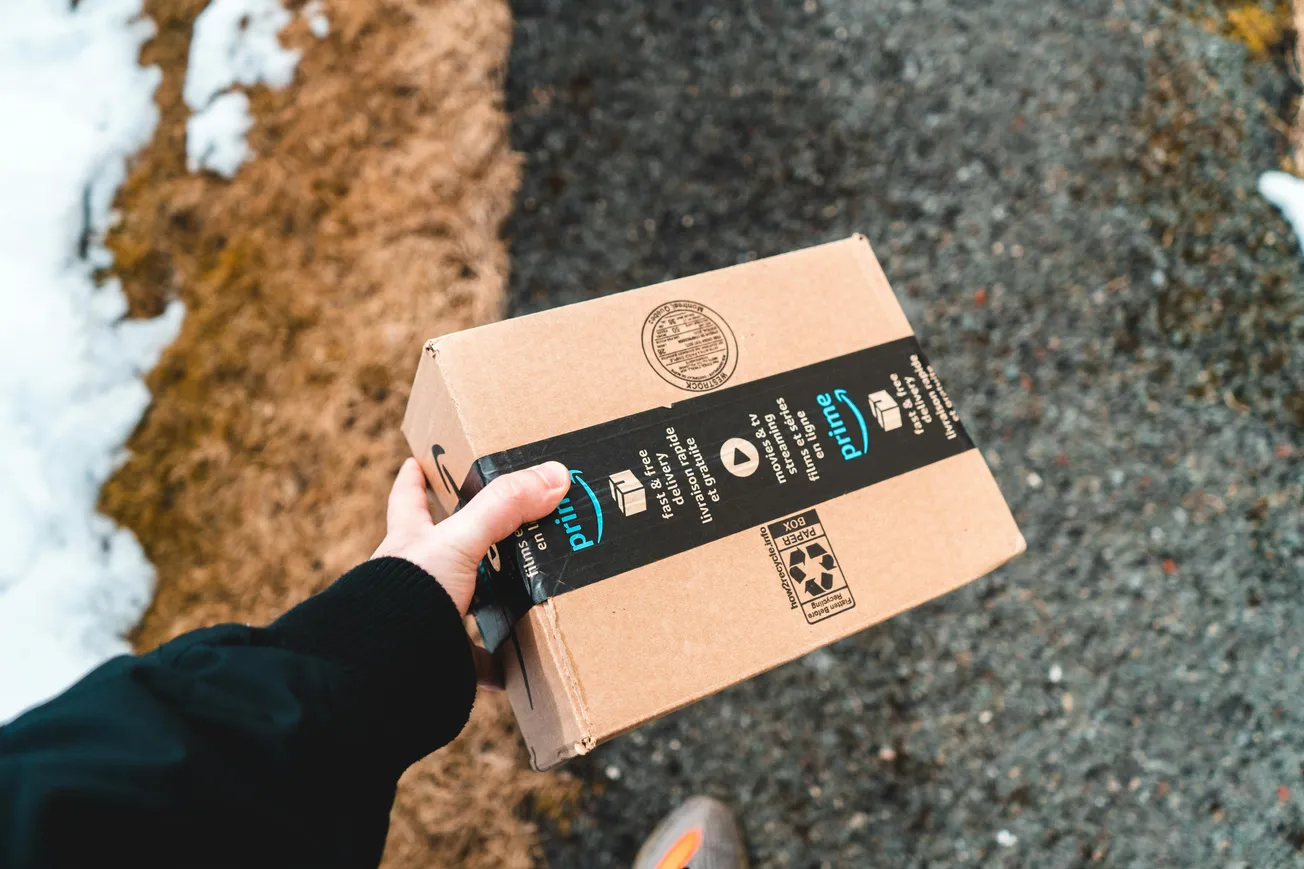
Amazon Now — the newly announced ultra‑fast delivery service from Amazon — is being tested in parts of Seattle and Philadelphia, offering groceries and household essentials in about 30 minutes or less. Users can receive items like milk, eggs, fresh produce, pet food, personal‑care goods, and basic household supplies almost immediately after ordering.
Prime members pay starting at approximately $3.99 per order, while non‑Prime customers are charged around $13.99; additionally, a small‑basket fee applies for smaller orders.
A Bigger Push Into Grocery and Essentials Logistics
This move builds on Amazon’s broader expansion of fast grocery and essentials delivery across the U.S. In 2025, Amazon extended its same‑day delivery service — including fresh groceries — to over 1,000 cities and towns, with plans to cover 2,300 or more by the end of the year.
According to Amazon, the “everyday essentials” segment — groceries, household items, pantry staples — has grown more than twice as fast as other categories in the first quarter of 2025, indicating strong consumer demand for quick fulfillment of consumables.
Amazon’s recent infrastructure investments support this acceleration: the company is expanding its network of distribution and fulfillment facilities, including temperature-controlled centers for perishables, and optimizing delivery routing to slash fulfillment times.
Strategic Implications: Competing on Immediacy
Amazon Now positions Amazon to compete directly with rapid-delivery players and services from other large retailers — a space historically dominated by grocery‑delivery apps and established chains.
The faster delivery window appeals especially to impulse-buying behaviors and immediate‑need scenarios: when consumers want household staples, baby supplies, or groceries on short notice. For Amazon, mastering this immediacy could deepen customer loyalty, increase basket frequency, and reinforce Prime’s value proposition.
Challenges and Questions Ahead
While 30‑minute delivery offers convenience, scaling it beyond select metros poses challenges: fulfillment capacity, delivery‑zone density, and cost structure are all constraints. Analysts note that widespread adoption may require substantial investments in fulfillment infrastructure and careful demand forecasting.
Moreover, the pricing structure — especially the higher fee for non‑Prime customers and additional fee for small orders — could limit usage to frequent or high‑urgency shoppers, potentially constraining volume relative to traditional same‑day or next‑day delivery.
What It Means for Retail & Supply‑Chain Strategy
Amazon’s test of 30‑minute delivery underscores a broader retail shift: speed and convenience increasingly define competitive advantage, not just price or selection. For supply‑chain executives and omnichannel retailers, it signals growing pressure to optimize last‑mile fulfillment and respond to rising consumer expectations.
If Amazon scales this service successfully, we may see a redefinition of "same‑day" delivery standards — with 30 minutes becoming a new baseline for essentials. That shift could reshape consumer behavior, inventory allocation, and logistics planning across retail industries.