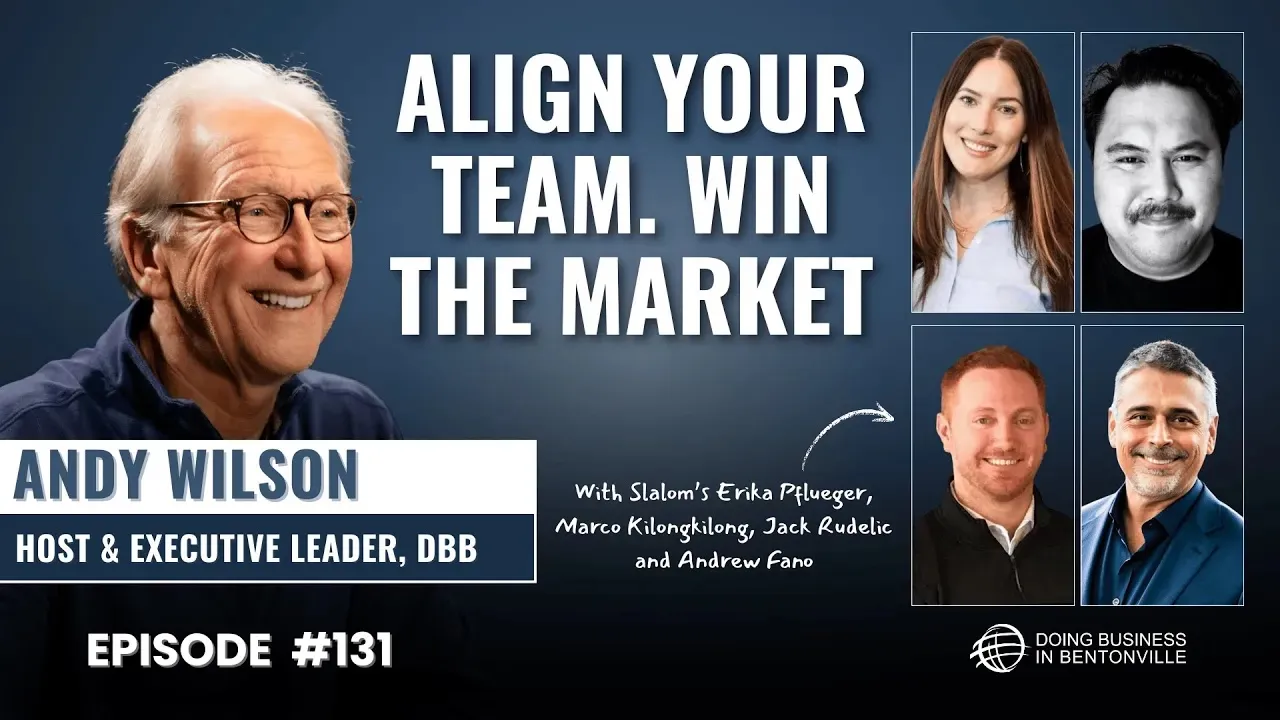
AI doesn’t win because it’s shiny; it wins because it shortens the path from data to decision. We sit down with Slalom’s Andrew Fano, Jack Rudelic, Erika Pflueger, and Marco Kilongkilong to dig into how generative AI is transforming retail and consumer goods, from product roadmaps and software delivery to supply chain and customer experience. The conversation starts with culture and outcomes, then moves quickly into the real levels: where to inject AI in existing workflows, how to accelerate time to value, and what it takes to avoid the dreaded proof-of-concept graveyard.
Jack breaks down why tapping enterprise data with LLMs speeds answers to employees and customers, improving logistics, HR, and day-to-day operations. Erica shares how teams build higher-fidelity roadmaps and ship faster by using AI to draft requirements, test ideas, and keep priorities moving without adding headcount. Marco leads a candid look at ethics and governance: human accountability, principle-based guardrails, and practical controls for privacy, explainability, and legal risk. Together they outline a simple frame; people, tools, and processes, that turns AI from a demo into dependable, trusted production systems.
We also zoom out to the future of work. Expect more citizen developers as the barrier to building falls, and yes, a credible path toward shorter work weeks as drudge work disappears and creativity scales. The throughline is trust: companies that bake governance into AI from day one will move faster, protect customers and employees, and earn the right to scale. If you’re ready to turn AI into real outcomes, not just experiments, this conversation lays out the playbook.
Subscribe, share with a teammate who’s wrestling with AI adoption, and leave a review with your top use case you want us to unpack next.
More About this Episode
How AI is Revolutionizing Retail and the Workplace—Insights from Slalom’s Experts
Artificial intelligence is no longer a futuristic concept. It’s here, and it’s already reshaping how we work, shop, and solve problems. During a recent conversation on Doing Business in Bentonville, I had the opportunity to sit down with a remarkable team from Slalom, a consulting firm known for its focus on modern technology, business transformation, and human-centered culture.
What followed was one of the most engaging, informative, and honest discussions we’ve had on the topic of AI. From ethical concerns to real-world use cases, the team didn’t just talk about AI, they unpacked what’s really happening across retail, tech, and industries in transition.
Here’s what I learned from Jack Rudelic, Erika Pflueger, Marco Kilongkilong and Andrew Fano, four professionals who are not only helping companies implement AI but doing it in a way that builds trust, unlocks creativity, and puts people first.
The Real AI Opportunity: Solving Problems, Not Selling Hype
When companies think about AI, many imagine futuristic robots or voice assistants. But as I learned from this team, the real power of AI lies in how it helps internal teams work smarter and faster.
Jack Rudelic, who leads the software engineering practice at Slalom in the Missouri Valley region, talked about how AI can mine enormous volumes of data that companies already have, and extract real, actionable insights from it. Whether it's optimizing supply chain decisions, improving HR workflows, or enhancing customer service, AI enables companies to get better answers faster.
“Business decisions rely on data. But with so much of it, it’s hard to get to the answers quickly,” Jack said. “That’s what AI unlocks. It connects to enterprise systems and gets the right information to the right people at the right time.”
It’s not about adding another tool. It’s about embedding intelligence into processes that already exist, and removing manual, repetitive tasks that slow teams down.
AI in Retail: From Idea to Implementation
Retail is an especially exciting space for AI innovation. With tight margins, intense competition, and evolving customer expectations, retailers are looking for every edge. AI is becoming that edge.
Erika Pflueger, a client partner at Slalom who works with retail and consumer packaged goods clients, explained how her team has been helping companies rethink how they build digital products. One example she gave was working with a consumer-facing brand to speed up the software development lifecycle using AI.
“We looked at how a developer takes an idea to an actual experience that a customer interacts with,” Erika said. “Then we asked, where can AI improve that process? Whether it’s generating better requirements, creating high-fidelity roadmaps, or helping teams move faster, AI can drive real impact.”
What stood out to me was how practical their approach is. They’re not forcing AI onto clients, they’re finding natural fits based on the tools and processes already in place. Then they pilot, test, and train teams for adoption.
AI Adoption Starts With People
AI isn’t just a tech project. It’s a people project.
That was a point made clearly by Marco Kilongkilong, who focuses on transformation and AI governance. “The tech is often ready before the people are,” he said. “If you don’t train your workforce to use AI, and if you don’t give them confidence in the tools, it won’t matter how good your models are.”
This is especially important when AI touches sensitive areas, like legal compliance, HR decisions, or customer data. Organizations need clear oversight and management strategies to ensure AI tools are used safely, responsibly, and effectively.
Marco’s team spends a lot of time helping companies structure that governance, especially in industries like healthcare or finance where compliance is critical. That includes defining who’s responsible when AI makes a decision, how to audit results, and how to stay aligned with privacy and data laws.
Why Most AI Projects Fail—and How to Avoid It
One of the most eye-opening parts of our discussion was around why so many AI initiatives fail. As Marco shared, a large number of companies have AI pilots sitting on the shelf, not because the tech didn’t work, but because there was no governance or leadership confidence to put them into production.
Jack offered another perspective. “A lot of companies try to bring in new AI tools instead of solving existing problems. But the power of AI is in making the hard work easier. It’s not about more tools, it’s about removing the friction.”
Erika added that Slalom’s approach is to help clients identify the right use cases, not just flashy ones. “Not every problem is an AI problem,” she said. “We help clients focus on use cases that are achievable, measurable, and aligned to their business goals. That’s how you build momentum.”
Ethics, Trust, and the Human Side of AI
It’s impossible to have a responsible conversation about AI without addressing ethics. And this team didn’t shy away from it.
Marco emphasized that ethical AI starts with one core idea: you can’t blame the algorithm. Companies must retain human accountability for decisions made with or by AI systems. That means setting clear principles (like transparency, fairness, and explainability) and operationalizing them through oversight structures.
He broke it down into three pillars: people, tools, and processes. Organizations need the right people involved (including legal, compliance, and audit teams), the right technology stack, and the right workflows to govern how AI is used.
Jack echoed that, noting how important it is to understand what data AI models are accessing and how that data is being processed. If that’s not handled properly, companies risk exposing sensitive information, or worse, losing customer trust.
And trust is everything. Without it, you don’t just lose customers. You lose your license to operate.
The Future of Work: AI as an Enabler, Not a Threat
Toward the end of our conversation, we looked ahead. What does AI mean for the future of work?
Marco shared a vision that resonated deeply: the four-day workweek. With AI handling more of the repetitive, low-value tasks, employees can spend more time on creative, strategic, or interpersonal work, and less time grinding through manual processes.
Jack added that AI is lowering the barrier to entry for creators. We’re entering an era where anyone can build apps, design solutions, or innovate, without needing to know how to code. That kind of democratization of technology is going to unlock an explosion of innovation, especially among the next generation.
Erika brought it back to product management. “We’re seeing higher fidelity roadmaps, better collaboration, and faster delivery, all because AI is helping us shift left in the development process.”
The result? More value, delivered faster, with less burnout.
Culture Still Matters
As advanced as this conversation was, what struck me most was how grounded it all was in culture. Slalom isn’t just a tech consultancy. It’s a people-first organization, and that shows in everything they do, from how they deliver client outcomes to how they recognize their employees.
Their culture is what allows them to do high-impact work, stay aligned as a team, and build long-term trust with their clients. And that’s a critical lesson for every company navigating the future of AI: tech is only as good as the people behind it.
Final Takeaway
If you’re a retailer, or any business leader, asking how to navigate the rapid growth of AI, the message from this team was clear:
- Start small, but think big.
- Build trust by leading with governance.
- Use AI to amplify your people, not replace them.
- Stay rooted in your values and your community.
And most importantly, surround yourself with the right partners who can meet you where you are and guide you forward.